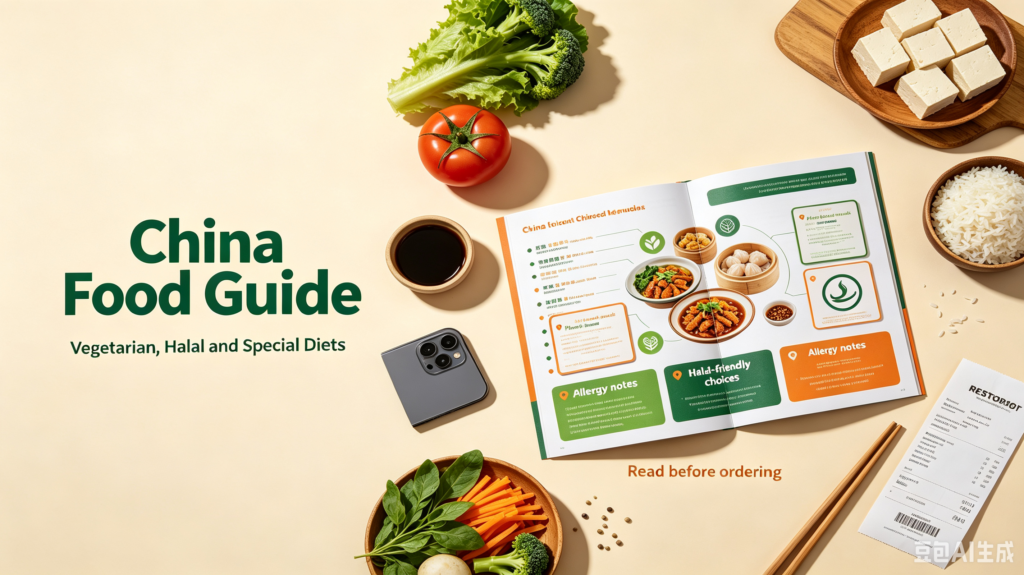
| Vegetarian / Vegan No meat or fish | Halal / No Pork Beef, lamb, chicken & seafood | No Restrictions All ingredients, full experience |
How to Use This Guide
China’s food culture varies dramatically by region. A dish you eat in Beijing will taste completely different from its southern cousin. This guide organizes China’s most famous city foods into three dietary categories, so you can plan what to eat before you arrive.
| Vegetarian / Vegan: Dishes made without meat, poultry, or seafood. Always double-check with the restaurant — many Chinese vegetable dishes are cooked in pork or chicken broth. Say “wǒ chī sù” (我吃素) to indicate you are vegetarian, or “quán sù” (全素) for strictly vegan. |
| Halal / No Pork: Dishes using beef, lamb, chicken, or seafood — no pork. China has a large Hui Muslim population; cities like Xi’an, Lanzhou, and Urumqi have extensive halal food streets. Look for the 清真 (qīngzhēn) sign, which means halal. |
| No Restrictions: The full Chinese food experience — pork, offal, seafood, everything. Chinese cuisine uses pork extensively as a base flavoring, so dishes in this category may contain pork even when not the main ingredient. |
| Useful Phrase: “wǒ chī sù” (我吃素) — I am vegetarian “bù chī zhū ròu” (不吃猪肉) — I don’t eat pork “qīngzhēn” (清真) — Halal certified “wǒ duì ___ guòmǐn” (我对___过敏) — I am allergic to ___ |
| Vegetarian & Vegan-Friendly DishesNo meat, no poultry, no seafood — confirmed plant-based options from across China |
China is not traditionally a vegetarian-friendly country — pork is used as a background flavoring in many ‘vegetable’ dishes. However, Buddhist cuisine (zhāi cài, 斋菜) has a long history in China, and cities like Hangzhou, Suzhou, and Chengdu offer excellent plant-based options. Always specify 全素 (quán sù) for strictly vegan dishes.
| Dish | City | Description | Price (CNY) |
| Scallion Oil Pancake葱油饼 Cōngyóubǐng | Shanghai / Nationwide | Crispy layered flatbread with fragrant scallion oil. Made fresh on griddles. One of the most satisfying street snacks in China. Vegetarian when no lard is used — ask to confirm. | ¥3–¥8 |
| Mapo Tofu (veg version)麻婆豆腐 Mápó dòufu | Chengdu / Sichuan | Silken tofu in a numbing-spicy sauce. Traditional version has minced pork — request the vegetarian version (素麻婆豆腐). Many Sichuan restaurants offer it. Bold, warming, addictive. | ¥15–¥30 |
| Buddha’s Delight罗汉斋 Luóhán zhāi | Hangzhou / Suzhou / Fujian | Classic Buddhist vegetarian dish with wood ear mushrooms, tofu skin, lotus root, lily buds, and glass noodles. Rich umami from fermented sauces. Often served at temple restaurants. | ¥20–¥45 |
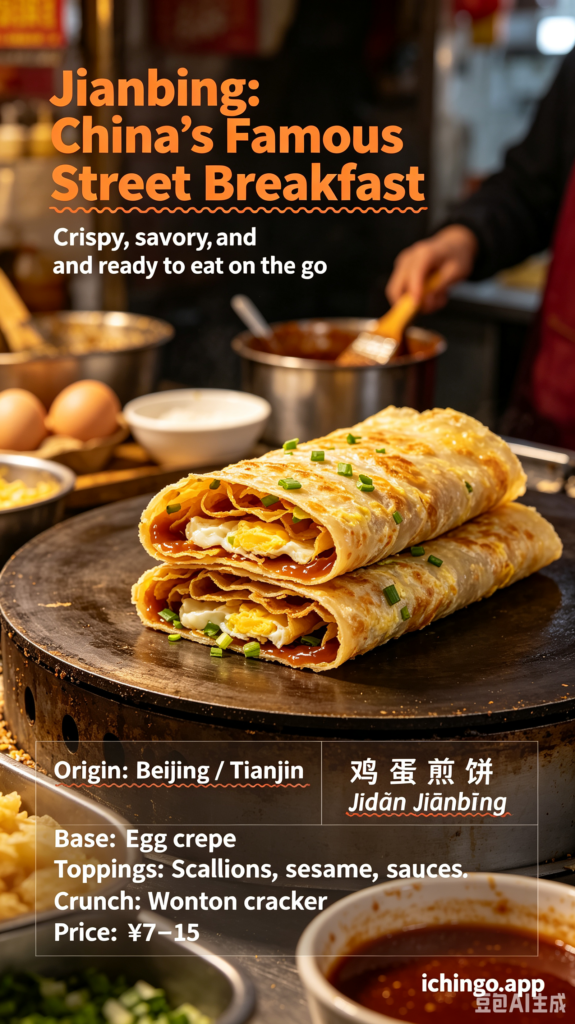
| Egg Bing (Jianbing)鸡蛋煎饼 Jīdàn jiānbǐng | Beijing / Tianjin / Nationwide | Thin crepe cooked with egg, scallions, sesame, hoisin, and chilli sauce, folded around a crispy wonton cracker. No meat in the base version — a perfect vegetarian breakfast. | ¥7–¥15 |
| Stir-fried Wood Ear Mushrooms木耳炒山药 Mù’ěr chǎo shānyào | Sichuan / Nationwide | Black wood ear mushrooms with yam, chilli and garlic. Crunchy, earthy, intensely satisfying. Naturally vegan. One of China’s most popular home-cook dishes. | ¥12–¥25 |
| Vegetable Dumplings素饺子 Sù jiǎozi | Beijing / Shandong / Nationwide | Dumplings stuffed with chive, egg, glass noodles, or mixed vegetables. Available at dumpling restaurants across China. Confirm no pork broth in cooking water. | ¥10–¥25 |
| Deep-fried Stinky Tofu臭豆腐 Chòu dòufu | Changsha / Shaoxing | Fermented tofu deep-fried until crispy outside, custardy inside. The smell is extreme — the taste is extraordinary. A must-try for adventurous vegetarians. Vegan-friendly. | ¥5–¥12 |
| Taro Cake芋头糕 Yùtou gāo | Guangzhou / Hong Kong | Steamed cake made from taro, rice flour, dried shrimp optional. Request the plain vegetarian version (素芋头糕). Dense, savoury, with a beautiful purple tint. | ¥8–¥18 |
| Rice Porridge / Congee白粥 Bái zhōu | Guangzhou / Guangdong / Nationwide | Plain rice porridge — the purest comfort food. Naturally vegan. Add pickled vegetables or tofu for flavour. A Guangdong breakfast staple. The best accompaniment to morning tea. | ¥5–¥15 |
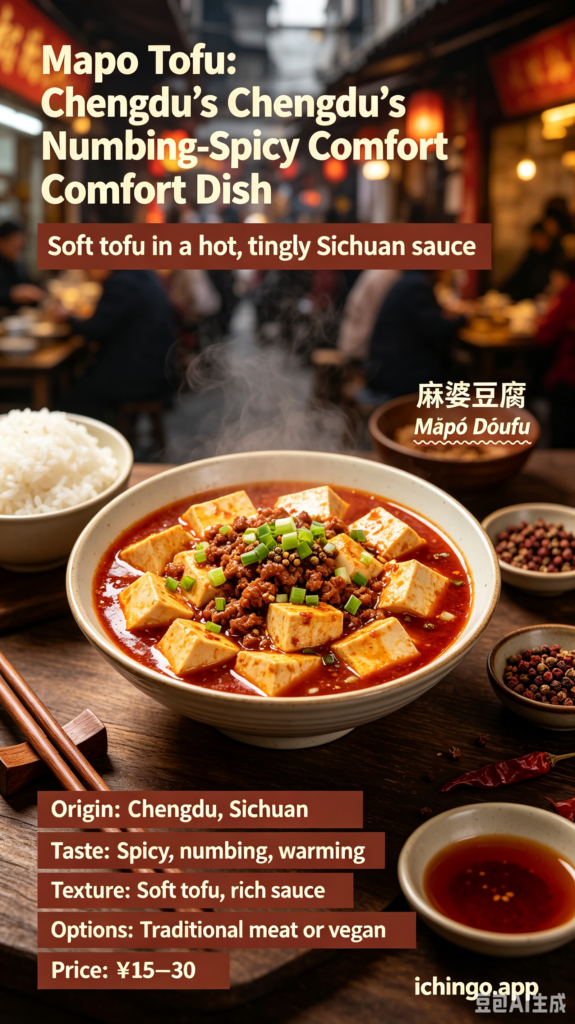
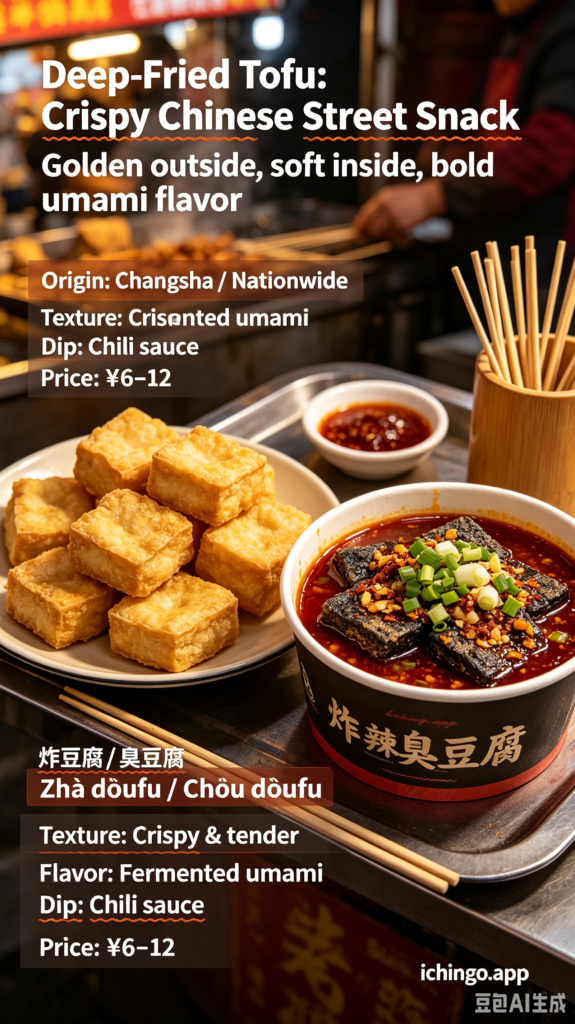
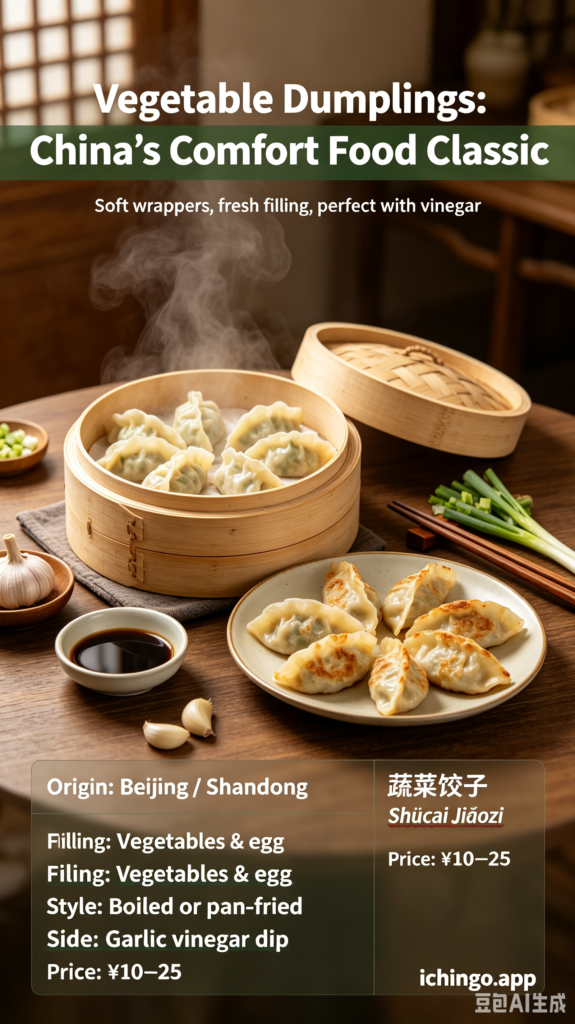
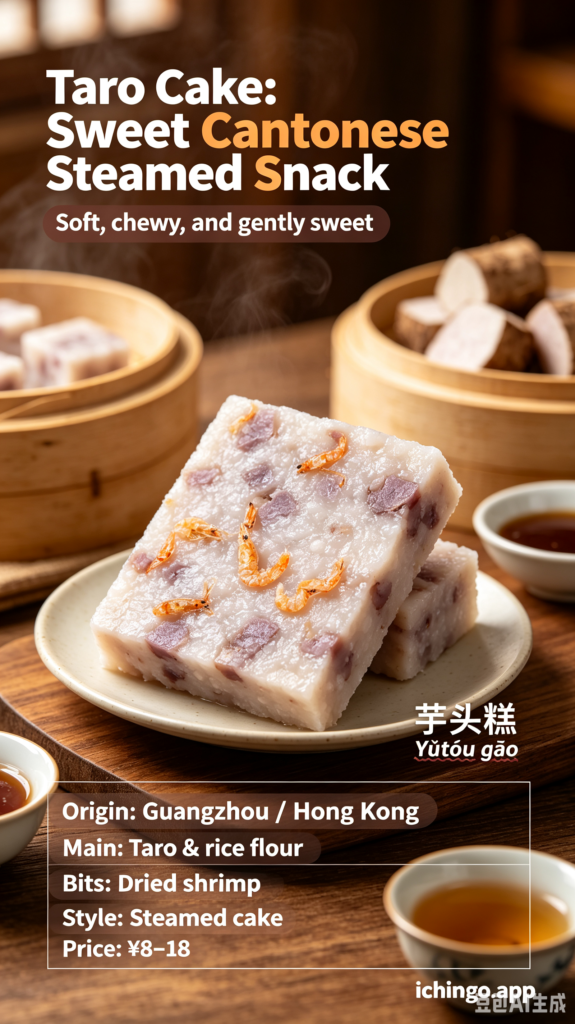
| Tip: In Hangzhou, visit the Buddhist vegetarian restaurant inside Lingyin Temple (灵隐素斋) for some of the finest plant-based cuisine in China.In Chengdu, ‘veggie’ (素) versions of most Sichuan classics are available — just ask. The Tibetan Quarter near Wuhou Shrine also has excellent vegan options.Shanghai’s Former French Concession area has several dedicated vegetarian restaurants with English menus. |
China has a Muslim population of around 20–25 million, predominantly the Hui ethnic group, spread across Gansu, Ningxia, Xinjiang, Qinghai, and Yunnan. Halal food (清真食品, qīngzhēn shípǐn) is widely available in cities with Hui communities. Xi’an’s Muslim Quarter is the most famous halal food destination in China for visitors.
| Dish | City | Description | Price (CNY) |
| Roujiamo — Beef / Lamb肉夹馍 Ròujiāmó | Xi’an (Shaanxi) | China’s original ‘sandwich’ — slow-braised beef or lamb stuffed into a baked flatbread. The bread is crispy outside, doughy inside. Xi’an’s Muslim Quarter serves the halal beef & lamb version. One of China’s greatest street foods. | ¥10–¥20 |
| Lanzhou Beef Noodles兰州牛肉拉面 Lánzhōu niúròu lāmiàn | Lanzhou / Nationwide | Hand-pulled wheat noodles in a clear beef broth with sliced beef, white radish, and chilli oil on top. The gold standard of Chinese noodle soups. Served at halal noodle shops (兰州拉面) across China. | ¥10–¥20 |
| Lamb Skewers羊肉串 Yángròu chuàn | Xi’an / Xinjiang / Nationwide | Seasoned lamb on bamboo skewers, grilled over charcoal with cumin, chilli, and sesame. The signature street food of Xi’an’s Muslim Quarter and Xinjiang. Juicy, smoky, deeply satisfying. | ¥3–¥8 each |
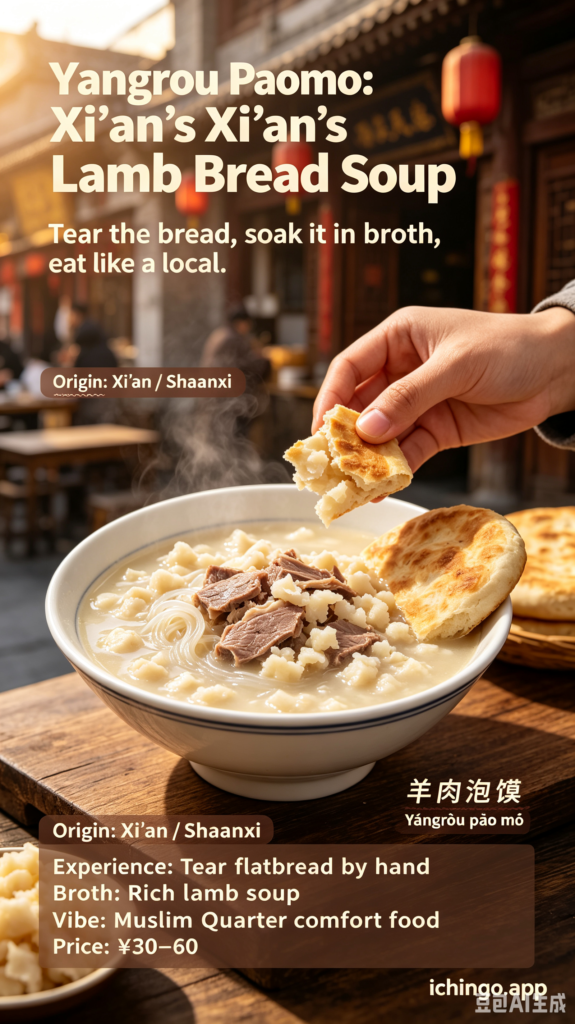
| Yangrou Paomo羊肉泡馍 Yángròu pàomó | Xi’an (Shaanxi) | Crispy flatbread torn into pieces and soaked in a rich lamb broth with vermicelli and lamb chunks. You tear the bread yourself at the table. A complete, warming meal unique to Xi’an. | ¥30–¥60 |
| Steamed Beef Dumplings牛肉蒸饺 Niúròu zhēng jiǎo | Xi’an / Shandong | Beef and chive or beef and celery dumplings, steamed or pan-fried. Found at halal restaurants. Lighter than the pork version, cleaner flavour. | ¥15–¥30 |
| Braised Beef (Halal)卤牛肉 Lǔ niúròu | Nationwide | Beef slow-braised in soy sauce, star anise, cassia bark and sugar until meltingly tender. Served sliced cold as a starter or hot over rice. Widely available at halal restaurants. | ¥20–¥45 |
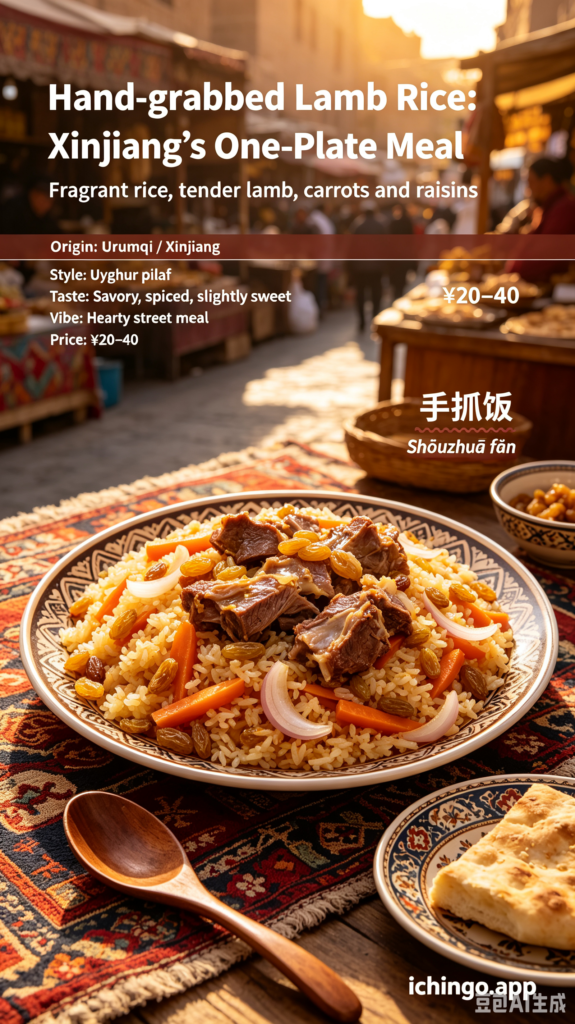
| Hand-grabbed Lamb Rice手抓饭 Shǒuzhuā fàn | Xinjiang / Urumqi | Xinjiang-style pilaf: rice cooked with lamb, carrots, onion, and raisins in lamb fat and spices. One of China’s most satisfying one-bowl meals. The dish of the Uyghur people. | ¥20–¥40 |
| Grilled Lamb Chops (Xinjiang)新疆烤羊排 Xīnjiāng kǎo yángpái | Xinjiang Restaurants Nationwide | Lamb rack marinated in cumin, chilli and garlic, grilled over charcoal. Sold at Xinjiang restaurants across China. Bone-in, aromatic, boldly spiced. A carnivore’s dream. | ¥40–¥80 |
| Grilled Whole Fish烤鱼 Kǎo yú | Chongqing / Nationwide | Whole fish grilled then braised in chilli, doubanjiang, and aromatics. Seafood is generally halal — confirm the restaurant doesn’t use lard. Popular at seafood hotpot restaurants. | ¥40–¥100 |
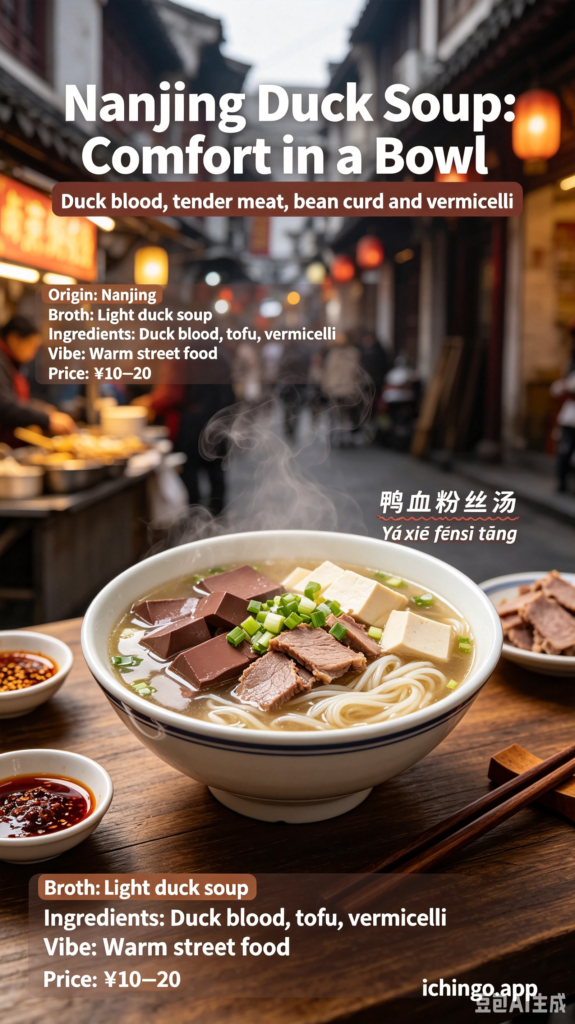
| Nanjing Duck Soup鸭血粉丝汤 Yā xuè fěnsī tāng | Nanjing | ⚠️ Contains duck blood and offal. Listed for completeness — halal travelers should stick to the plain duck soup version (鸭汤) without blood. Nanjing’s most famous street food. | ¥10–¥20 |
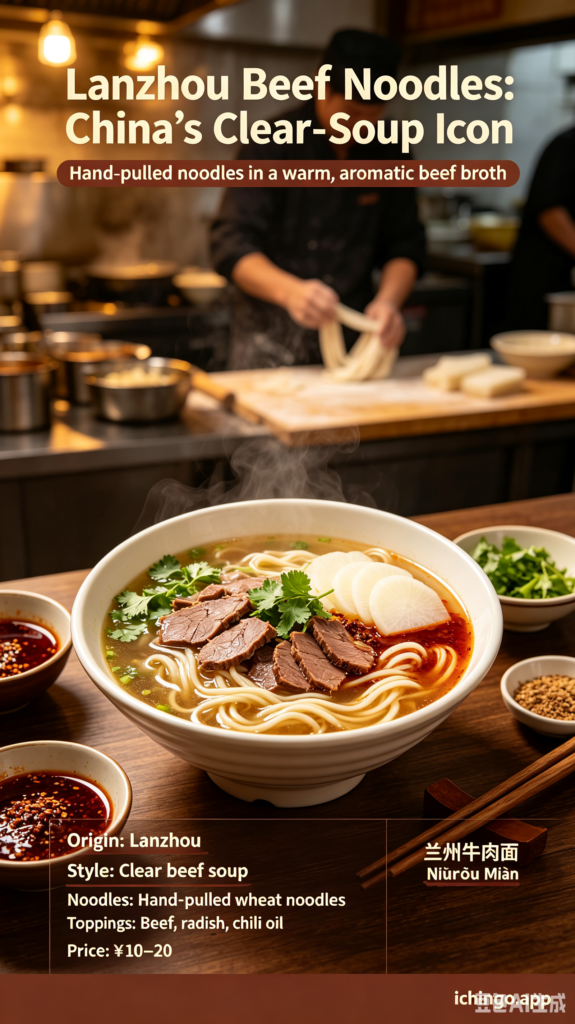
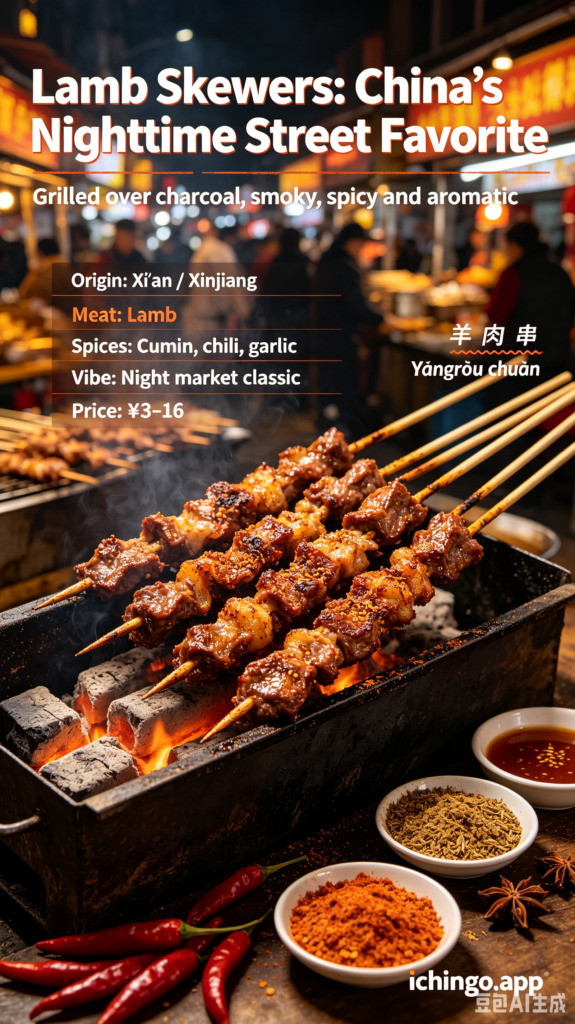
| Tip: Xi’an’s Muslim Quarter (回民街, Huímín Jiē) is the single best halal food destination in China. Over 200 halal stalls and restaurants in one district. Visit in the evening for the full atmosphere.Look for the Arabic crescent moon and the characters 清真 on restaurant signs — this indicates certified halal food.Lanzhou beef noodle restaurants (兰州拉面) are found in virtually every city in China and are a reliable halal option anywhere. |
These are the iconic dishes that define Chinese food culture — the meals people travel across the country to eat, the flavors that appear on every ‘best of China’ list, and the foods that will give you the deepest connection to each city’s culinary identity. Many contain pork, mixed proteins, or broths made from multiple meat sources.
Beijing — Imperial Capital Cuisine
Beijing food is hearty, savory, and influenced by centuries of imperial court cooking. The dominant flavors are soy sauce, sesame, and fermented bean paste. Lamb is also prominent due to northern China’s proximity to Inner Mongolia.
| Dish | Description | Must Try At | Price |
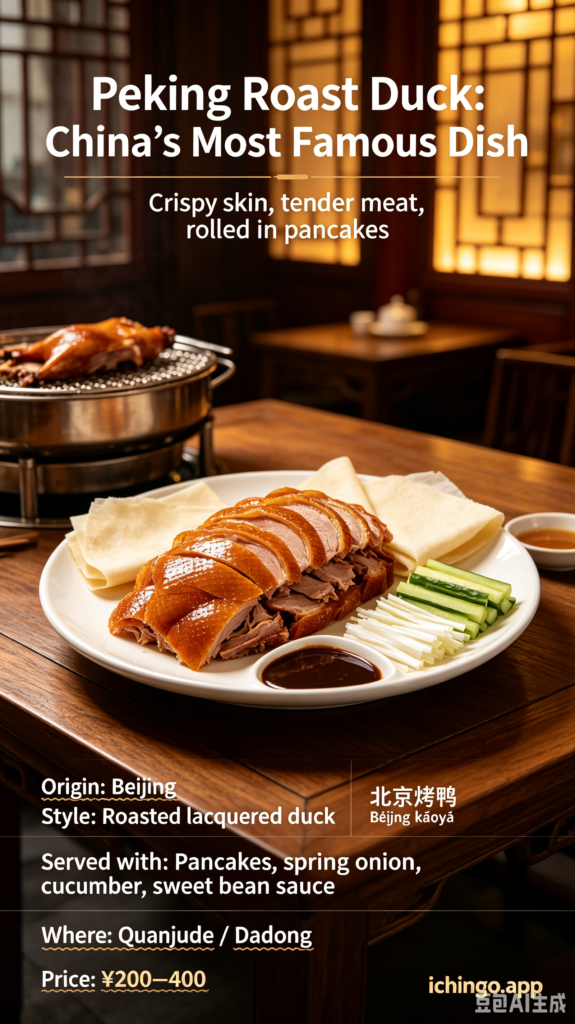
| Peking Roast Duck北京烤鸭 | The most famous dish in China. Duck slow-roasted in a wood-fired oven until the skin is lacquered and crackling. Served with thin pancakes, spring onion, cucumber, and sweet bean sauce. Ritual eating — not just food. | Quanjude / Dadong | ¥200–¥400/duck |
| Jianbing煎饼果子 | Beijing’s iconic street breakfast: thin egg crepe, sesame, scallion, hoisin, chilli, and a crispy fried wonton cracker. Assembled in under 3 minutes on a hotplate. Eaten while walking. The soul of Beijing mornings. | Street vendors citywide | ¥8–¥15 |
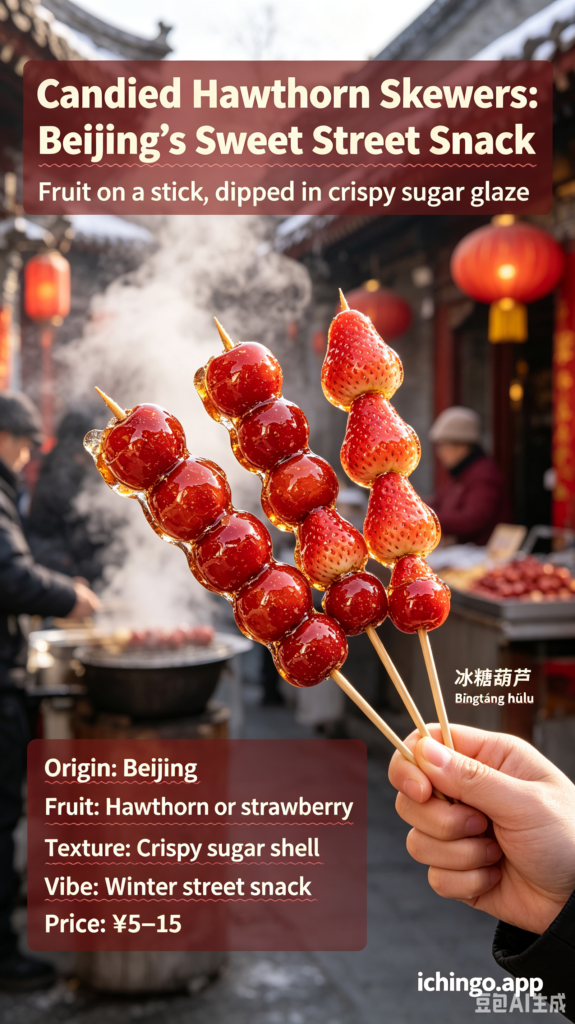
| Candied Hawthorn Skewers冰糖葫芦 | Clusters of hawthorn berries (or strawberries, kiwi) dipped in crackling toffee glaze on a bamboo stick. Tart, crunchy, beautiful. A Beijing winter tradition dating to the Song Dynasty. | Wangfujing / Houhai | ¥5–¥15 |
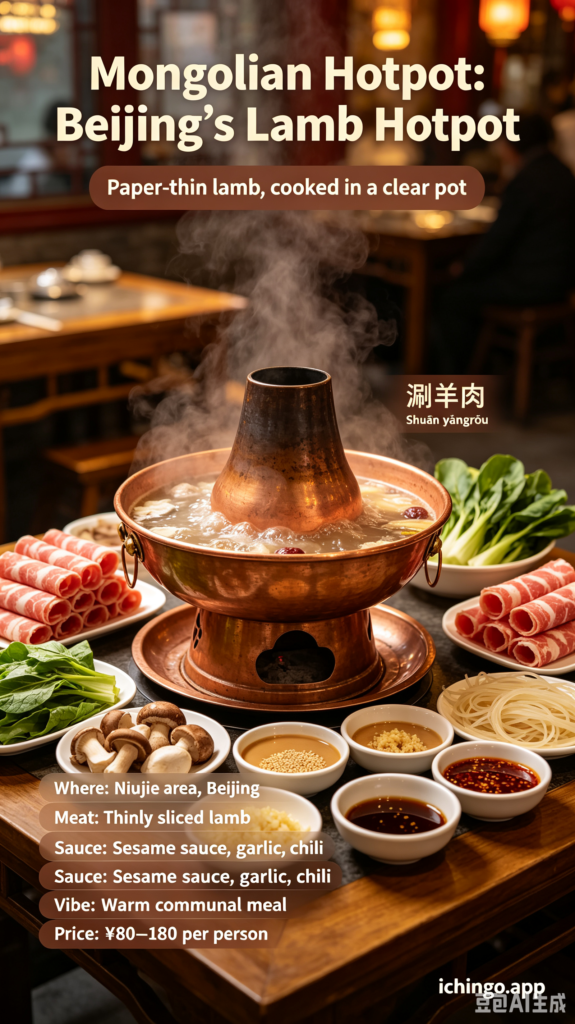
| Mongolian Hotpot铜锅涮肉 | Paper-thin slices of lamb and beef cooked in a copper pot of boiling broth at the table, dipped in sesame sauce with garlic and chilli. Beijing’s version of hotpot — simpler than Sichuan, more focused on the quality of the meat. | Niujie area | ¥80–¥180/person |
| Zhama Doufu / Bean Curd Bowl炸酱面 | Beijing noodles tossed with a rich pork and fermented soybean paste sauce, topped with raw cucumber, radish, and bean sprouts. Mix everything together. The city’s most beloved everyday noodle. | Any local noodle shop | ¥15–¥30 |
Shanghai — Sweet-Savory Coastal Cuisine
Shanghai cuisine (本帮菜, Běnbāng cài) is characterized by a sweet-savory balance using soy sauce, sugar, and Shaoxing wine. The city is also one of the world’s great soup dumpling destinations.
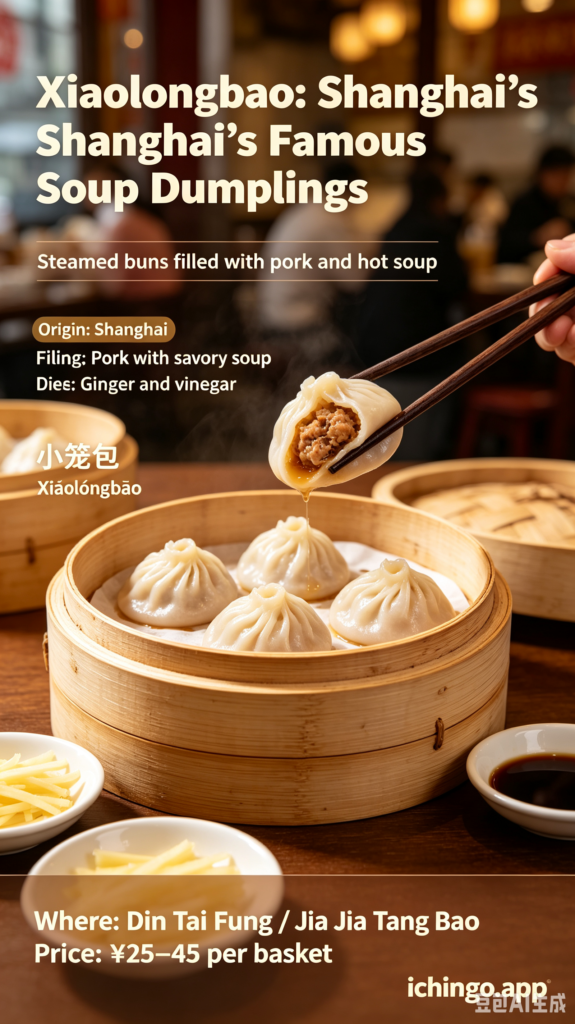
| Xiaolongbao小笼包 | Shanghai’s most famous export — delicate steamed dumplings with pork filling and a spoonful of hot savory soup inside. Bite a small hole, sip the soup, then eat the dumpling. With ginger-vinegar dipping sauce. | Din Tai Fung / Jia Jia Tang Bao | ¥25–¥45/basket |
| Shengjianbao生煎包 | Pan-fried soup dumplings — thicker dough, crispy bottom, juicy pork filling and broth inside. Topped with sesame and spring onion. Messier and more satisfying than xiaolongbao. | Yang’s Dumplings (小杨生煎) | ¥10–¥20/4 pieces |
| Scallion Oil Noodles葱油拌面 | Cold wheat noodles tossed with caramelized scallion oil, soy sauce, and sugar. Deceptively simple — the quality of the scallion oil defines everything. A Shanghai daily staple eaten by millions. | Any local noodle shop | ¥12–¥20 |
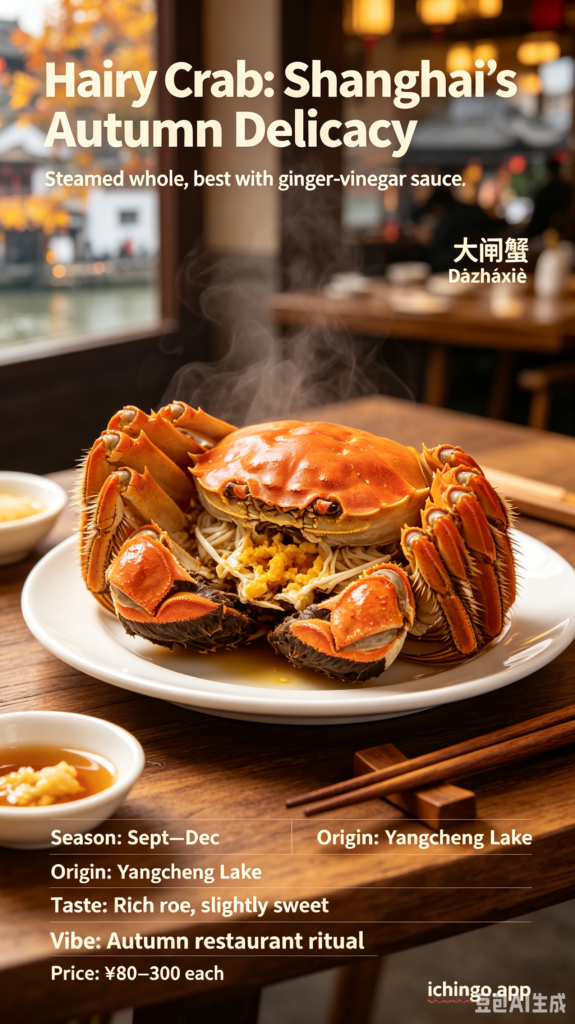
| Hairy Crab大闸蟹 | Available Sept–Dec. Freshwater crabs steamed whole, eaten with ginger-vinegar dipping sauce. The roe inside is a seasonal delicacy. Intensely rich, slightly sweet. A Shanghai autumn ritual. | Yangcheng Lake restaurants | ¥80–¥300 each |
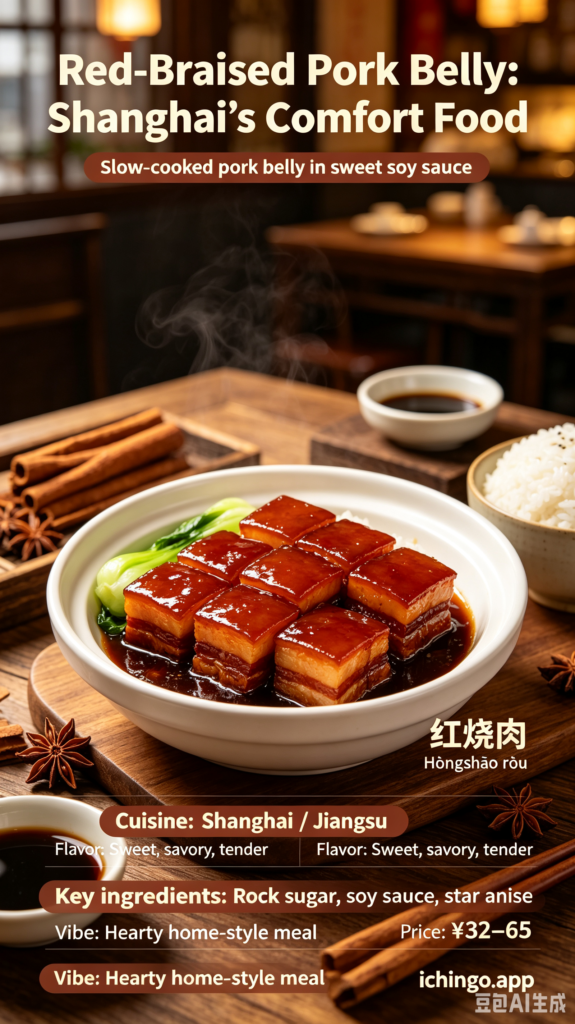
| Red-Braised Pork Belly红烧肉 | Pork belly slow-cooked in soy sauce, Shaoxing wine, rock sugar, and spices until caramelized and meltingly tender. The soy-sweet sauce defines Shanghai cooking. Served over rice. | Fu 1039 / local restaurants | ¥35–¥65 |