Introduction
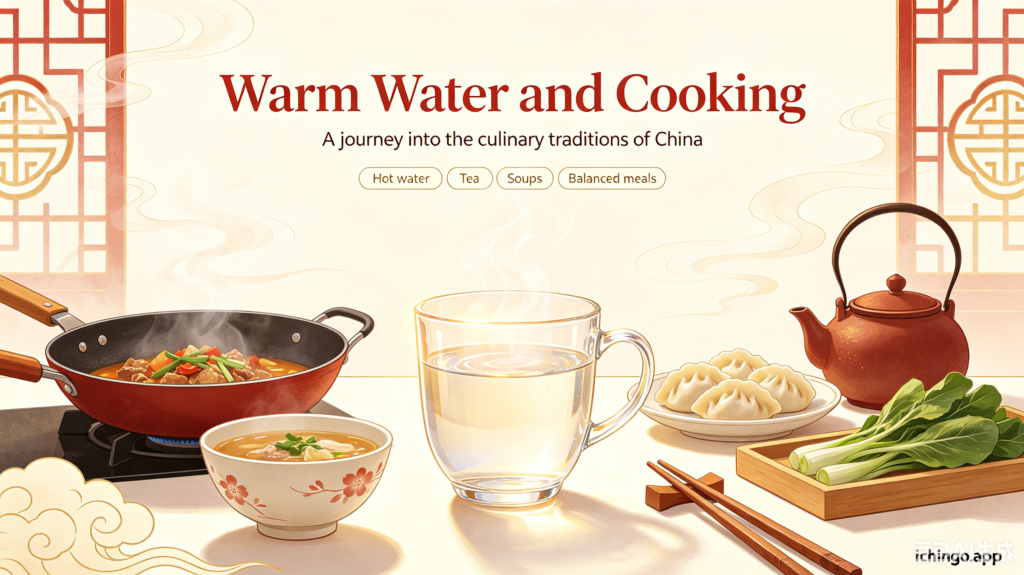
If you’ve spent any time eating in China — or cooking with Chinese friends — you may have noticed something: almost everything is cooked. Vegetables are stir-fried, blanched, steamed or braised. Meat is always cooked through. Even fruit is sometimes served warm. Cold raw salads are rare. Uncooked greens on a dinner table are almost unheard of in traditional Chinese homes.
Is this just a culinary preference? A food safety habit? Or something deeper rooted in history, medicine, and philosophy? The answer is all three — and understanding it gives you a completely new window into Chinese culture.
Why Does China Cook Everything?
The short answer is: it’s not just one reason. It’s a combination of history, traditional medicine, water quality, agricultural practice, and cultural philosophy — all layered on top of each other over thousands of years.
1A. The Water Problem — The Original Reason
For most of China’s history, the water supply was not safe to drink without boiling. Rivers were used simultaneously for irrigation, washing, and waste. Wells were shared by entire villages. Waterborne diseases — cholera, typhoid, dysentery — were endemic killers.
The practical response was simple and brilliant: boil everything. Boiling water kills pathogens. Cooking vegetables and meat in boiling water or hot oil does the same. Over thousands of years, this practice became so deeply embedded in Chinese culture that it stopped being a food safety rule and became a cultural norm: raw food is simply not how food is properly prepared.
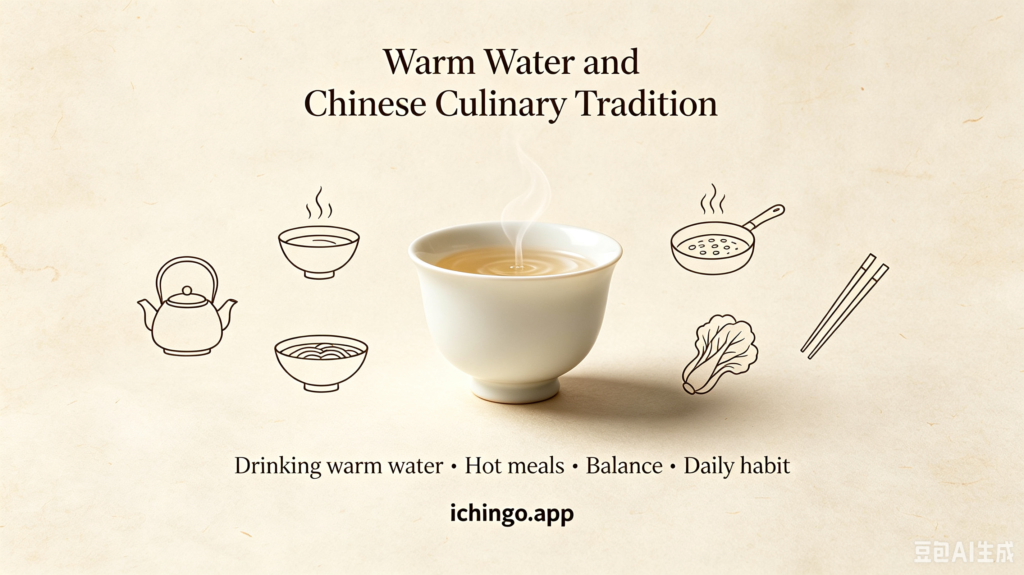
| Historical Note: Even today, most older Chinese people will not drink cold water from a tap — they boil it first, or drink hot water (热水, rè shuǐ). If you ask for water in a traditional Chinese home, you will almost certainly be given hot water, not cold.Foreign visitors sometimes find this strange — but it is one of the oldest public health habits in the world, and it worked. |
1B. Traditional Chinese Medicine (TCM) — Hot vs Cold
Traditional Chinese Medicine (中医, zhōng yī) — which has guided Chinese health thinking for over 2,000 years — classifies foods, seasons, and body states into yin (cold/cool) and yang (hot/warm) energies. This isn’t about literal temperature — it’s about how a food affects the body’s internal balance.
Under TCM principles:
- Cold foods (raw vegetables, cold water, raw fruit, salads) are believed to harm the digestive system, especially the stomach and spleen, which TCM considers the center of digestive fire.
- Cooking transforms food — heat is believed to make nutrients easier to absorb and reduce the burden on the digestive system.
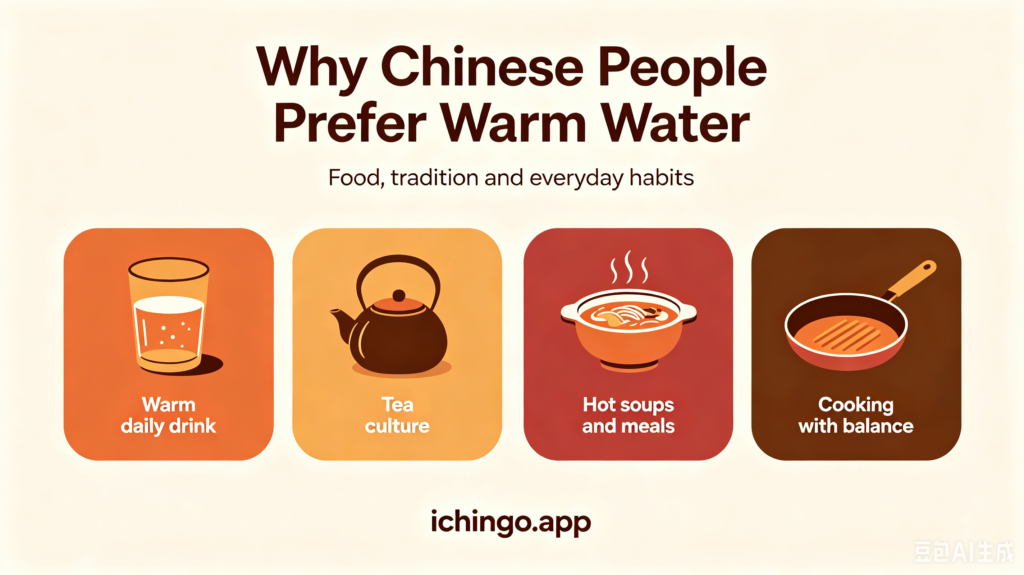
- Cold drinks are discouraged — particularly during illness, menstruation, or after physical exertion. Hot water is believed to aid digestion and circulation.
- Balance is everything — if you eat too many ‘cooling’ foods (like raw cucumber or watermelon) without balancing with ‘warming’ foods (like ginger, garlic, or cooked grains), you disrupt your body’s harmony.
| Did You Know: This is why Chinese people — especially older generations — often react with concern when foreigners drink ice water, eat cold salads, or have smoothies with ice. It’s not rudeness. They genuinely believe it can harm your health. |
1C. Agricultural History — The Soil Factor
For centuries, Chinese farmers used human and animal waste (night soil) as fertilizer — a highly efficient agricultural practice that sustained one of the world’s densest populations for millennia. This was pragmatic genius: nothing was wasted, and soil fertility was maintained.
The consequence, however, was that raw vegetables grown in these fields carried serious contamination risk. Parasites, bacteria, and pathogens from human waste could survive on the surface of vegetables. Eating raw vegetables from these fields could — and did — cause serious illness.
Cooking at high heat destroyed these pathogens completely. Over generations, this created a strong cultural association: raw vegetables are dangerous; cooked vegetables are safe. Even after modern sanitation made this less relevant, the cultural habit remained.
1D. Confucian Food Philosophy — Proper Preparation
Confucian culture — which shapes Chinese social norms profoundly — places enormous emphasis on proper form, care, and effort. Food preparation is no exception.
In classical Chinese thought, presenting raw food to guests or family is a sign of laziness or disrespect. Proper hospitality means the host has invested time, skill, and care into preparing the food. A bowl of washed raw leaves requires almost no effort — and the cultural message that sends is negative.
This is one reason Chinese hosts insist on cooking for guests even when guests say they’re not hungry — the act of cooking is itself an expression of care. Serving raw food would undermine that message entirely.
1E. The Five Cooking Methods — Not Just Boiling
It’s a common misconception that Chinese cooking is just ‘boiling everything.’ In fact, Chinese cuisine has one of the world’s most sophisticated and varied cooking technique repertoires. The key insight is: heat is almost always involved, but in very different ways.
| Method | Chinese | Description & Famous Dishes |
| Stir-fry | 炒 (chǎo) | High-heat wok cooking with oil, done in seconds to minutes. Vegetables stay crisp but are never raw. The dominant technique in Chinese home cooking. e.g. 炒青菜 (stir-fried greens), 宫保鸡丁 (Kung Pao chicken). |
| Steam | 蒸 (zhēng) | Food cooked over boiling water without contact. Preserves flavour and nutrition. e.g. 蒸鱼 (steamed fish), 小笼包 (soup dumplings), 蒸蛋 (steamed egg custard). |
| Braise/Red Cook | 红烧 (hóng shāo) | Slow cooking in soy sauce, wine, sugar and spices. Creates deep, rich flavours. e.g. 红烧肉 (red-braised pork belly) — arguably China’s most beloved dish. |
| Deep-fry | 炸 (zhá) | Submerging in hot oil for crisp textures. e.g. 炸春卷 (spring rolls), 炸酱面 (fried sauce noodles), street food tofu. |
| Boil/Blanch | 煮/焯 (zhǔ/chāo) | Quick blanching in boiling water (often followed by stir-frying). Used to pre-cook vegetables, noodles, dumplings. e.g. 水饺 (boiled dumplings), 涮羊肉 (hot pot lamb slices). |
| Hot Pot | 火锅 (huǒguō) | Diners cook raw ingredients in boiling broth at the table. Social dining ritual. Very popular across China, especially in Sichuan and Chongqing. |
| Roast/Grill | 烤 (kǎo) | Less common than in Western cuisine but famous examples exist. e.g. 北京烤鸭 (Peking Roast Duck) — one of China’s most iconic dishes. |
| Cold dress (熟) | 凉拌 (liáng bàn) | The Chinese equivalent of a ‘salad’ — but crucially, the vegetables are ALWAYS blanched or cooked first, then dressed cold. Never truly raw. |
| Cooking Note: Notice the last entry: 凉拌 (liáng bàn). This is the closest thing to a salad in traditional Chinese cooking — but the vegetables are ALWAYS cooked first (blanched, briefly boiled, or scalded), then chilled and dressed with vinegar, sesame oil, garlic, and chilli. A truly raw salad — uncooked leaves with dressing — is still not traditional Chinese food. |
Final Thoughts
Chinese cooking culture is not about a fear of food or a lack of culinary imagination — it’s the product of one of the world’s most sophisticated food traditions, shaped by thousands of years of practical wisdom, medical philosophy, and cultural values.
For more China culture guides, food tips, travel apps, and practical advice for exploring China, visit ichingo.app — your complete toolkit for traveling China with confidence.


