Dining Etiquette in China
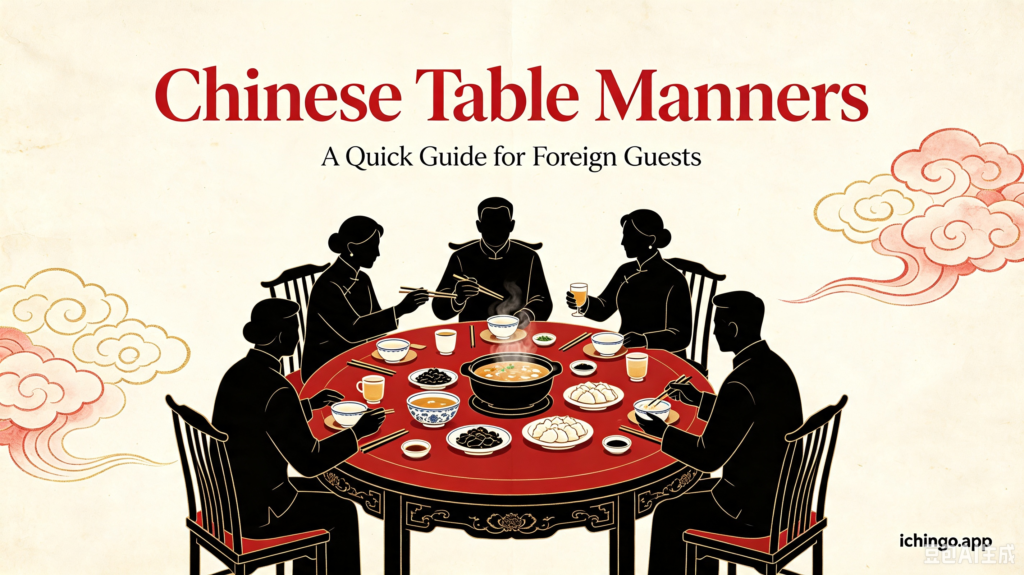
Sharing a meal in China is one of the most important social rituals in the culture. Food is not just sustenance — it is an expression of hospitality, respect, and community. Understanding the unwritten rules of the Chinese dining table will help you make a great impression and fully enjoy one of the world’s greatest food cultures.
Before the Meal
Seating Matters
In formal settings, seating is not random. The seat facing the door is the most honourable position, traditionally reserved for the most senior or respected guest. Wait to be directed to a seat rather than choosing your own at a banquet or formal dinner.
The Lazy Susan (Rotating Turntable)
Most Chinese restaurants — especially for group dining — use a large rotating turntable in the centre of the table. All dishes are placed on this and shared by everyone. The host typically rotates dishes toward the guests of honor first. Spin it slowly and always check nobody is currently serving themselves before rotating.
Chopstick Etiquette 🥢
Chopsticks are far more than utensils in China — how you use them communicates your respect for both your host and the culture. Several specific behaviors are considered deeply rude or even offensive.
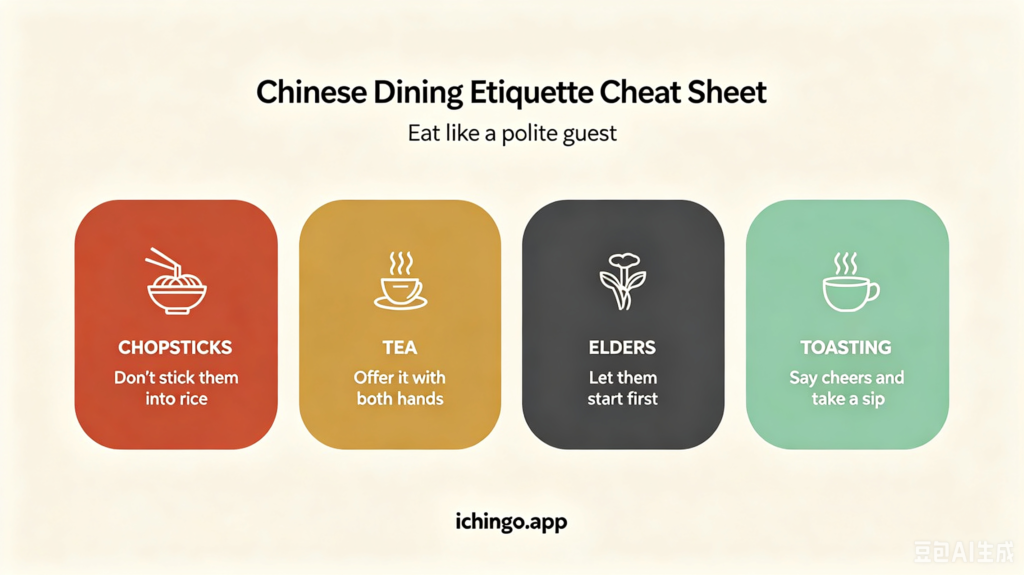
| ⚠️ Watch Out: Never stick chopsticks upright into a bowl of rice. This mimics the incense sticks burned at funerals as offerings for the dead, and is considered extremely bad luck and disrespectful. |
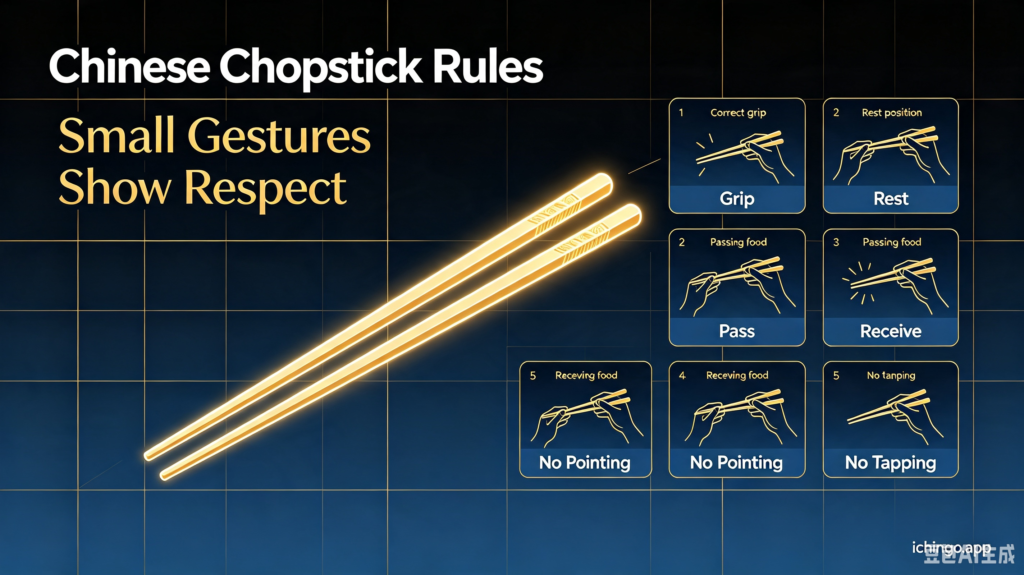
- DO: Rest chopsticks horizontally on the chopstick holder or across your bowl when not using them.
- DO: Use serving chopsticks (公筷, gōng kuài) if provided on the table — these are specifically for taking food from shared dishes.
- DON’T: Point at people with your chopsticks — this is considered impolite.
- DON’T: Spear food with chopsticks like a fork — pick up and grip.
- DON’T: Pass food directly from your chopsticks to another person’s chopsticks — this mirrors a funeral ritual and should be avoided.
- DON’T: Wave chopsticks around while talking or deciding what to eat.
Tea Culture at the Table 🍵
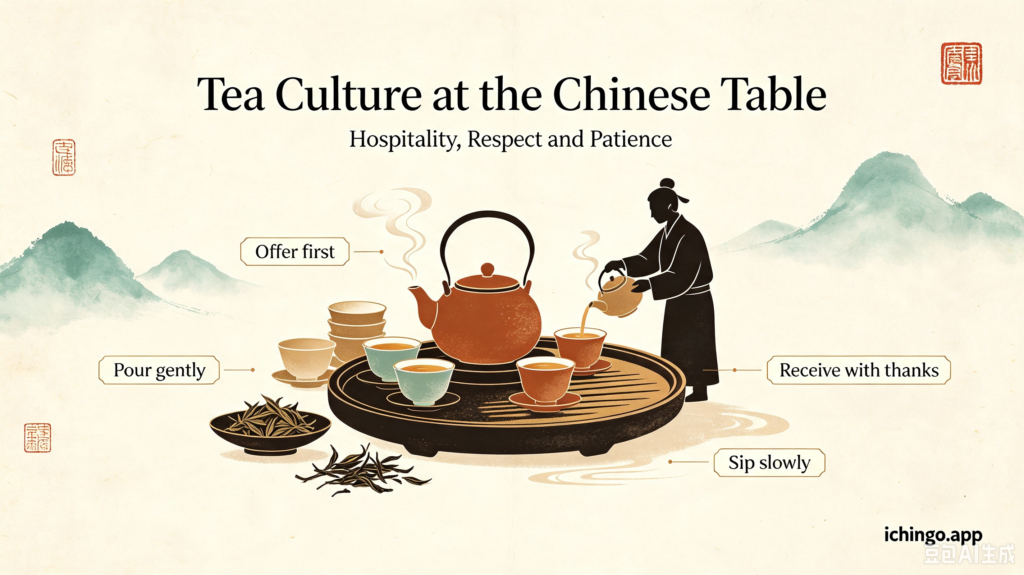
Tea is the lifeblood of Chinese dining. It is almost always served, often before food arrives, and is continuously refilled throughout the meal. There is a beautiful, subtle etiquette surrounding it that most foreigners have never seen.
The Two-Finger Thank You
When someone pours tea into your cup, you lightly tap two fingers on the table as a silent gesture of thanks. This custom dates back to the Qing Dynasty, when Emperor Qianlong would travel in disguise and pour tea for his servants. Not wanting to reveal his identity by bowing, his companions would tap two bent fingers on the table to secretly mimic a bow — symbolising ‘thank you, Your Majesty.’ The gesture survives today as a common and charming part of Chinese dining culture.
| 💡 Tip: Try the two-finger tap the next time someone pours you tea in China. Locals will be pleasantly surprised and impressed that you know this custom. |
Pouring Tea for Others First
It is proper etiquette to pour tea for everyone else at the table before filling your own cup. This gesture of placing others first reflects the Confucian values of respect and care for elders and guests that underpin Chinese social culture.
Paying the Bill 💰
The bill is one of the most culturally loaded moments at a Chinese meal. Unlike in Western countries where splitting the bill is common and even expected, in China it is traditional for one person — usually the host or the most senior person at the table — to pay for everyone.
- Expect a loud, energetic ‘fight’ over the bill — this is completely normal and is a sign of warmth and generosity, not conflict.
- Offer to pay yourself — even if you fully expect the host to insist on paying. Making the gesture is important for maintaining ‘face’ (面子, miànzi).
- Splitting the bill (AA制, AA zhì) is increasingly common among friends of the same generation in cities, but is generally not appropriate in a business or formal host-guest situation.
| ⚠️ Watch Out: Never simply sit and wait for someone else to pay without offering. Even if your offer is immediately refused, the act of offering is an important social signal of your good character. |
Making Noise is Fine 🍜
Slurping noodles and soup is perfectly acceptable in China, and in some contexts is actually a compliment to the chef — signalling that the food is so good you can’t slow down. Don’t feel the need to eat in silence or suppress natural sounds of enjoyment. A loud, lively table is a happy table in Chinese dining culture.
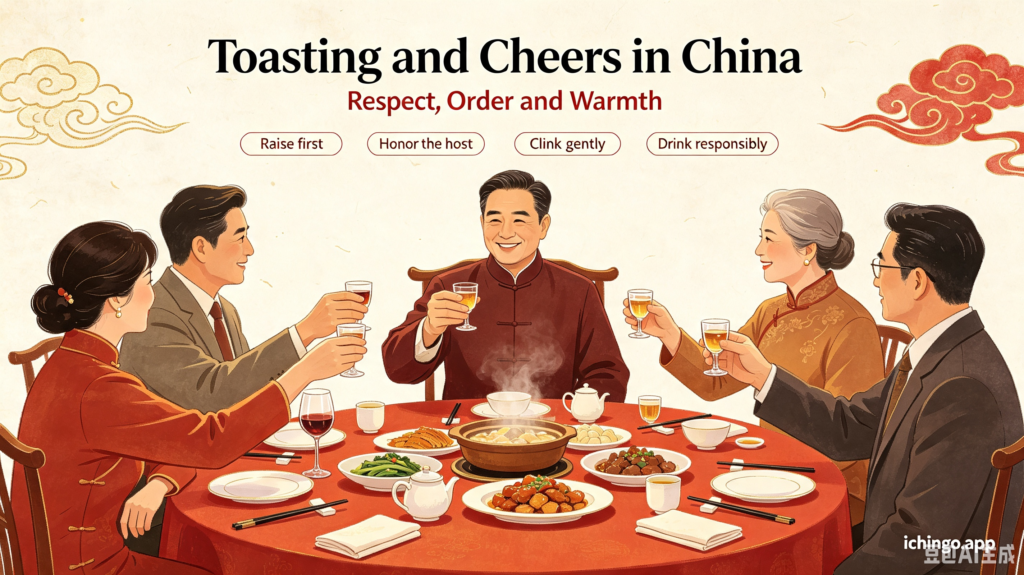
Toasting: Gān Bēi! 🥂
Toasting (干杯, gān bēi — literally ‘dry cup’) is an important part of formal and business dinners in China. When someone raises their glass for a toast, it is polite to hold your glass slightly lower than that of the most senior person as a sign of respect. The traditional expectation is to drain the glass completely — though in modern settings, sipping is increasingly accepted.
- If you don’t drink alcohol, it’s perfectly acceptable to toast with tea or a soft drink.
- You can initiate a toast yourself — raise your glass, make eye contact, and say ‘干杯!’ (gān bēi!).
Quick Reference: Do’s and Don’ts at the Table
| ✅ DO | ❌ DON’T |
| Wait for the host to sit and invite eating first | Start eating before the host signals to begin |
| Try every dish — refusal can seem rude | Stick exclusively to ‘safe’ Western-style dishes |
| Accept food placed in your bowl by the host — it’s affectionate | Insist on serving yourself only |
| Use the serving chopsticks (公筷) if provided | Use your personal chopsticks to serve others from shared dishes |
| Tap two fingers on the table to say thank you when tea is poured | Ignore when someone pours you tea |
| Let the host pay — it’s a sign of respect and generosity | Immediately split the bill Western-style |
| Offer to pay loudly — even if the host insists, it’s proper etiquette | Simply sit and wait for someone else to pay |
| Hold your bowl up to eat rice | Leave rice in the bowl — finish it to show appreciation |
| Compliment the food — ‘好吃!(Hǎo chī!)’ means ‘Delicious!’ | Complain about flavors, spice, or ingredients |
| Make some noise — slurping noodles is perfectly normal | Assume silence at the table is expected |
Useful Phrases for the Dining Table
| English | Chinese | Pronunciation |
| Delicious! | 好吃! | Hǎo chī! |
| Thank you (for the tea) | 谢谢 | Xiè xiè |
| Cheers! / Bottoms up! | 干杯! | Gān bēi! |
| Please help yourself | 请用 | Qǐng yòng |
| I’m full, thank you | 我吃饱了,谢谢 | Wǒ chī bǎo le, xiè xiè |
| This is very tasty | 这很好吃 | Zhè hěn hǎo chī |
| May I have the bill? | 买单 | Mǎi dān |
| Let me pay! | 我来付! | Wǒ lái fù! |
Final Tips from ichingo.app
Understanding Chinese culture goes a long way in making your trip more meaningful, respectful, and enjoyable. Most locals are incredibly warm and forgiving of cultural missteps from visitors — but making the effort to understand these customs will earn you genuine appreciation and open doors that would otherwise stay closed.
Here are three simple rules to remember above all else:
1.When in doubt, use red. For colors, gifts, and envelopes — red is always safe, always welcome, always appreciated.
2.Watch your chopsticks. The two rules that matter most: don’t stick them upright in rice, and don’t pass food chopstick-to-chopstick.
3.Offer to pay — always. Even if you know you won’t win the battle. The gesture matters enormously in Chinese social culture.


2 Responses
Hi Its very good.
Hi! Thank you for sharing your thoughts. We are glad it could help.