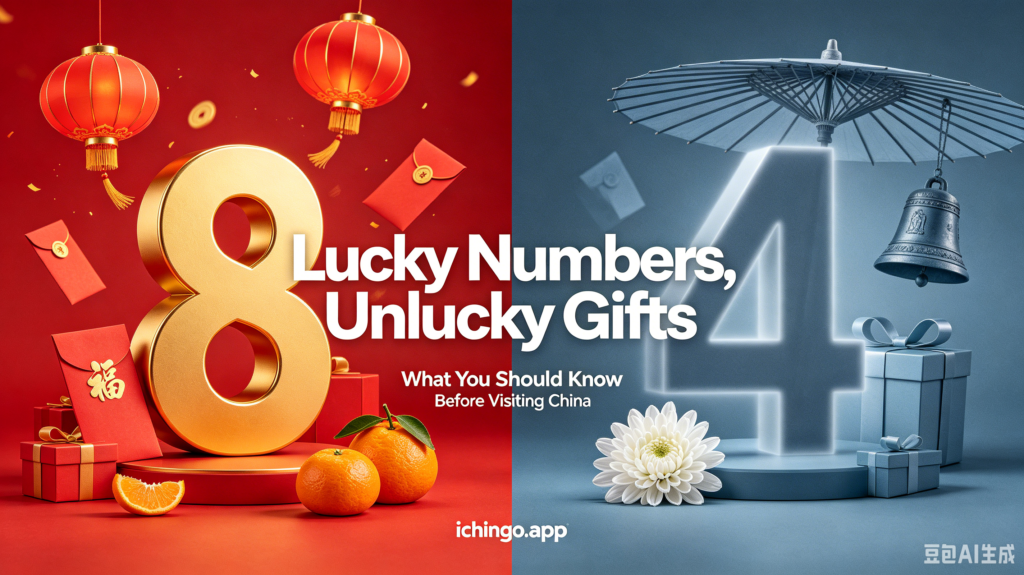
The numbers everyone wants
Chinese number wonderful mostly comes down to sound, not math. Many numbers are lucky or unlucky simply because they sound like another word — a phone number, license plate, or wedding date with the “right” digits is genuinely seen as a small advantage in life
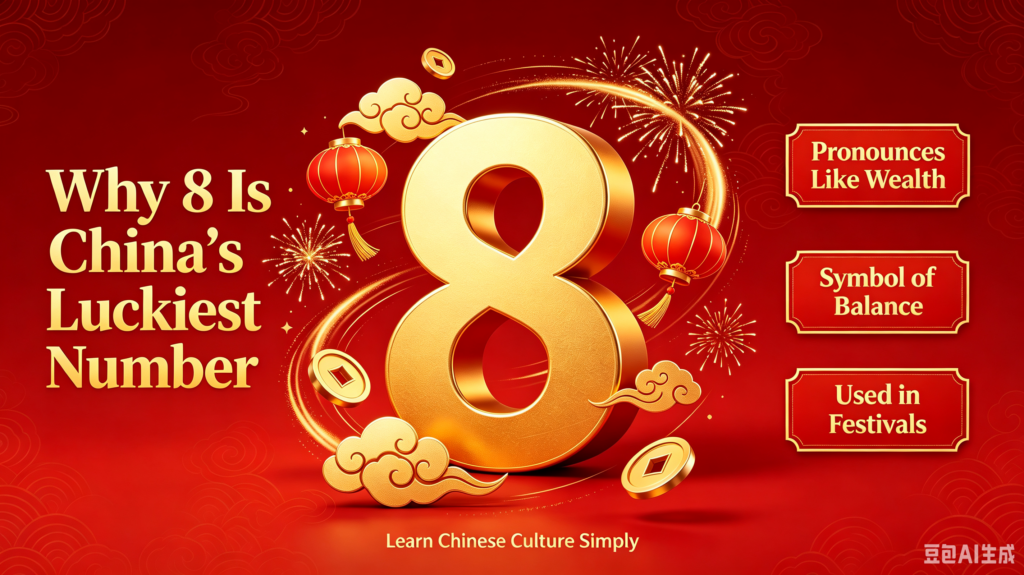
8
WEALTH
MOST LUCKY Sounds almost identical to 发 (fā), “to generate wealth.” The single most desired digit in China — phone numbers and license plates packed with 8s sell at a real premium.
9
LONGEVITY Sounds like 久 (jiǔ), “long-lasting.” The largest single-digit odd number, historically linked to emperors and eternity — still common in gold purity marks like 999.
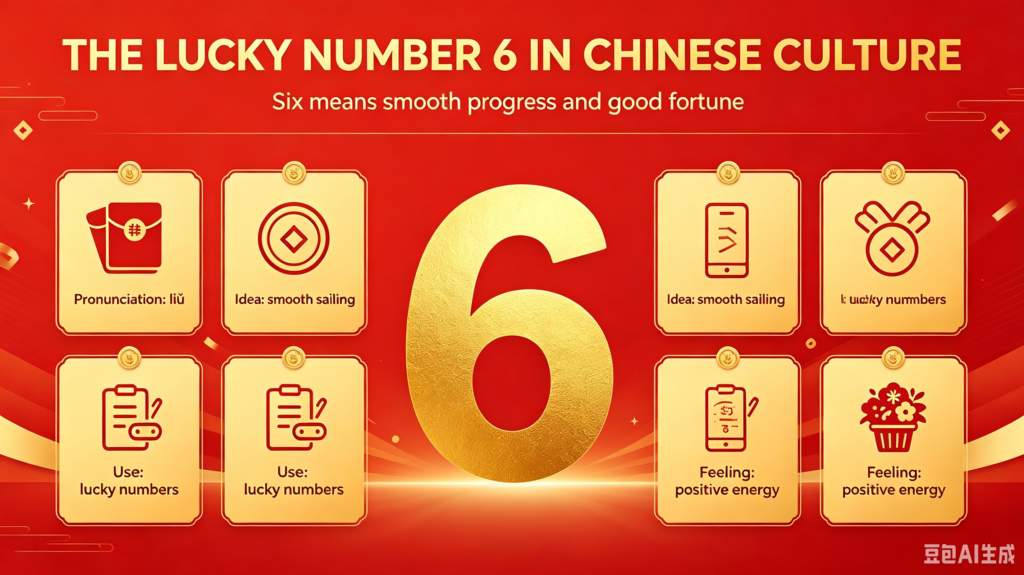
6
SMOOTHNESS Linked to 顺 (shùn), “smooth” or “without obstacles,” as in the popular saying 六六大顺 — “everything goes smoothly.”
2
TOGETHERNESS Even numbers in general are considered more auspicious than odd ones, and 2 specifically reflects the idea that good things come in pairs.
Numbers that combine into phrases Combinations carry their own meaning beyond the individual digits: 520 and 521 sound like “I love you,” 1314 sounds like “forever,” and 168 sounds like “a smooth road to wealth.” You’ll see these constantly in marketing, gifts, and red envelope amounts.
The number everyone avoids
4
SOUNDS LIKE “DEATH”
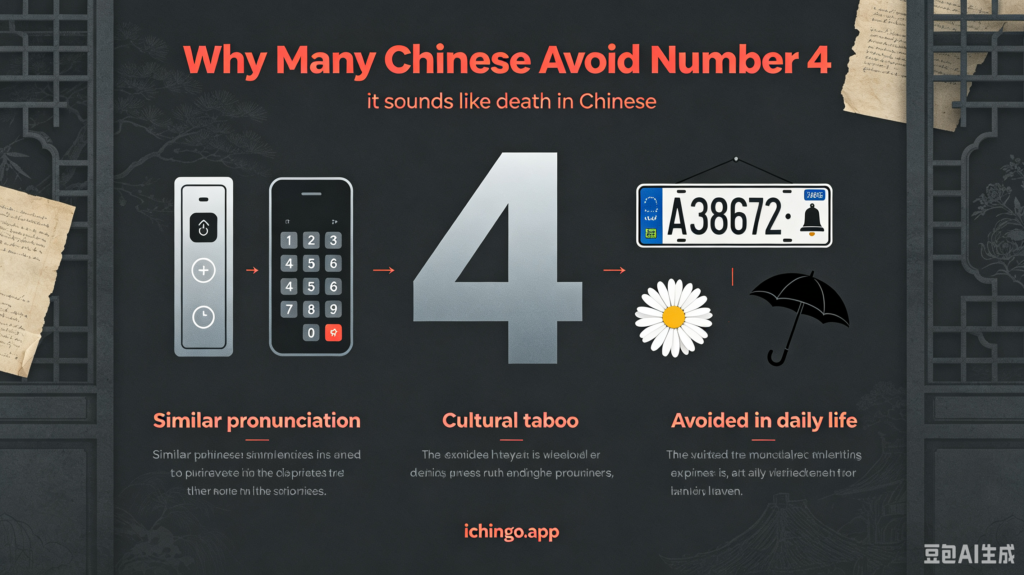
MOST AVOIDED 四 (sì) sounds close to 死 (sǐ), “death.” It’s avoided in phone numbers, car plates, gift quantities, and floor numbers — many buildings skip straight from 3 to 5, or relabel the 4th floor as “3A.
7
ASSOCIATED WITH THE DEAD Linked to ghosts and funerals — the 7th lunar month is the “Ghost Month,” and gifts are traditionally never given in sets of seven.
An interesting wrinkle: 666 means something different to foreigners In China, “666” online is actually a compliment, roughly meaning “smooth,” “skilled,” or “awesome” — the opposite of its association with evil numerology in the West. Don’t be confused if you see it everywhere in livestream chat comments.
Gifts to think twice about
Most of these taboos come from the same place as the unlucky numbers — a gift’s name sounds like something bad, even if the object itself is perfectly nice.
Clocks & Watches
SOUNDS LIKE A FUNERAL送钟 (“giving a clock”) sounds identical to 送终, the phrase for attending someone’s final moments. Considered the single biggest gift taboo, especially for older relatives.
Pears
SOUNDS LIKE “LEAVING”梨 (lí, pear) sounds like 离 (lí), “to part” or “leave.” Avoid giving pears to couples or close friends in particular.
Umbrellas
SOUNDS LIKE “SCATTER”伞 (sǎn) sounds like 散 (sàn), meaning to scatter or break up — an odd thing to symbolically give a friendship or relationship.
Shoes
SOUNDS LIKE “EVIL”鞋 (xié) sounds like 邪 (xié), “evil” or “inauspicious.” Also seen as suggesting the other person will “walk away” from you.
Other common ones worth knowing Sharp objects like knives or scissors imply “cutting off” a relationship. Mirrors are linked to bad luck and breakage. Handkerchiefs are associated with funeral farewells. And wallets, oddly, are seen as risky to give — it’s said to symbolically hand over your “money luck” along with the object.
None of this needs to change your plans Most younger, urban Chinese treat these as fun cultural quirks rather than firm rules — picking a lucky moving date or skipping a clock as a gift is more like avoiding walking under a ladder than a genuine fear. Knowing the basics just helps you understand the jokes, the décor, and the odd missing 4th floor button in the elevator.


