Did China Never Have Salads?
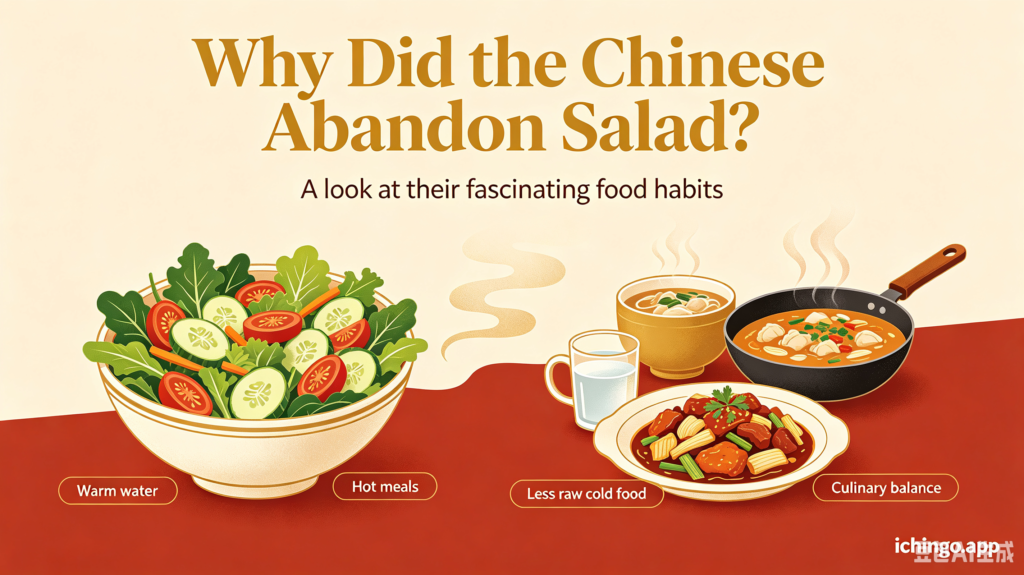
This is one of the most interesting questions in Chinese food history. The direct answer is: traditional Chinese cuisine has no equivalent to the Western raw-leaf salad — but it absolutely has its own cold dishes, and they’re delicious.
1A. What Chinese Food Has Instead of Salads
Rather than raw leaves dressed with oil and vinegar, Chinese cold dishes follow a different logic entirely:
| Chinese Cold Dish | Description |
| 凉拌黄瓜 (Smashed Cucumber) | One of the most popular cold dishes in China. Cucumber is smashed (not sliced), salted to draw out water, then dressed with garlic, chilli oil, vinegar, and sesame. Technically raw — cucumber is one of the few vegetables eaten uncooked — but heavily dressed and often left to marinate. This is about as close as traditional Chinese food gets to a salad. |
| 凉拌木耳 (Black Fungus Salad) | Wood ear mushrooms (black fungus) are blanched in boiling water, then dressed cold with vinegar, soy, chilli and garlic. Often served as a starter. Popular nationwide. |
| 凉拌豆腐 (Cold Tofu) | Silken tofu served cold, topped with spring onion, soy sauce, sesame oil, and sometimes preserved egg. No cooking involved — tofu is already processed. A refreshing summer dish. |
| 凉拌菠菜 (Spinach Salad) | Spinach blanched briefly in boiling water, squeezed dry, then dressed with sesame paste, garlic, and vinegar. The blanching is always done — raw spinach is never served. |
| 口水鸡 (Saliva Chicken) | Cold poached chicken (cooked thoroughly, then chilled) dressed with a complex Sichuan sauce of chilli oil, numbing peppercorn, sesame, garlic, and vinegar. Intensely flavoured cold dish. |
| 凉皮 (Cold Skin Noodles) | Cold wheat or rice noodles dressed with chilli oil, vinegar, garlic, cucumber strips, and bean sprouts. Hugely popular street food in Xi’an and Shaanxi province. |
| Did You Know: If you want to try the most popular cold dish in China, order 凉拌黄瓜 (liáng bàn huángguā) — Smashed Cucumber. It’s on virtually every menu across the country, costs ¥5–¥15, and perfectly demonstrates how Chinese cuisine approaches the concept of a ‘cold dish.’ |
1B. Western Salads in China Today
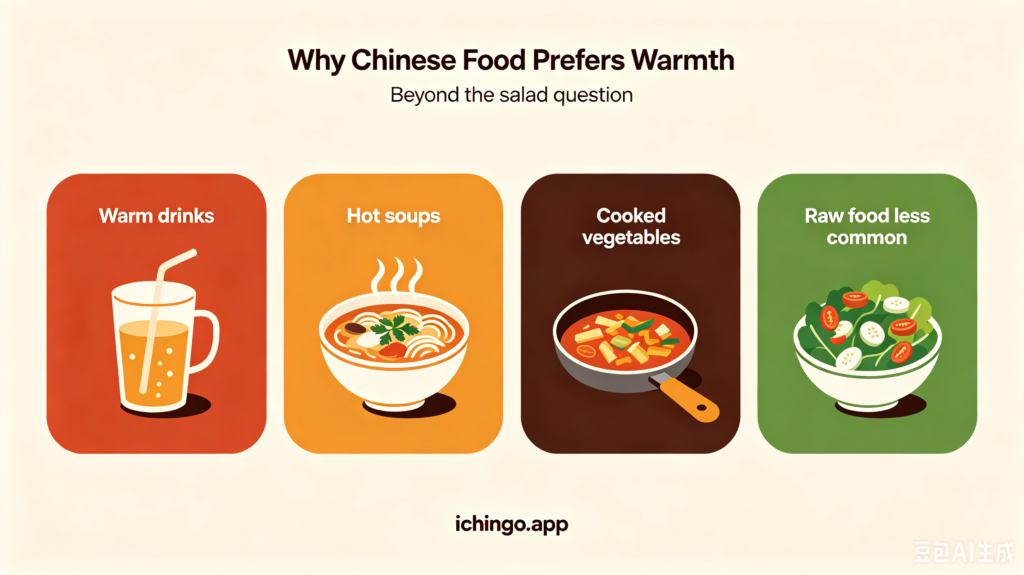
Modern China — particularly its major cities — has changed dramatically. In Shanghai, Beijing, Guangzhou, Shenzhen, and Chengdu, you will now find:
- Western-style salad restaurants — often with quinoa, rocket, avocado, and vinaigrette. Hugely popular with young urban professionals.
- Smoothie and juice bars with raw fruit, cold-pressed juices, and açaí bowls.
- Sushi and Japanese food which includes raw fish — sashimi is now extremely popular in Chinese cities.
- Raw oyster bars — especially in coastal cities like Shanghai and Qingdao.
- Western fast food — KFC, McDonald’s, Subway all serve raw lettuce and cold salads without modification for the Chinese market.
The generational divide is stark: older Chinese people (over 50) largely maintain the traditional view that raw food is unhealthy or inappropriate. Young urban Chinese (under 35) eat salads, smoothies, and raw foods regularly — and consider it fashionable.
China’s Rich World of Pickled & Preserved Foods
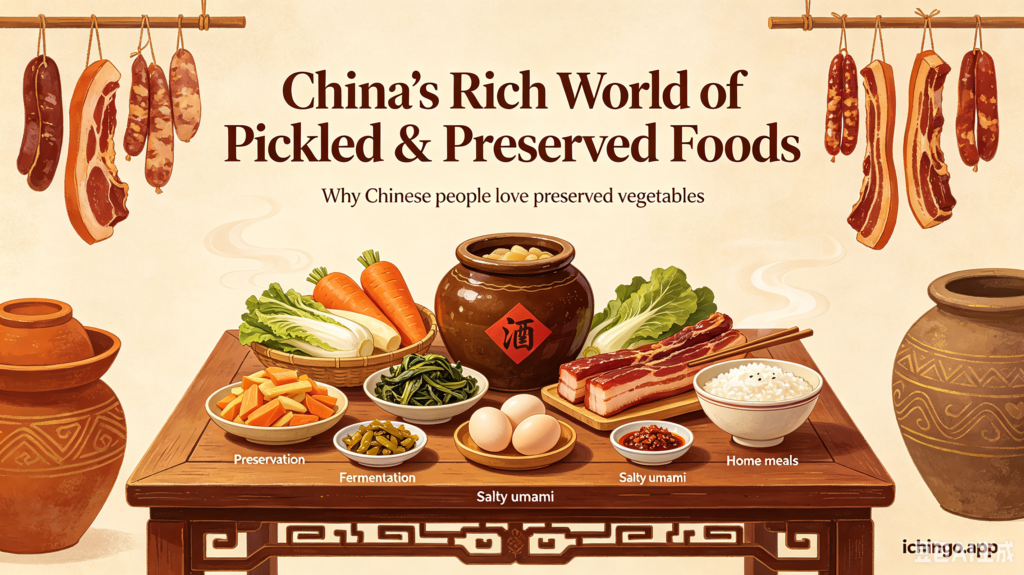
Here’s where a major misconception gets corrected: the idea that China didn’t eat preserved or fermented vegetables. In reality, China has one of the world’s oldest and most diverse traditions of food preservation — stretching back over 3,000 years.
The Chinese didn’t eat raw vegetables — but they absolutely ate transformed vegetables: fermented, brined, dried, pickled, and preserved in dozens of ways. This was not just a culinary choice — it was a survival strategy that allowed vegetables to be stored through winter and transported across vast distances before refrigeration existed.
2A. The Major Categories of Chinese Preserved Foods
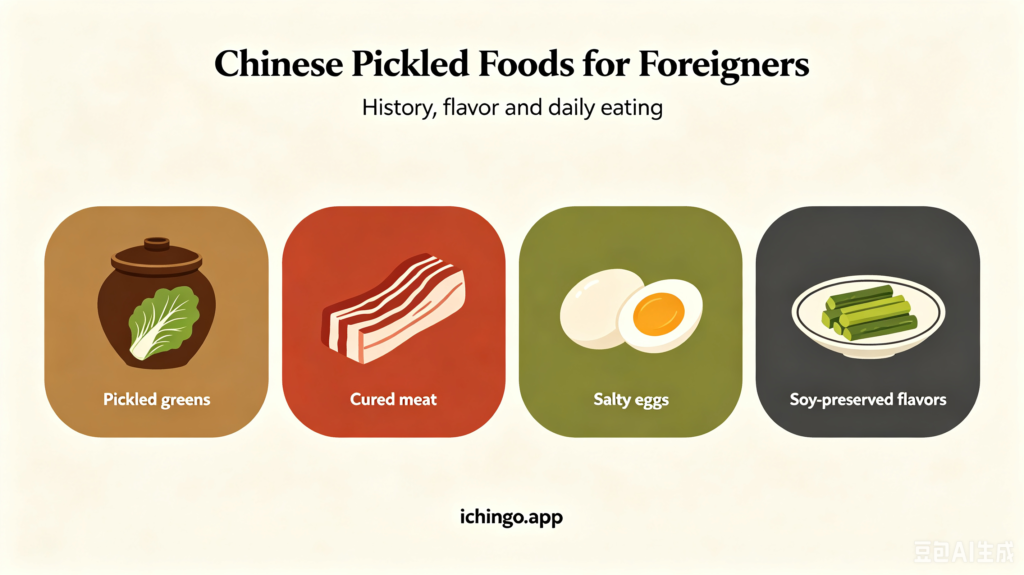
| Type | Chinese Name | How It’s Made & Famous Examples |
| Salty Pickles | 咸菜 (Xiáncài) | Vegetables preserved in salt brine. The most basic form of preservation. Every region has its own version. Served as a side dish with congee (rice porridge) or steamed rice. e.g. 榨菜 (Zha Cai, Sichuan pickled mustard stem) — now exported worldwide. |
| Fermented Pickles | 泡菜 (Pàocài) | Vegetables fermented in seasoned brine (not the same as Korean kimchi, though the name is similar). Sour, tangy, crunchy. Sichuan paocai is famous — quick-fermented in 1–3 days. A staple at every Sichuan restaurant. |
| Preserved Mustard | 梅干菜 (Méigāncài) | Sun-dried and salted mustard greens from Zhejiang province. Intensely savoury, used in braised pork dishes and steamed buns. Central to Zhejiang cuisine. |
| Fermented Bean Curd | 腐乳 (Fǔrǔ) | Tofu fermented in wine, salt, and spices until it becomes soft, pungent, and deeply umami. Called ‘Chinese cheese’ by foreigners. Eaten as a condiment with congee. Available in red (南乳) and white (白腐乳) varieties. |
| Preserved Eggs | 皮蛋 (Pídàn) | Duck eggs preserved in alkaline clay, ash, salt and lime for weeks to months. The egg white turns dark translucent brown/black; the yolk turns creamy green-grey. Intensely savoury. Often served cold as a starter. |
| Dried Vegetables | 干菜 (Gāncài) | Sun-dried vegetables that can be stored for months or years. e.g. 干木耳 (dried black fungus), 干百合 (dried lily bulb), 干笋 (dried bamboo shoots). Rehydrated before cooking. |
| Fermented Black Beans | 豆豉 (Dòuchǐ) | Soybeans fermented until dark, soft, and intensely savoury. One of China’s oldest condiments — documented over 2,000 years ago. Used in stir-fries and sauces as an umami bomb. |
| Vinegar-pickled | 醋泡菜 (Cùpàocài) | Vegetables (often ginger, garlic, radish) preserved in Chinese rice vinegar. Light, refreshing, less sour than Western pickles. Commonly served as a palate cleanser. |
| Lap Yuk / Cured Meats | 腊肉 (Làròu) | Pork belly cured with salt, soy sauce, sugar, and spices, then hung to air-dry. A specialty of Sichuan, Hunan, and Guangdong. Has a distinct smoke-and-salt flavour. Eaten year-round, especially at Lunar New Year. |
| Soy-fermented Sauces | 酱 (Jiàng) | The entire family of Chinese fermented sauces: soy sauce (酱油), bean paste (豆瓣酱), hoisin (海鲜酱), sweet bean sauce (甜面酱). These are the backbone of Chinese flavour — all products of long fermentation. |
| Historical Note: The oldest written record of Chinese pickling dates to the Zhou Dynasty (1046–256 BC) — over 3,000 years ago. The ‘Rites of Zhou’ (周礼) documents preserved foods as part of ritual feasting. China didn’t lack preserved vegetables — it had so many varieties that entire culinary traditions were built around them. |
2B. Regional Pickle Specialties Worth Trying
Every province in China has its own pickle tradition. Here are the ones visitors are most likely to encounter:
| Region/Dish | Chinese | What to Expect |
| Sichuan Paocai | 四川泡菜 | Quick-fermented in spiced brine. Crunchy, tangy, mildly spicy. Served free as a starter at Sichuan restaurants. Addictively good. |
| Zha Cai (Sichuan) | 榨菜 | Pickled and pressed mustard stem. Salty, crunchy, slightly spicy. Sold in vacuum packets worldwide (Fuling brand). Great with rice porridge. |
| Suancai (Northeast) | 酸菜 | Northern Chinese fermented cabbage — similar to sauerkraut but made with Chinese leaf cabbage. Used in 酸菜鱼 (sour cabbage fish soup) and 酸菜白肉 (sour cabbage with pork). |
| Dongbei Pickled Garlic | 腌大蒜 | Garlic cloves pickled in vinegar and sugar in Northeast China. Mild, slightly sweet, purple-pink colour. Eaten alongside dumplings. |
| Preserved Egg (nationwide) | 皮蛋 | The famous ‘century egg’ — jet black egg white, grey-green yolk, intensely umami. Try it at least once. Pairs brilliantly with ginger and vinegar. |
| Hunan Duo Jiao | 剁椒 | Finely chopped fresh chillies fermented in salt. Bright red, fiery, tangy. The key ingredient in 剁椒鱼头 (steamed fish head with chopped chilli) — a Hunan classic. |
| Cantonese Preserved Veg | 梅菜 | Sun-dried preserved mustard from Guangdong. Slightly sweet, deeply savoury. Classic with 梅菜扣肉 (pork belly with preserved vegetables). |
| ✅ Good to Know: Most Chinese pickles and preserved vegetables are served free as starters at restaurants, or sold in small dishes for ¥3–¥8. They’re one of the most accessible and authentic food experiences you can have in China — and they’re genuinely delicious. |
Modern China: How Food Culture Is Changing
China’s relationship with raw food is changing fast — especially among younger, urban, educated Chinese. Understanding this shift helps explain some of the contradictions visitors notice: an older Chinese colleague who is horrified by your cold sandwich, and a 25-year-old in Shanghai who orders a kale smoothie for breakfast.
3A. The Generational Divide
| Topic | Traditional / Older Generation | Young Urban Chinese |
| Cold water | Must be boiled. Cold water harms the stomach. | Ice water, cold sparkling water — totally normal. |
| Raw salad | Not proper food. Raw vegetables are unhealthy. | Salad restaurants are trendy and fashionable. |
| Sushi / raw fish | Suspicious or unacceptable. | Extremely popular. Sushi is one of the fastest-growing restaurant categories in China. |
| Smoothies & juice | Cold drinks damage digestive qi. | Trendy health food. Juice bars everywhere in cities. |
| Western fast food | Foreign, unfamiliar. Avoided by many. | Part of daily life. China has 6,000+ KFC outlets alone. |
| Hot water | Always. Hot water is healthy and safe. | Hot water still widely consumed, but not exclusively. |
3B. Three Things That Will Surprise You About Chinese Food Culture
1.Leftovers are NOT thrown away. Chinese culture considers wasting food deeply disrespectful. Restaurants will pack up remaining dishes without being asked. At home, every meal is planned to have no waste.
2.Soup is not a starter — it’s often drunk throughout the meal or at the end. Clear soups (like 蛋花汤, egg drop soup) are considered digestive aids and are sipped alongside other dishes.
3.Tea is the default beverage at meals — not alcohol, not soda. Hot tea aids digestion (under TCM principles) and is served free in almost every restaurant. Learning to appreciate Chinese tea is one of the great pleasures of visiting China.
Final Thoughts
Chinese cooking culture is not about a fear of food or a lack of culinary imagination — it’s the product of one of the world’s most sophisticated food traditions, shaped by thousands of years of practical wisdom, medical philosophy, and cultural values.
For more China culture guides, food tips, travel apps, and practical advice for exploring China, visit ichingo.app — your complete toolkit for traveling China with confidence.


