推拿 · 足疗 · 针灸 · 拔罐 · 刮痧 · 经络按摩 · 盲人按摩
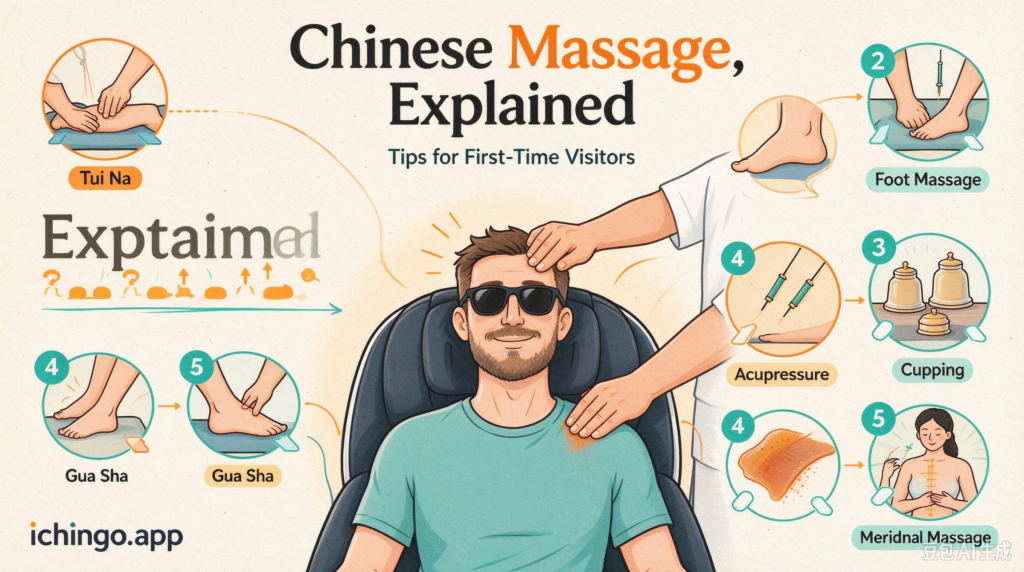
China has one of the world’s oldest and most sophisticated massage traditions — spanning over 4,000 years of history. From vigorous deep-tissue Tuina to meditative foot reflexology to the dramatic-looking cupping therapy, Chinese massage is a world most foreign visitors never fully explore. This guide tells you everything you need to know
Introduction — China’s 4,000-Year Massage Tradition
Chinese massage is not a modern wellness trend — it is a medical and therapeutic tradition with roots stretching back over four millennia, developed as an integral part of Traditional Chinese Medicine (TCM). Unlike Western massage, which primarily focuses on muscular relaxation, Chinese massage traditions are built on the concept of 气 (Qì — life energy) flowing through 经络 (jīnglù — meridians) throughout the body. When this flow is blocked, illness and pain occur; massage restores the flow.
For foreign visitors, China’s massage scene offers something for every need and budget — from world-class foot massage parlors on every city block to ancient therapeutic practices available in TCM hospitals. Understanding the different types available, what to expect, and how to navigate the experience will help you get the most from one of China’s great everyday luxuries.
| 📱 ichingo.app Connection: Finding, booking, and navigating massage services in China:Dianping (大众点评) — China’s most trusted review platform for finding nearby massage and wellness services. Search ‘按摩’ (massage) or ‘足疗’ (foot massage) plus your location for thousands of real user reviews, photos, and price information. The most reliable way to find quality services. Full guide on ichingo.app.Meituan (美团) — Book massage appointments and purchase discounted treatment packages online. Many massage shops offer significant discounts through Meituan vouchers — often 30–50% off the walk-in price. Full guide on ichingo.app.Baidu Maps (百度地图) — Search for any massage type in Chinese and navigate to the nearest quality provider. Use with Yandex Translate to camera-translate Chinese signs, menus, and treatment lists when you arrive. Full guide on ichingo.app.Yandex Translate — Camera-translate service menus, treatment descriptions, and price lists at massage shops. Essential for understanding exactly what you’re booking, especially for more specialised treatments. Full guide on ichingo.app. |
Part 1 — The Main Types of Chinese Massage
👐 Tuina 推拿 Tuīná
Intensity: Medium–Strong Typical Duration: 60–90 minutes Price Range: ¥80–200/hrChina’s foundational therapeutic massage — the basis of all Chinese bodywork traditions.
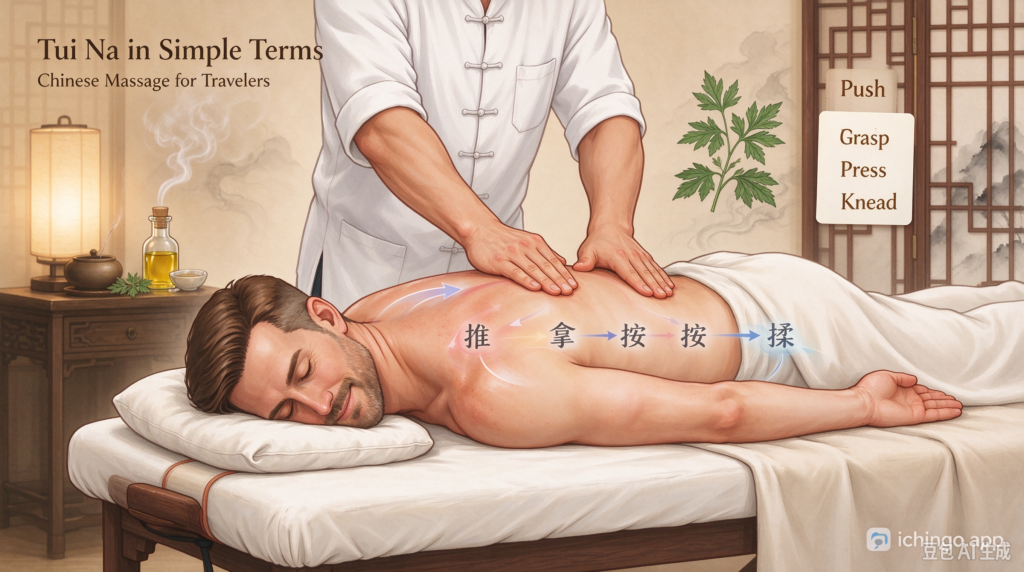
Tuina (推拿, literally ‘push and grasp’) is the most fundamental form of Chinese therapeutic massage and the one most deeply rooted in Traditional Chinese Medicine. Unlike Western massage which works primarily on muscles, Tuina works on specific acupressure points and meridians throughout the body. Practitioners use a range of techniques including pushing, pressing, kneading, rolling, and vibrating motions applied to targeted areas.
| 📌 Key Facts: Tuina has been practiced in China for over 2,000 years and is taught as a formal medical discipline in Chinese universitiesIt is widely used in TCM hospitals as a therapeutic treatment alongside acupuncture and herbal medicineTuina can target specific health issues including back pain, neck stiffness, joint problems, headaches, and digestive issuesSessions are typically performed fully clothed or with a light sheet coveringIntensity can be customized — inform your practitioner if you prefer lighter pressure |
💡 Visitor Tip: Tuina at a TCM hospital or certified clinic is performed by trained medical professionals and represents genuine therapeutic treatment, not just relaxation. If you have a specific physical complaint, this is the type to seek out.The sensation can be quite different from Western massage — expect more focused pressure on specific points rather than smooth flowing strokes. Some techniques may feel intense but should not cause acute pain.Say ‘轻一点’ (qīng yīdiǎn) if you want lighter pressure, or ‘重一点’ (zhòng yīdiǎn) if you want more pressure.
📱 ichingo.app Connection: Search ‘推拿’ on Dianping to find TCM massage clinics near you. Filter by rating (4.5+ recommended) and look for providers that show certified practitioners in their photos. Use Yandex Translate to camera-read the price menus when you arrive.
🦶 Foot Reflexology 足疗/足底按摩 Zúliáo
Intensity: Light–Medium Typical Duration: 60–90 minutes Price Range: ¥60–150/hrChina’s most accessible and beloved wellness ritual — found on virtually every urban street corner.
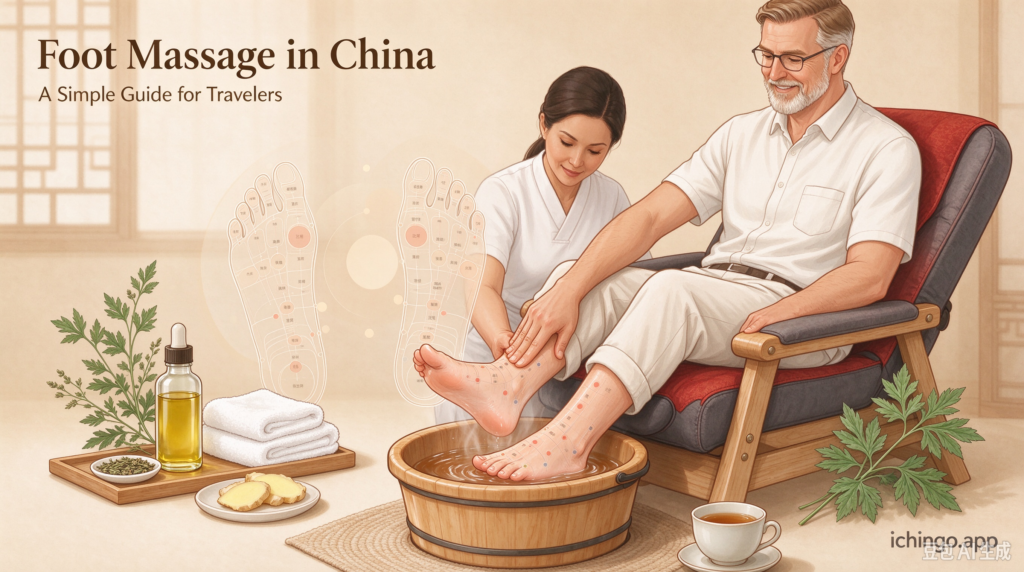
Foot massage (足疗 zúliáo or 足底按摩 zúdǐ ànmó) is by far the most popular and widely available massage service in China, and for good reason — it is deeply relaxing, completely accessible to first-time visitors, typically inexpensive, and based on a sophisticated understanding of how the feet map to the rest of the body. Chinese foot reflexology is based on the principle that every organ and system in the body has a corresponding reflex point on the foot, and that stimulating these points promotes healing throughout the body.
| 📌 Key Facts: Chinese foot massage shops exist on virtually every commercial street in every Chinese city — finding one within a 5-minute walk is almost always possibleA full session typically begins with a warm herbal foot soak (药浴 yàoyù), followed by the massage itselfThe experience often includes additional work on the legs and calves as part of the treatmentCompletely appropriate for first-time visitors — no special preparation needed, just remove socks and shoesMany shops offer additional shoulder and head massage as an optional add-on |
💡 Visitor Tip: Foot massage is the ideal entry point for foreign visitors new to Chinese wellness culture. It’s relaxing, culturally fascinating, and extraordinarily good value — a 90-minute session including foot soak often costs less than a coffee in many Western cities.The herbal foot soak at the beginning typically contains traditional Chinese medicinal herbs — the water will often be reddish-brown or dark from the herbs. This is completely normal and beneficial.If the practitioner hits a particularly sensitive spot, it may indicate a corresponding organ is under stress according to reflexology principles — this is considered diagnostically useful information.
💰 Typical Prices: Basic foot massage (60 min): ¥60–80Premium foot massage with herbal soak (90 min): ¥100–150Foot massage + shoulder/neck add-on (90 min): ¥120–180High-end spa foot treatment: ¥200–400+
📱 ichingo.app Connection: Search ‘足疗’ or ‘足底按摩’ on Dianping for nearby foot massage shops with user reviews and photos. Meituan often has 30–50% discount vouchers for foot massage — check before walking in.
🧘 Full Body Meridian Massage 经络按摩 Jīngluò
Intensity: Light–Medium Typical Duration: 60–90 minutes Price Range: ¥100–250/hrA meditative, whole-body treatment that follows the energy pathways of Traditional Chinese Medicine.
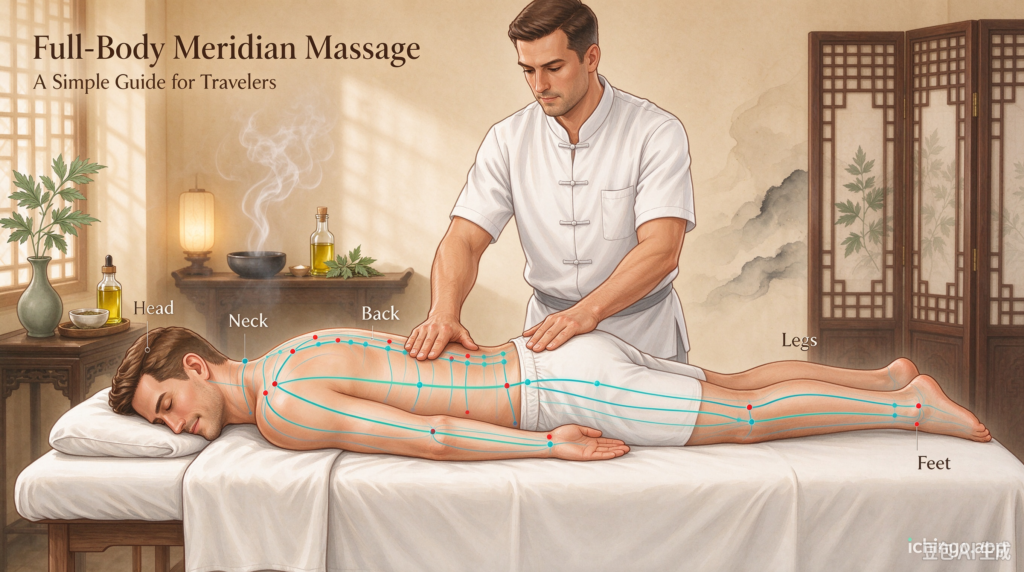
Meridian massage (经络按摩) focuses specifically on the network of energy channels (经络 jīngluò) that Traditional Chinese Medicine identifies as running throughout the body. The practitioner follows these pathways with flowing, sustained pressure to release blockages and encourage the smooth flow of Qi. The experience is typically more meditative and flowing than Tuina, with less targeted intensity on individual points.
| 📌 Key Facts: The meridian system identifies 12 primary channels and 8 extraordinary vessels, each associated with specific organs and body systemsSessions are typically performed on a massage table with light covering, using massage oilThe treatment is designed to be deeply relaxing while simultaneously having therapeutic effectsParticularly beneficial for stress, fatigue, sleep problems, and general wellbeing maintenanceOften combined with elements of aromatherapy using traditional Chinese botanical oils |
| 💡 Visitor Tip: Meridian massage is an excellent choice for visitors who want a more relaxing, flowing experience rather than the intense targeted pressure of Tuina. It is particularly good for stress relief and jet lag recovery.The combination of flowing massage along energy pathways with aromatic oils creates an experience that is genuinely unlike anything available in Western wellness settings. |
💪 Blind Massage 盲人按摩 Mángrén
Intensity: Medium–Strong Typical Duration: 60–90 minutes Price Range: ¥60–120/hrA uniquely Chinese institution — certified blind massage therapists known for their exceptional sensitivity and skill.
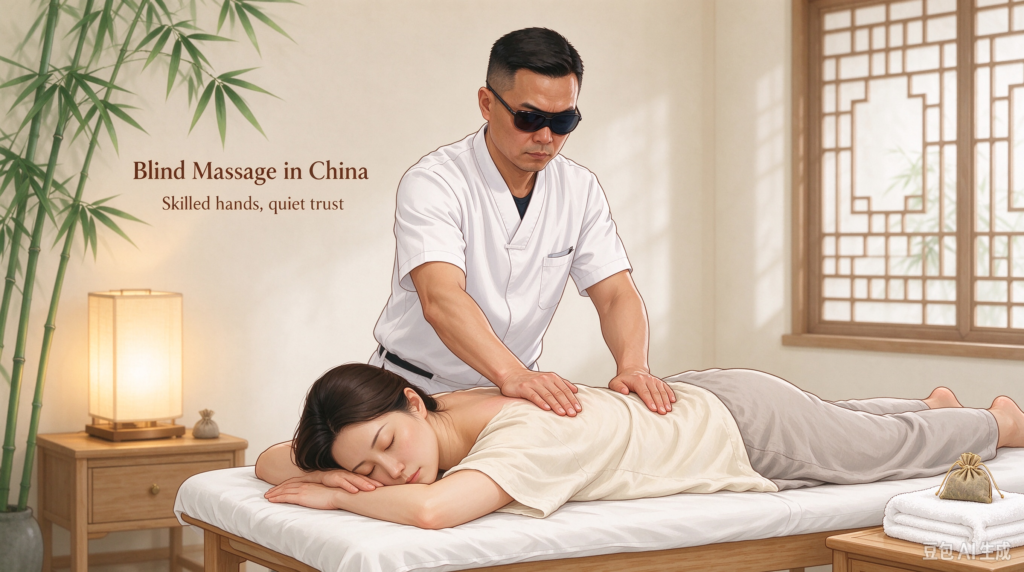
Blind massage (盲人按摩) is one of the most distinctive features of China’s wellness landscape — a government-supported industry that provides professional massage certification specifically to visually impaired practitioners. The tradition is based on the understanding that the absence of sight dramatically enhances tactile sensitivity, and many practitioners develop an exceptionally refined ability to detect tension, blockages, and imbalances through touch alone. These shops — identifiable by their distinctive signage showing a white cane or written ‘盲人按摩’ — are found throughout Chinese cities.
| 📌 Key Facts: Blind massage has official government support in China as both a therapeutic profession and an employment pathway for visually impaired peoplePractitioners receive formal certification through accredited training programsMany regular clients specifically prefer blind massage for the quality of the practitioner’s sensitivity and techniquePrices are typically at the lower to mid-range — the quality is genuine but overheads are lowerSessions cover the full body including back, shoulders, neck, limbs, and often head |
💡 Visitor Tip: Blind massage shops are widely recommended by long-term China residents as offering some of the most therapeutically effective massage available at accessible prices. The practitioners’ heightened tactile sensitivity genuinely produces a different quality of treatment.Look for the distinctive signage: white cane symbol or the characters ‘盲人按摩’ (mángrén ànmó) on the shop front.
Part 2 — Traditional Chinese Medicine Wellness Treatments
Beyond conventional massage, China offers a range of TCM-based wellness treatments that are genuinely unlike anything available in most Western countries. These treatments may look dramatic or unfamiliar, but they have been refined over thousands of years and have a large body of traditional knowledge supporting their use.
🔴 Cupping Therapy 拔罐 Báguàn
Intensity: Light (unique sensation) Typical Duration: 30–60 minutes Price Range: ¥80–200/sessionThe treatment that leaves dramatic circular marks — and has been used in China for over 2,000 years.
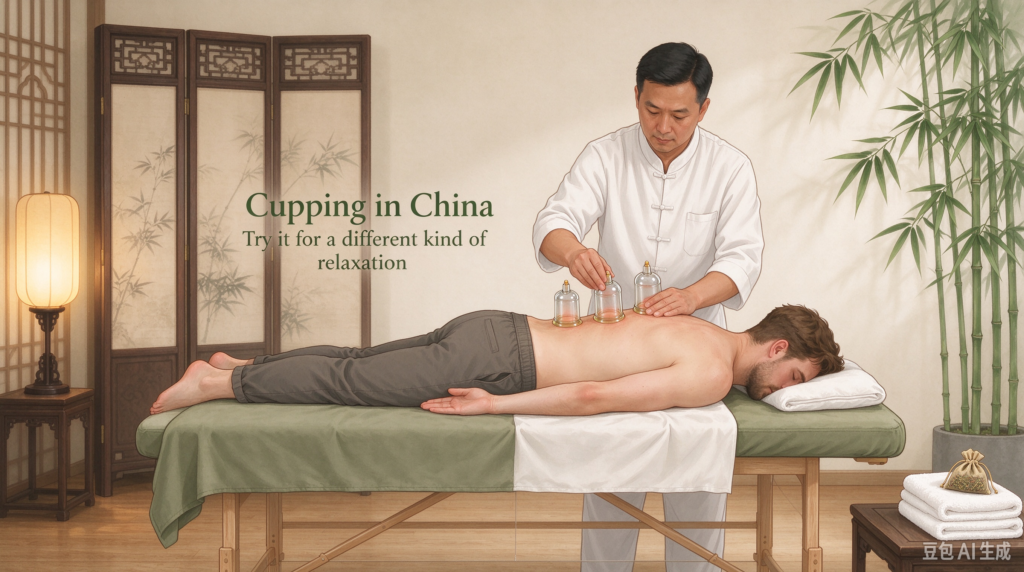
Cupping therapy (拔罐 báguàn) is one of the most visually distinctive TCM treatments — it involves placing heated glass, bamboo, or silicone cups on the skin, which creates a vacuum effect that draws the skin upward into the cup. The suction is believed to stimulate blood flow, release muscle tension, remove toxins, and promote the flow of Qi. The treatment leaves distinctive circular marks on the skin — ranging from light pink to deep red or purple depending on the level of stagnation the practitioner identifies — which typically fade within a few days.
| 📌 Key Facts: Cupping has been used in China, the Middle East, and ancient Egypt for over 2,000 yearsThe circular marks left by cupping are a normal result of the treatment and are not bruises in the conventional sense — they indicate areas of stagnation in the TCM understandingMost marks fade within 3–7 daysModern cupping often uses silicone cups rather than traditional fire-heated glass cupsParticularly popular for back pain, muscle soreness, respiratory issues, and deep relaxationBecame internationally famous when Olympic athletes were photographed with cupping marks |
💡 Visitor Tip: If you try cupping, be aware that the marks will be visible for several days — plan accordingly if you have events where bare skin will be visible.
The sensation during cupping is unusual but not painful — it feels like a strong pulling or suction on the skin. Most people find it deeply relaxing once they adjust to the sensation.Inform the practitioner of any skin conditions, broken skin, or areas to avoid.
⚠️ Important to Know: Cupping is not suitable for people with certain skin conditions, blood disorders, or who are pregnant. Always inform practitioners of any health conditions before treatment.Ensure the shop uses clean, sterilized cups. Reputable TCM clinics and established shops maintain proper hygiene standards.
Gua Sha 刮痧 Guāshā
Intensity: Medium Typical Duration: 30–60 minutes Price Range: ¥60–150/sessionAn ancient scraping technique that looks intense but delivers remarkable relief from muscle tension.
Gua Sha (刮痧, literally ‘scrape away fever/sha’) involves pressing a smooth-edged tool — traditionally made of jade, horn, or ceramic, now often a smooth stone implement — firmly against oiled skin and scraping in long strokes along the meridians or across tense muscles. Like cupping, it produces redness on the skin that can look alarming but is considered in TCM to represent the release of stagnant blood and toxins from the tissues. The redness typically fades within a few days.
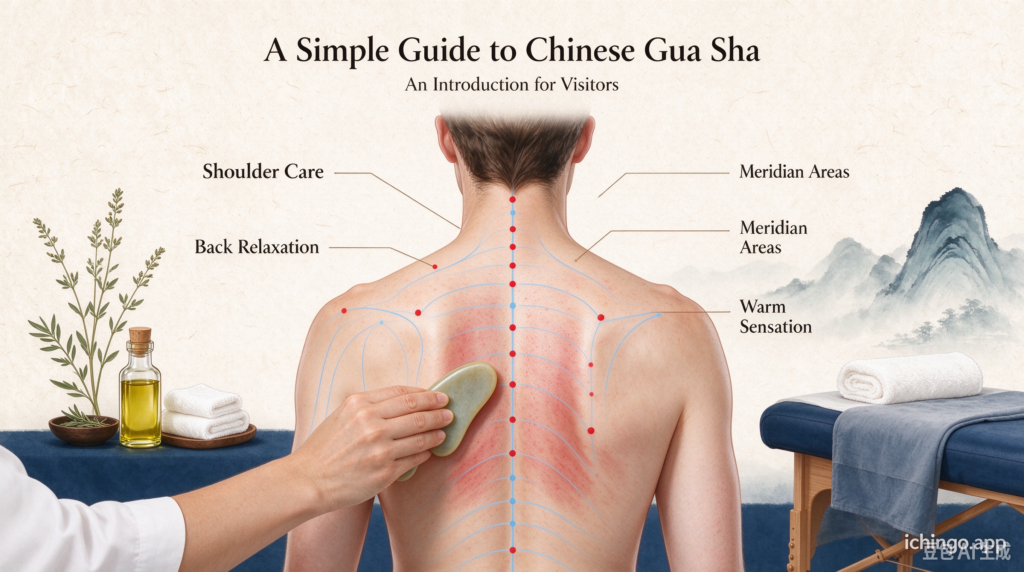
| 📌 Key Facts: Gua Sha has been practiced in China for centuries and remains a common home remedy as well as a professional treatmentThe tool is pressed firmly against the skin with oil and scraped in one direction — the sensation is similar to firm massageThe redness produced (called ‘sha’ 痧) is considered evidence of the release of stagnation in TCMParticularly effective for neck pain, back pain, muscle fatigue, and colds or respiratory issuesRedness typically fades within 2–5 days |
💡 Visitor Tip: Gua Sha has gained significant international attention in recent years through its use in Western facial treatments (a much gentler version). The traditional body Gua Sha is considerably more vigorous and produces different results.The experience is often intensely relaxing despite looking dramatic. Many people who try it become regular devotees for managing chronic muscle tension.
Acupuncture 针灸 Zhēnjiǔ
Intensity: Very Light (needles) Typical Duration: 45–75 minutes Price Range: ¥100–300/sessionChina’s most globally recognized TCM therapy — fine needles placed at specific points to balance the body’s energy.
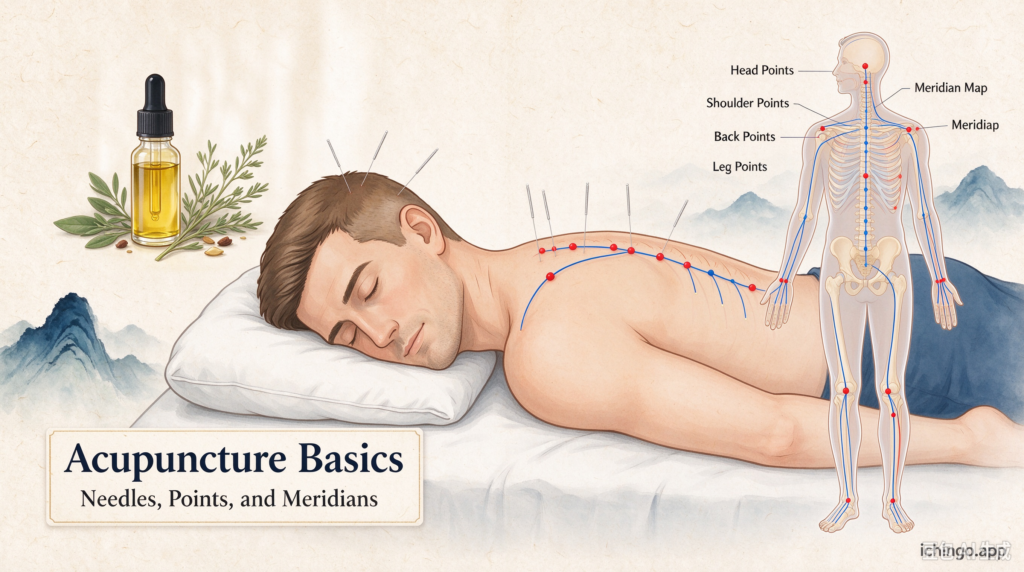
Acupuncture (针灸 zhēnjiǔ) involves the insertion of very fine sterile needles at specific points along the body’s meridians. Despite the appearance, the needles are typically so fine that many people feel little to no sensation during insertion. The treatment is based on the principle that inserting needles at specific points stimulates the flow of Qi and restores balance to the body’s systems. It is one of the most widely recognized and internationally studied TCM treatments, and is available throughout China at both TCM hospitals and standalone clinics.
| 📌 Key Facts: Acupuncture is recognized by the World Health Organization as an effective treatment for numerous conditionsModern acupuncture needles are sterile, single-use, and extremely fine — much thinner than injection needlesThe sensation is often described as a dull ache, tingling, or warmth at the point of insertion — not sharp painA full treatment involves needles being left in place for 20–40 minutes while the patient restsIn China, acupuncture at a TCM hospital is covered by national health insurance for Chinese citizens |
💡 Visitor Tip: If you have specific health concerns — chronic pain, headaches, insomnia, digestive issues, anxiety — a TCM hospital acupuncture session is one of the most valuable health experiences available in China, and at a fraction of the cost of equivalent treatments in Western countries.First-time visitors: tell the practitioner it is your first time (第一次 dì yī cì). Good practitioners will explain what they are doing and adjust the treatment accordingly.
⚠️ Important to Know: Ensure you receive acupuncture from a qualified practitioner using clearly sterile, individually packaged needles. TCM hospitals and certified clinics maintain the highest standards.Not suitable for people with bleeding disorders, pacemakers, or who are pregnant (certain points are contraindicated during pregnancy). Always disclose medical history.
🌿 Moxibustion 艾灸 Àijiǔ
Intensity: Warm (heat therapy) Typical Duration: 30–60 minutes Price Range: ¥60–150/sessionThe ancient art of burning dried mugwort to warm and stimulate acupuncture points — a uniquely sensory experience.
Moxibustion (艾灸 àijiǔ) involves burning dried mugwort (艾草 àicǎo) — either on or above specific acupuncture points or meridians — to warm the area and stimulate the flow of Qi. The burning moxa produces a distinctive, pleasantly earthy smoke and a deep, penetrating warmth that many recipients describe as profoundly relaxing. It is often combined with acupuncture and is particularly used for conditions associated with ‘cold’ in TCM — including joint pain, digestive issues, fatigue, and certain gynaecological conditions.
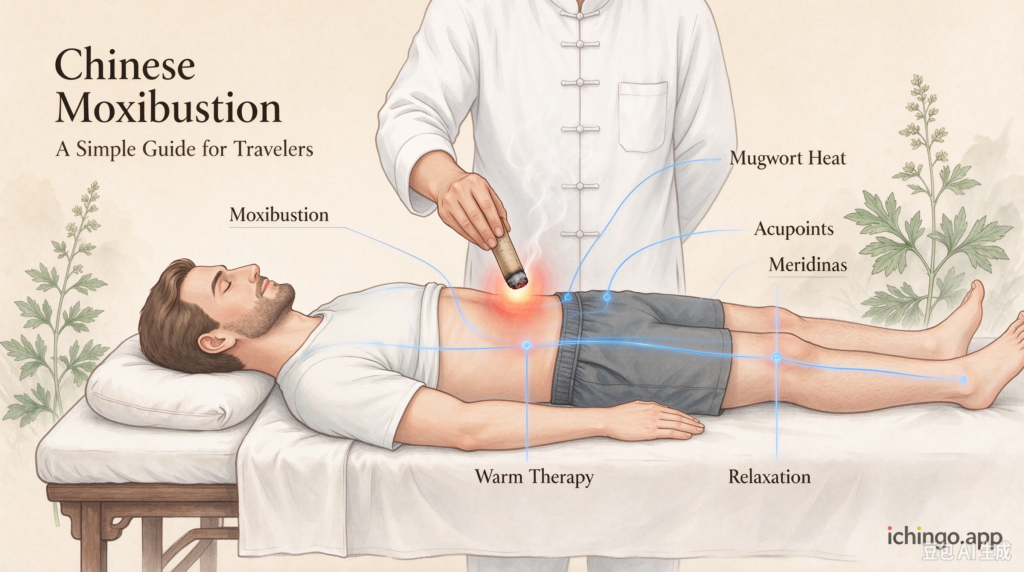
| 📌 Key Facts: Moxibustion has been part of Chinese medical practice for over 3,000 yearsModern moxibustion often uses smokeless moxa sticks or electric moxa devices to reduce smokeThe distinctive smell of burning moxa is earthy and herbal — sometimes compared to cannabis smoke by people who encounter it for the first time (it is unrelated)Particularly valued for warming and energizing effects during cold seasons or for people with cold-type conditions in TCM |
💡 Visitor Tip: The smell of moxa smoke is distinctive and will linger on your clothing. This is completely normal and considered evidence of genuine traditional treatment. If you are sensitive to smoke, ask about smokeless moxa options (无烟艾灸 wúyān àijiǔ).The combination of acupuncture and moxibustion in a single session is one of the most complete traditional TCM wellness experiences available — and in China, costs a small fraction of equivalent treatments in Western countries.
Part 3 — Speciality and Regional Massage Experiences
Hot Stone Massage 热石按摩 Rèshí
Intensity: Light–Medium Typical Duration: 60–90 minutes Price Range: ¥150–350/sessionSmooth heated basalt stones combined with massage technique — particularly popular in upscale Chinese spas.
Hot stone massage combines traditional Chinese massage techniques with smooth volcanic basalt stones heated to specific temperatures. The stones are placed on key meridian points throughout the body and used as massage tools to deliver deep, penetrating warmth to the muscles. In Chinese wellness contexts, this is often combined with meridian massage techniques and essential oils. The experience is deeply relaxing and particularly effective for muscle tension, cold-related discomfort, and stress relief.
| 💡 Visitor Tip: Hot stone massage is particularly popular in Chinese spa hotels and high-end wellness centres. Booking through Meituan or Klook often makes this available at significantly reduced prices.In winter in northern China, hot stone massage is especially popular and considered particularly beneficial for warming the body’s meridians. |
| 👁️ Head, Neck and Shoulder Massage 头肩颈按摩 Tóu jiān jǐngIntensity: Medium Typical Duration: 30–60 minutes Price Range: ¥50–100/sessionThe most targeted and widely available quick-relief treatment — perfect for office workers and travellers. |
🏥 Hospital TCM Massage 医院推拿 Yīyuàn
Intensity: Therapeutic Typical Duration: 45–90 minutes Price Range: ¥80–200/sessionThe most medically rigorous option — qualified TCM doctors at registered hospitals and clinics.
TCM hospitals offer massage and manual therapy services from formally qualified practitioners with medical degrees. TCM hospitals (中医院 zhōngyī yuàn) exist in every Chinese city of any size, and their outpatient departments offer acupuncture, Tuina, cupping, Gua Sha, and moxibustion at prices that are typically comparable to or lower than private wellness centres. The clinical environment provides the highest assurance of practitioner qualification and hygiene standards.
| 💡 Visitor Tip: For anyone with a genuine health complaint — chronic back pain, headaches, insomnia, joint problems — a consultation and treatment at a TCM hospital outpatient department represents extraordinary value. Qualified TCM doctors provide both diagnosis and treatment.Use Baidu Maps to search ‘中医院’ (TCM hospital) near you and navigate there. The outpatient registration process is straightforward — staff at major hospitals in large cities often speak some English. |
| 📱 ichingo.app Connection: Use Baidu Maps to search ‘中医院’ (zhōngyī yuàn) for TCM hospitals nearby. Use Yandex Translate camera function to navigate the registration and payment processes — most are now digital via WeChat or Alipay. Trip.com or Klook can also arrange English-assisted TCM appointments at major hospitals in tourism-heavy cities. Full guides on ichingo.app. |
Part 4 — Practical Guide for Foreign Visitors
How to Find a Good Massage Shop
| Method | How It Works |
| Dianping (大众点评) | Search the massage type in Chinese (足疗/推拿/按摩) plus your location. Filter by rating — 4.5+ stars is a reliable indicator. Look at photos to verify cleanliness and professionalism. Read recent reviews using Yandex Translate. |
| Meituan (美团) | Check for discount vouchers before booking — many massage shops offer 30–50% off through Meituan. Purchase the voucher and show it on your phone when you arrive. |
| Walk-in (街头找店) | Foot massage shops and basic massage services are so common in Chinese cities that walking the commercial streets and choosing a busy, well-lit shop with visible customers is a reliable method. Busy = trustworthy. |
| Hotel concierge | In major tourist cities, hotel concierge staff can recommend nearby quality massage services and may have partnerships with local providers. |
| Klook | For upscale spa experiences or TCM hospital appointments, Klook lists English-friendly wellness services with transparent pricing and instant booking confirmation. |
Essential Chinese Phrases
| Situation | Chinese | Pronunciation |
| I want a foot massage | 我要做足疗 | Wǒ yào zuò zúliáo |
| 60 minutes please | 60分钟 | Liùshí fēnzhōng |
| Please use lighter pressure | 轻一点 | Qīng yīdiǎn |
| Please use more pressure | 重一点 | Zhòng yīdiǎn |
| That hurts | 有点痛 | Yǒudiǎn tòng |
| How much does it cost? | 多少钱? | Duōshǎo qián? |
| Do you have an English menu? | 有英文菜单吗? | Yǒu yīngwén càidān ma? |
| I have a bad back | 我背部不好 | Wǒ bèibù bù hǎo |
| This is my first time | 这是我第一次 | Zhè shì wǒ dì yī cì |
| Can I pay by Alipay/WeChat? | 可以用支付宝/微信付款吗? | Kěyǐ yòng Zhīfùbǎo/Wēixìn fùkuǎn ma? |
Price Reference Guide — What to Expect
| Treatment Type | Budget (¥) | Mid-Range (¥) | Notes |
| Foot Massage (60 min) | 60–80 | 100–150 | Most widely available; quality consistent across price ranges |
| Blind Massage (60 min) | 60–90 | 100–130 | Exceptional value for quality; government-certified practitioners |
| Tuina / Body Massage (60 min) | 80–120 | 150–220 | Therapeutic focus; seek certified practitioners for best results |
| Cupping (session) | 80–120 | 150–200 | Often combined with Tuina in one session |
| Acupuncture (TCM hospital) | 100–150 | 200–300 | Highest quality at TCM hospitals; covers consultation + treatment |
| Moxibustion (session) | 60–100 | 120–180 | Often combined with acupuncture for comprehensive TCM session |
| Hot Stone Massage (60 min) | 150–200 | 250–350 | Typically at mid-range spas and hotel wellness centres |
| Head/Neck/Shoulder (30 min) | 40–60 | 80–120 | Widely available as add-on to foot massage or standalone |
Important Hygiene and Safety Notes
| ⚠️ Important to Know: Always ensure that any implements (cups, needles, Gua Sha tools) are either single-use or visibly sterilized before your treatment. Established TCM hospitals and reputable massage shops maintain high standards — if anything looks unclean, you are within your rights to ask or leave.Chinese massage establishments are legally required to register their business. Legitimate shops are not difficult to identify — they have storefronts, clear signage, and visible staff.Prices should be agreed before the treatment begins. Ask for a price list (价格表 jiàgé biǎo) if none is posted. Reputable shops have transparent pricing.Some establishments operating under the guise of massage offer non-therapeutic services. These are typically characterized by unusually low prices, dim lighting, and are not associated with the legitimate wellness culture described in this guide. Stick to established shops with good Dianping reviews. |
The Complete ichingo.app Toolkit for Massage in China
| App | How to Use for Massage and Wellness |
| ⭐ Dianping (大众点评) | Search ‘足疗’ / ‘按摩’ / ‘推拿’ / ‘中医院’ for comprehensive user reviews, photos, and pricing. Filter by distance and rating. The single most reliable way to find quality massage services. Full guide on ichingo.app. |
| 🛒 Meituan (美团) | Buy discounted massage packages and appointment vouchers at 30–50% below walk-in prices. Show your phone at the door. Full guide on ichingo.app. |
| 🗺️ Baidu Maps (百度地图) | Search any massage type in Chinese and navigate directly. Search ‘中医院’ for TCM hospitals nearby. Full guide on ichingo.app. |
| 🌐 Yandex Translate | Camera-translate service menus, price lists, and treatment descriptions when you arrive. Essential for understanding exactly what you are booking and paying for. No VPN required. Full guide on ichingo.app. |
| 💰 Alipay (支付宝) | Pay for massage services cashlessly at virtually any establishment. Link your international Visa/Mastercard — payment is seamless. Full guide on ichingo.app. |
| 🎯 Klook | Book English-friendly TCM hospital appointments, premium spa experiences, and guided wellness tours in major tourist cities. Instant confirmation and transparent pricing. Full guide on ichingo.app. |
| 💬 WeChat (微信) | Many massage establishments have official accounts for booking and loyalty programs. WeChat Pay is the most widely accepted payment method across all types of massage establishments. Full guide on ichingo.app. |
For full step-by-step guides to every app mentioned in this document — including how to set up Dianping, use Meituan vouchers, and navigate TCM hospital appointments as a foreign visitor — visit ichingo.app.


