Introduction — Drinking Is Diplomacy in China
In China, sharing a drink is rarely just about the drink. A toast at a business dinner is a social contract. A refused glass can be read as coldness or disrespect. A well-timed ‘ganbei’ (干杯 — bottoms up) can build more trust in ten minutes than a week of meetings.
Chinese drinking culture has evolved over 5,000 years, deeply intertwined with Confucian values of hierarchy, hospitality, and face. Understanding it will help you navigate business dinners, family celebrations, and social gatherings with confidence — whether you drink alcohol or not.
This guide covers China’s major drink categories, the unwritten rules of the drinking table, how to toast properly, what to do if you cannot drink, and which ichingo.app platforms will help you find the best venues, book restaurants, and pay for it all.
Part 1 — China’s Major Drinks
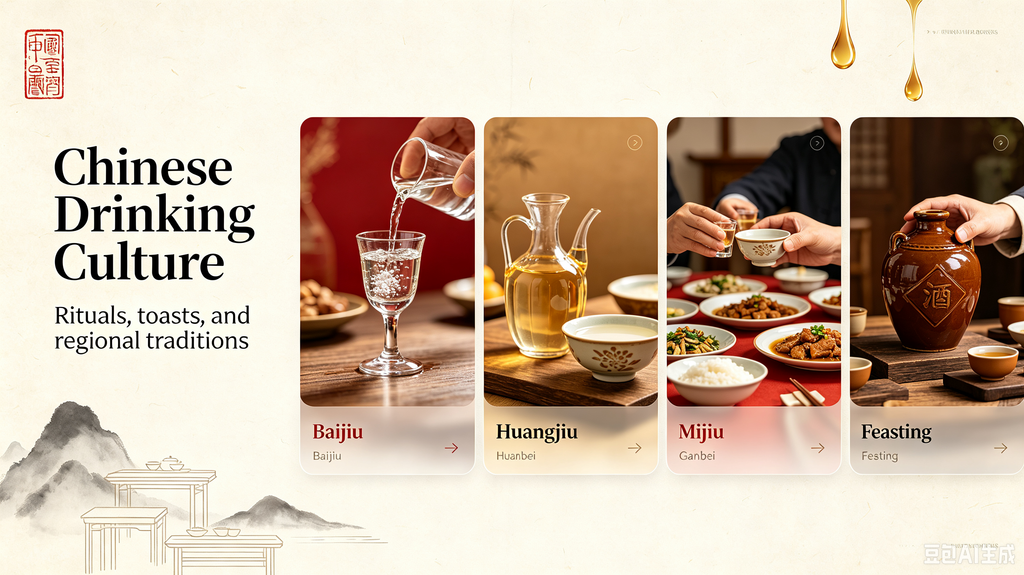
China’s drinking landscape is far richer than most foreigners expect. It is not just baijiu — there is a 5,000-year tradition of fermented grains, rice wines, fruit spirits, and craft beers that varies dramatically by region.
1A. Baijiu (白酒) — China’s National Spirit
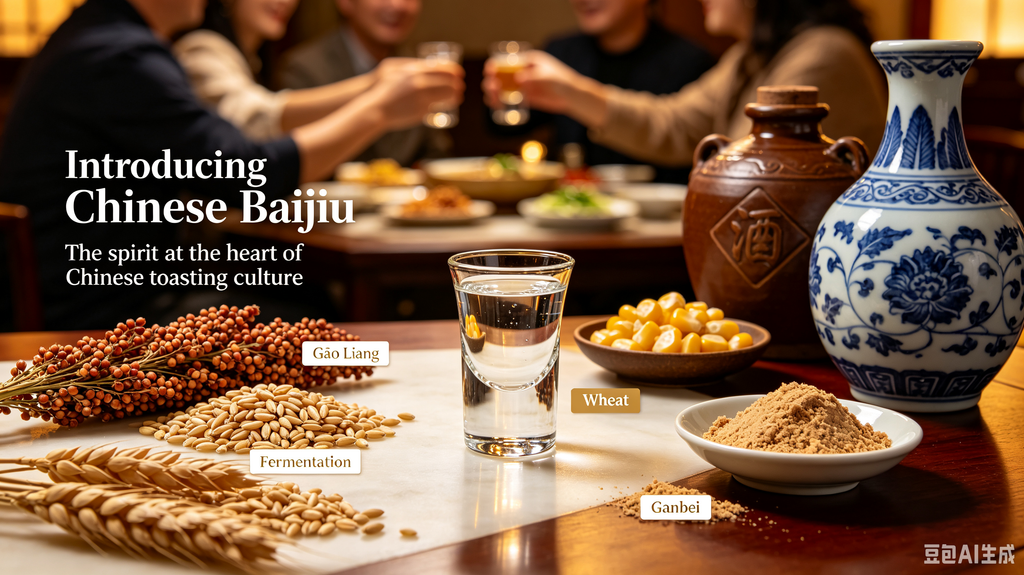
Baijiu (白酒) — literally ‘white alcohol’ — is China’s most consumed spirit and the world’s best-selling liquor by volume. With roughly 10 billion litres produced annually, baijiu outsells whisky, vodka, gin, rum, and tequila combined. Yet almost no one outside China has tasted it.
| Baijiu Fact | Details |
| Alcohol content | 40–60% ABV — significantly stronger than most Western spirits. Some premium varieties reach 65%. |
| Made from | Sorghum, wheat, rice, or mixed grains — fermented in pits, then distilled. The fermentation pit itself is crucial; some famous distilleries have pits over 600 years old. |
| Flavor categories | China classifies baijiu into 12 aroma types. The four most important: Sauce (酱香 jiang xiang), Light (清香 qing xiang), Strong (浓香 nong xiang), and Rice (米香 mi xiang). |
| How it is served | Room temperature, in small ceramic or glass cups (30–50ml). Drunk in one go (ganbei) at formal toasts. Sipping is increasingly accepted at casual settings. |
| Price range | ¥30 to ¥3,000+ per bottle. The same brand (e.g. Moutai) can range from ¥1,500 to ¥50,000 depending on vintage and edition. |
| With food | Always paired with food — baijiu is a meal drink, not a cocktail bar drink. The strong flavor is designed to complement rich, spicy, and umami-heavy Chinese dishes. |
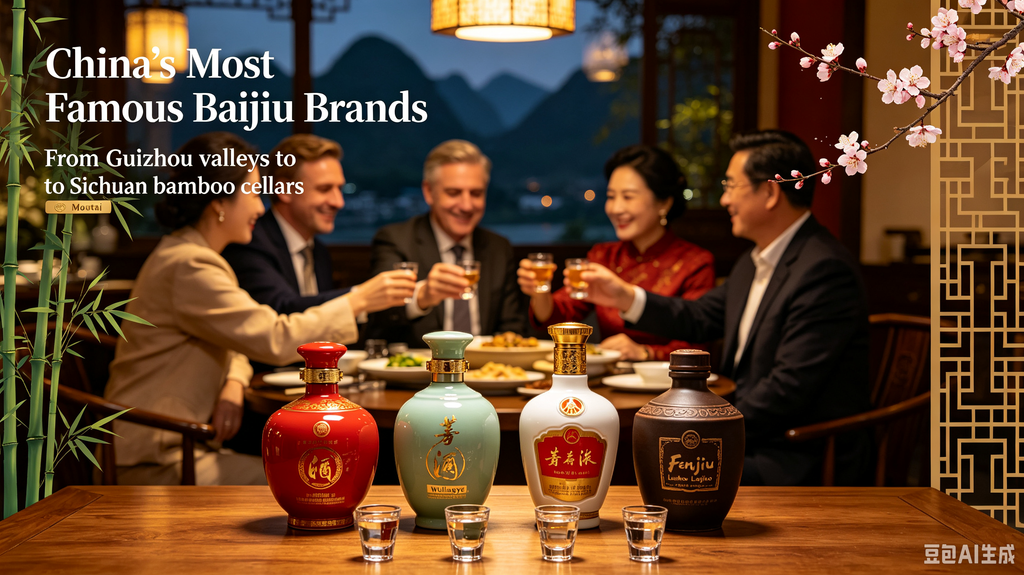
1B. The Big Four Baijiu Brands
| Brand | Chinese | Price Range | Why It Matters |
| Moutai | 茅台 Máotái | ¥1,500–¥50,000+ | China’s most prestigious baijiu. Served at state banquets since 1949. A bottle of aged Moutai is the most powerful business gift in China. Sauce-aroma type. Made in Guizhou province. |
| Wuliangye | 五粮液 Wǔliángyè | ¥800–¥3,000 | The second most prestigious. Strong-aroma type, made from five grains (sorghum, wheat, corn, rice, sticky rice). Smoother and more approachable than Moutai. |
| Luzhou Laojiao | 泸州老窖 | ¥100–¥500 | One of China’s oldest baijiu brands — pits date to 1573. Strong-aroma type. More affordable luxury. The blue-label Guojiao 1573 is well-regarded internationally. |
| Erguotou | 二锅头 Èrguōtóu | ¥10–¥80 | Beijing’s everyday baijiu. The working person’s drink. Strong, clean, affordable. The Red Star brand (红星) and Niulanshan (牛栏山) are the most famous versions. Perfect for first-timers on a budget. |
| 💡 Visitor Tip: If you want to try baijiu for the first time, start with Erguotou (二锅头) — affordable, widely available, and a fair representation of what baijiu tastes like without spending a fortune. Order it at any Beijing restaurant for ¥10–¥30 per bottle. Sip slowly with food, never on an empty stomach. |
1C. Huangjiu (黄酒) — China’s Ancient Wine
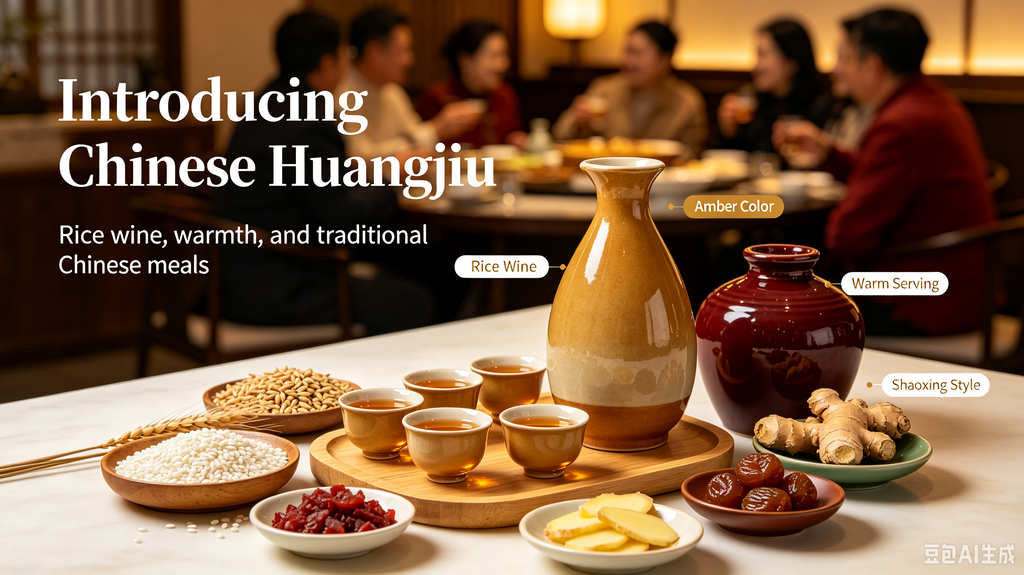
Huangjiu (黄酒) — ‘yellow wine’ — is China’s oldest alcoholic drink, with a history of over 5,000 years. It is a fermented rice wine with 8–20% ABV, amber-colored, subtly sweet, and complex. Often compared to Japanese sake, but distinctly Chinese.
- Most famous variety: Shaoxing Wine (绍兴黄酒) from Zhejiang province — also widely used in cooking
- Served warm in traditional ceramic vessels — warming brings out the fragrance
- The drink of Chinese scholars, poets, and literati for millennia — Li Bai, China’s most celebrated poet, was famous for his love of huangjiu
- More food-friendly than baijiu — lower alcohol and gentler flavor pair well with seafood, tofu, and light dishes
- Price: ¥20–¥500 per bottle. Premium aged varieties (10+ years) are considered collector’s items
1D. Beer (啤酒 Píjiǔ) — The Everyday Choice
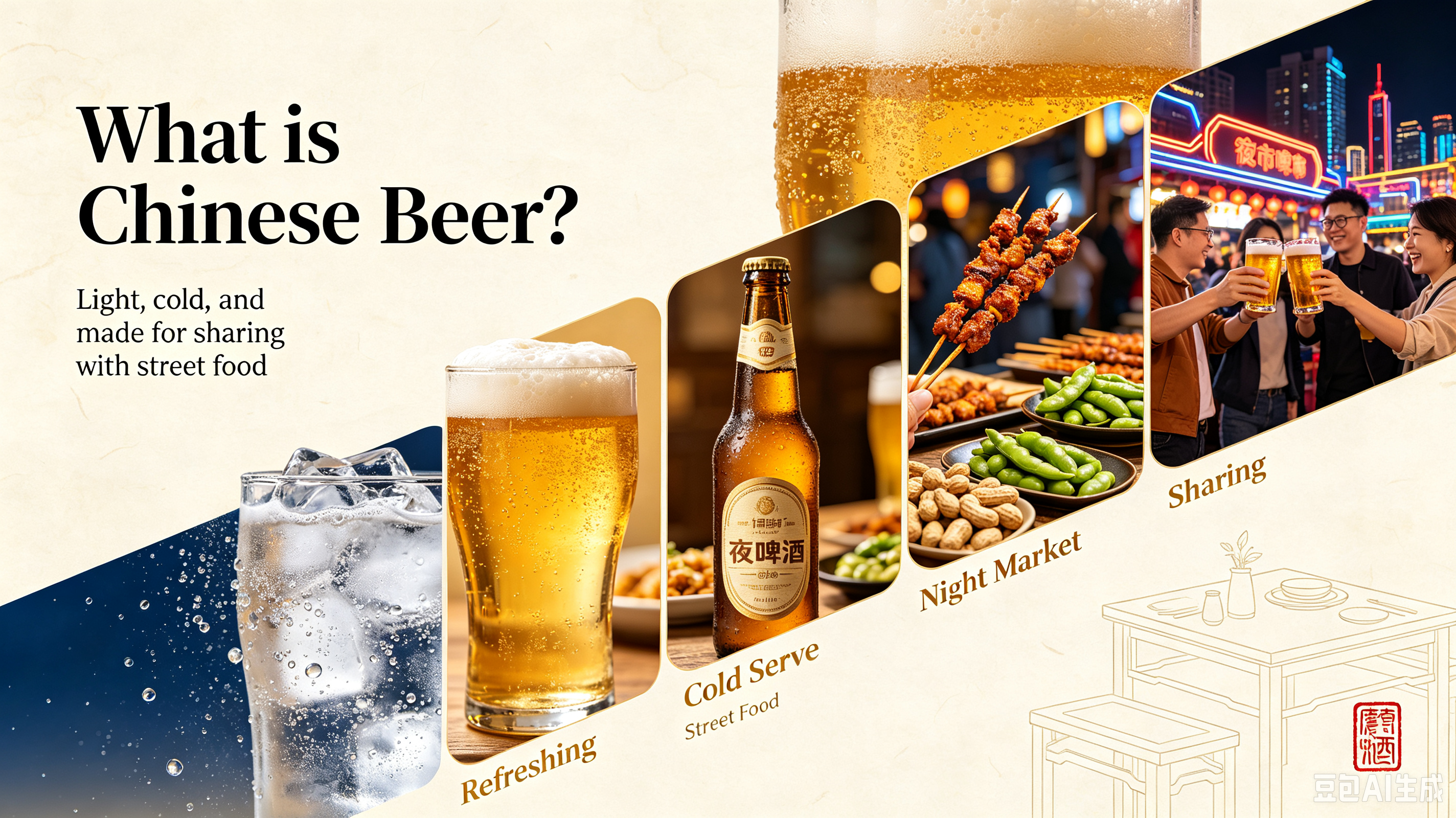
China is the world’s largest beer market by volume. Beer (啤酒, pijiu) is the everyday social drink — lighter on alcohol, more forgiving at long dinners, and universally acceptable.
| Beer | Style | Notes |
| Tsingtao (青岛) | Lager | China’s most exported beer. Founded by Germans in 1903. Light, crisp, globally recognizable. The ‘safe choice’ at any Chinese restaurant. |
| Snow (雪花) | Lager | The world’s best-selling beer by volume. Found everywhere in China. Very light, mild. The ‘house beer’ of most Chinese restaurants. |
| Harbin (哈尔滨) | Lager | China’s oldest beer brand (1900). Popular in northeast China. Slightly maltier than Snow. |
| Yanjing (燕京) | Lager | Beijing’s local beer. Fresh, light, affordable. The preferred beer for Beijing hot pot and roast duck dinners. |
| Craft Beer Scene | Various | China’s craft beer movement exploded after 2015. Cities like Chengdu, Shanghai, and Shenzhen have excellent local breweries. Pale ales, IPAs, stouts — all available. |
| 📌 Did You Know: In China, beer is often served warm or at room temperature in traditional restaurants and homes — especially in northern China. Ice-cold beer is becoming more common in modern restaurants and bars, but do not be surprised if your beer arrives warm. Cold beer is seen by some older Chinese as ‘bad for the stomach’ due to TCM beliefs about cold foods. |
Part 2 — The Drinking Table (酒桌文化)
The Chinese drinking table (酒桌文化, jiu zhuo wenhua) is a social institution with its own rules, hierarchy, rituals, and strategies. At business dinners especially, what happens around the alcohol is often more important than what is said in the meeting room.
2A. The Ganbei Ritual (干杯 — Bottoms Up)
‘干杯’ (gān bēi) means ‘dry the cup’ — the expectation is that you empty your glass completely in one go. This is the formal toast of Chinese drinking culture, and refusing or sipping when ganbei is called can be seen as a face-insult to the person who proposed the toast.
| Ganbei Rule | What It Means in Practice |
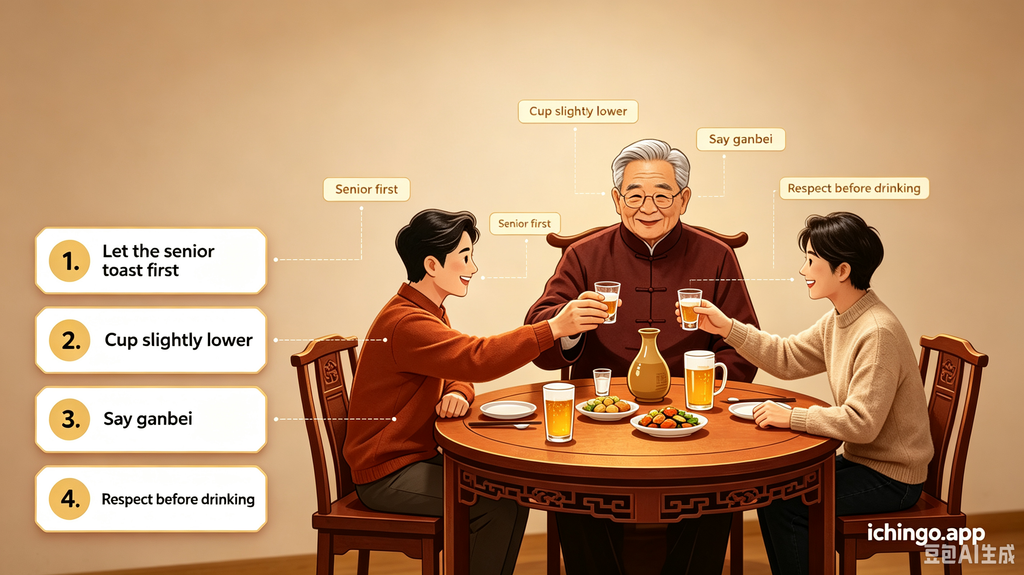
| Who proposes the toast | The host or most senior person opens with the first ganbei. Others may propose toasts throughout the meal — usually to the host, to the guest of honor, or to the whole table. |
| How to hold your glass | Hold your glass slightly lower than the person you are toasting if they are senior to you. This is a gesture of deference and respect — the lower your glass, the more respect you show. |
| After toasting | Show your empty glass or turn it upside down to prove it is empty — this is the traditional signal that you completed the ganbei. |
| Proposing a toast to someone | Stand up, raise your glass toward the person, make eye contact, say ganbei, and wait for them to raise theirs before drinking. |
| Frequency | At a formal business dinner, toasts can happen every 5–10 minutes. Pacing yourself is crucial — eat food between toasts to slow alcohol absorption. |
2B. The Hierarchy of Drinking
Chinese drinking is deeply hierarchical. Who sits where, who pours for whom, who toasts first, and whose glass is refilled first — all of these communicate social status and respect.
- The host always pours for the guests first — never pour for yourself before your guests’ glasses are filled
- Pour for the most senior person first, then work your way around the table by seniority
- Holding the bottle with two hands when pouring for someone senior is a sign of respect
- If someone fills your glass, tap two fingers lightly on the table as a gesture of gratitude (the same custom as with tea)
- The seat facing the door is the seat of honor — the most senior guest sits there, and the first toast is directed to them
2C. Persuasive Drinking (劝酒 Quàn Jiǔ)
Quanjiu (劝酒) — the practice of pressing others to drink more — is one of the most distinctive and sometimes uncomfortable aspects of Chinese drinking culture for foreigners. A host may refill your glass before it is empty, insist you finish, or propose repeated toasts specifically to you.
Understanding the intent matters: in traditional culture, pressing someone to drink is an act of hospitality and warmth — it means ‘I want you to enjoy yourself fully at my table.’ It is not meant to be aggressive, even when it feels that way.
- You can slow down by sipping rather than full ganbei — especially at casual dinners, this is increasingly accepted
- If you genuinely cannot drink more, say politely: ‘我不胜酒力 (wǒ bù shèng jiǔ lì)’ — ‘I cannot handle much alcohol.’ This is a graceful, face-saving exit.
- Pointing to your driving responsibility is widely accepted: ‘我开车 (wǒ kāi chē)’ — ‘I am the driver tonight.’
- Health reasons are also respected: ‘我在吃药 (wǒ zài chī yào)’ — ‘I am taking medication.’
| ⚠️ Watch Out: The single most important rule: NEVER simply say ‘I don’t drink’ flat and leave it there, especially at a business dinner. This can feel like rejection to your host. Always offer a reason and propose to toast with a non-alcoholic drink instead. The gesture of raising your glass and making eye contact is what matters — not the liquid inside. |
2D. Drinking as Face (面子) Exchange
Every aspect of the drinking ritual is connected to face. Proposing a toast to someone gives them face. Accepting a toast and drinking it in full shows you respect the person who proposed it. Refilling someone’s glass before they ask shows attentiveness and care.
- Accepting a toast and drinking is an act of respect — it shows you take the relationship seriously
- Proposing a toast to your host early in the meal gives them face and sets a warm tone
- Proposing a toast to the most senior person before toasting anyone else shows you understand hierarchy
- At the end of the meal, the host may propose a final toast — matching their energy here is important
Part 3 — Moutai (茅台) — China’s Liquid Gold
Moutai (茅台, Máotái) is not just a drink — it is a political artifact, a status symbol, a diplomatic tool, and an investment asset. Understanding Moutai means understanding something essential about how power and relationship operate in China.
Why Moutai Is Special
- Made in Maotai town, Guizhou province — a remote mountain location with a unique microclimate and mineral-rich water that cannot be replicated elsewhere
- Sauce-aroma (酱香) type — complex, layered flavors with notes of soy sauce, dried fruit, and earth. Very different from the light or strong aroma types. Requires patience to appreciate.
- Fermented and distilled nine times over one year — then aged a minimum of three years before bottling
- China’s official state banquet spirit since 1949 — served to every world leader who has visited China, from Nixon to Obama to Putin
- A 500ml bottle of standard Feitian (飞天) Moutai retails at approximately ¥1,499 — but scalpers and secondary market prices often reach ¥2,500–¥3,500
- Vintage and collector editions sell at auction for tens of thousands — a 1974 bottle sold for over ¥1.5 million at auction
| Moutai as Gift | What It Signals |
| Standard Feitian 500ml (~¥1,500) | A serious and respectful gift. Appropriate for important business contacts, senior officials, or family elders. Shows you understand Chinese prestige. |
| Moutai 1935 Edition (~¥800) | A newer premium line. Smoother, more approachable. Good gift for someone building their Moutai appreciation. |
| Vintage Moutai (10–30 year) | An exceptional gift for the highest-value relationships. Sends a message that this relationship is worth significant investment. |
| Moutai gift box set | Available at duty-free and official retailers. Includes multiple miniature bottles — good for someone who wants to explore without committing to a full bottle. |
| 📱 ichingo.app — China App Connection: Buying genuine Moutai and premium baijiu in China:JD.com (京东) — The safest place to buy authentic Moutai online. JD’s self-operated store carries official Kweichow Moutai products with authenticity guarantee. Search 飞天茅台. Full guide on ichingo.app.Taobao / Tmall — Alibaba’s Tmall has the official Moutai flagship store (茅台官方旗舰店). Verify you are on the official store before purchasing. Full guide on ichingo.app.Duty-free shops at major airports — Often the most reliable and transparent source for genuine Moutai at near-retail prices for departing visitors. |
Part 4 — Drinking Etiquette — The Complete Rules
4A. Before the First Toast
- Do not pour your own drink before the host has poured for the guests — wait to be served
- Do not drink before the first toast is made — wait for the host to initiate
- If you do not want alcohol, tell the server quietly before drinks are poured — it is easier to manage before the ritual begins
- Place your non-alcoholic drink in the same type of glass as the drinkers when possible — the form of the gesture matters
4B. During Toasting
| ✅ DOStand up when proposing a toast at a formal dinnerMake eye contact when clinking glassesHold your glass lower than a more senior person’s glassSay a few warm words before ganbei — not just the word itselfEat food between toasts to manage paceTap the table with two fingers when someone fills your glassToast the host and the guest of honor early in the mealShow your empty glass after ganbei at formal occasions | ❌ DON’TPour your own glass before your guests’ glassesFlatly refuse a toast without offering an alternative drinkHold your glass higher than a very senior person’sLeave your glass untouched when a toast is proposed to the tableDrink between toasts if you are trying to pace yourself — wait for the next ganbeiGet visibly drunk before the business portion of the evening is concludedDiscuss sensitive topics after excessive drinking has taken placeBoast about how much you can drink — this is considered crass |
4C. If You Cannot or Do Not Drink Alcohol
Not drinking at a Chinese dinner is perfectly manageable — but it requires active management. Passive non-participation is the one thing to avoid.
| Situation | What To Say and Do |
| You do not drink at all | Tell your host early, privately, and warmly: ‘我不喝酒,但我会用茶/饮料陪您喝’ (I don’t drink alcohol but I will toast with tea / juice with you). Then actively participate in every toast with your non-alcoholic glass. |
| You are driving | ‘我开车’ (Wo kai che — I am driving) is universally respected and understood. No further explanation needed. |
| Medical reasons / medication | ‘我在吃药,医生说不能喝酒’ (I am taking medication, the doctor said no alcohol). This is respected with no follow-up questions. |
| Religious reasons | Islam: ‘我是穆斯林,不喝酒’ is understood and respected, especially in cities with Hui Muslim populations. Other religious reasons are also accepted. |
| You want to slow down | Sip rather than ganbei when you can. Propose a ‘suiyi’ (随意, as you like) toast — this signals that you are toasting warmly but everyone can drink as they choose. |
| ✅ Good to Know: The key insight: Chinese drinking culture is about connection, not the alcohol itself. Participating fully in the ritual — with water, tea, or juice — is respected far more than passive non-participation. The gesture of raising your glass, making eye contact, and saying ganbei warmly is what creates the bond. |
Part 5 — Drinking Culture by Region
China’s drinking culture varies significantly by region. What is expected at a dinner in Sichuan is very different from a business meal in Shanghai or a family gathering in Fujian.
| Region | Drink of Choice | Drinking Culture Notes |
| Beijing | Erguotou baijiu + beer | Direct, high-energy, ganbei culture is strong. Business dinners are serious drinking occasions. Erguotou is the local pride. |
| Sichuan / Chongqing | Luzhou Laojiao + local baijiu | Hotpot + baijiu is the ultimate Sichuan combination. Spicy food and strong alcohol — the locals believe the heat neutralizes the alcohol’s effects. Very social, loud, warm atmosphere. |
| Shanghai | Wine + premium baijiu + craft beer | More international influence. Wine is acceptable and widely understood. Business dinners may skip baijiu entirely in favor of Bordeaux or Burgundy. |
| Guangdong (Canton) | Beer + rice wine + cognac | Cantonese culture is less intense about alcohol than northern China. Yum cha (tea) is more central to hospitality. Cognac (especially Hennessy) became a status drink in the 1990s. |
| Zhejiang / Jiangsu | Shaoxing huangjiu | Yellow wine country. Warm huangjiu served in ceramic vessels is the traditional choice. More refined and less aggressive than baijiu-centered drinking cultures. |
| Northeast (Dongbei) | Baijiu + beer | The heaviest drinking region in China. ‘Dongbei people can drink’ is a Chinese national stereotype — and it is not entirely wrong. Very warm, generous hosts who take drinking hospitality seriously. |
| Xinjiang / Muslim areas | Tea / fruit juice | Large Hui Muslim population means alcohol-free dining is common and completely normal. Grape juice from Xinjiang is often served as a festive non-alcoholic alternative. |
Part 6 — Visitor Practical Guide
6A. Useful Phrases for Drinking Situations
| English | Chinese | Pronunciation |
| Cheers! / Bottoms up! | 干杯! | Gān bēi! |
| As you like / Drink freely | 随意 | Suí yì |
| This is delicious baijiu | 这白酒真好喝 | Zhè báijiǔ zhēn hǎo hē |
| I cannot handle much alcohol | 我不胜酒力 | Wǒ bù shèng jiǔ lì |
| I am the driver tonight | 我开车 | Wǒ kāi chē |
| I am taking medication | 我在吃药 | Wǒ zài chī yào |
| I will toast with tea / juice | 我用茶/饮料陪您喝 | Wǒ yòng chá/yǐnliào péi nín hē |
| Please fill my glass | 请给我倒一杯 | Qǐng gěi wǒ dào yī bēi |
| A toast to our friendship | 为我们的友谊干杯 | Wèi wǒmen de yǒuyì gān bēi |
| A toast to your health | 为您的健康干杯 | Wèi nín de jiànkāng gān bēi |
6B. The Complete ichingo.app Toolkit for Drinking Culture
| Need | App | How It Helps |
| Find a restaurant for business dinner | Dianping (大众点评) | Search by cuisine, private room availability, and wine list. Check ratings for atmosphere before bringing important guests. Full guide on ichingo.app. |
| Book a private dining room (包间) | Dianping / Meituan | Many Chinese restaurants have private rooms (包间 bāojiān) for business dinners. Book through Dianping or Meituan — essential for formal occasions. Full guide on ichingo.app. |
| Pay for the dinner | WeChat Pay / Alipay | Pay quickly and smoothly — being able to pay without fumbling is itself a face-giving act. Set up before arrival. Full guides on ichingo.app. |
| Buy authentic Moutai as gift | JD.com / Tmall | Guaranteed authentic from official stores. Delivery to hotel possible. Full guides on ichingo.app. |
| Translate the drinks menu | Yandex Translate | Point camera at Chinese drinks menu for instant translation. No VPN needed inside China. Full guide on ichingo.app. |
| Get home safely | Didi (滴滴) | Never drink and drive in China — penalties are severe. Book a Didi from the dinner venue home. Also, ‘I am the driver’ is the perfect excuse not to drink. Full guide on ichingo.app. |
| Find the best baijiu bar | Xiaohongshu (小红书) | Search your city plus 白酒吧 or 酒吧 for photo-rich local bar and venue recommendations. Full guide on ichingo.app. |
| ⚠️ Watch Out: Drunk driving (饮酒驾车) is treated very seriously in China. The legal blood alcohol limit is extremely low (0.2 mg/ml for DUI, 0.8 mg/ml for drunk driving criminal charge). Police checkpoints after restaurant districts are common. Always use Didi or designate a non-drinking driver. Never risk it. |
Final Thought — The Glass Is Never Just a Glass
In China, what happens around the drinking table is often more consequential than what happens in the meeting room. A well-timed toast builds trust in minutes. A graceful refusal with a warm alternative preserves the relationship. An understanding of when to ganbei and when to sip marks you as someone who understands China deeply.
You do not need to drink to participate in Chinese drinking culture. You need to understand it, respect it, and engage with it on its own terms. Whether your glass holds baijiu, beer, tea, or juice — the raising of it, the eye contact, the warmth in the toast, and the intention behind the gesture are what create the connection.
For step-by-step guides to every app mentioned in this document — Dianping, Meituan, WeChat Pay, Alipay, JD.com, Didi, Yandex Translate, Xiaohongshu, and more — visit ichingo.app — your complete toolkit for navigating China with confidence.


