Introduction
China is one of the most fascinating destinations in the world — but its culture runs deep, and some everyday customs can catch first-time visitors completely off guard. From the colors on a gift bag to the way you place your chopsticks, small details carry big meaning. This guide covers two of the most important cultural areas for any traveler: color symbolism and dining etiquette. Get these right, and you’ll earn instant respect and warmth from locals. Get them wrong, and you might accidentally cause offence without knowing why.
This is part of the ichingo.app China Culture Series — your go-to toolkit for traveling China with confidence. Visit ichingo.app for app guides, city tips, and more cultural explainers.
Part 1: Color Culture in China
Colors in China are far more than aesthetic choices. They carry centuries of meaning rooted in history, philosophy, and superstition. What looks like a simple color choice on a gift, outfit, or decoration can send a powerful cultural message — positive or negative. Here’s what every visitor needs to know.
The Lucky Colors
Red — The Color of China
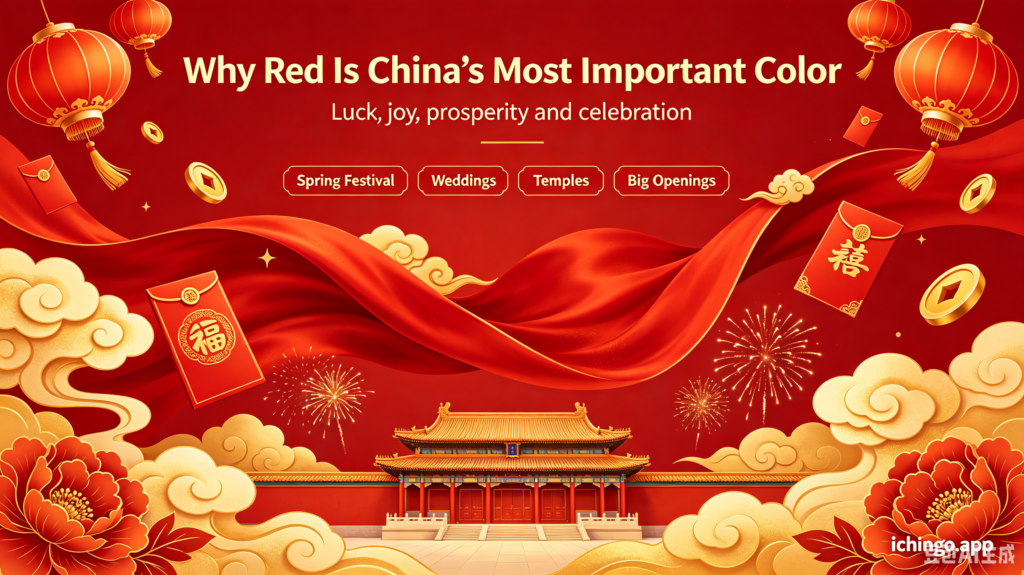
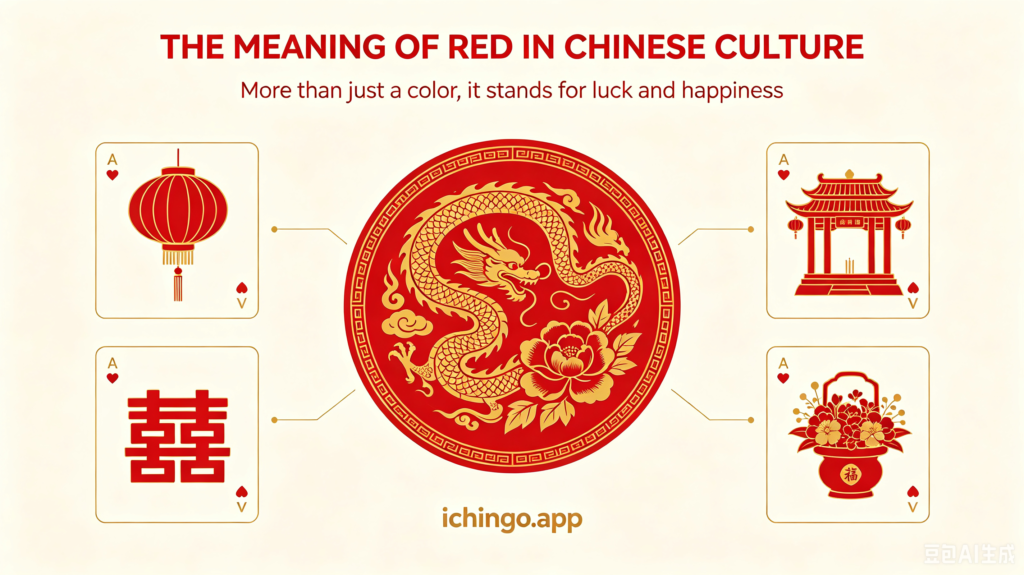
Red is China’s most important color, and perhaps the most universally recognised symbol of Chinese culture. It represents good luck, happiness, prosperity, and celebration. You’ll see red everywhere: at weddings, during Chinese New Year (Spring Festival), at grand openings, and in temple decorations.
- Red envelopes (红包, hóngbāo) filled with money are the standard gift at weddings, New Year celebrations, and birthdays.
- Brides traditionally wear red — not white — for Chinese wedding ceremonies.
- Red lanterns hang outside restaurants, temples, and homes to attract good fortune.
| Tip: Wear something red when visiting China during a festival or celebration. Locals will appreciate it and may even comment positively on your ‘lucky’ color choice. |
Gold & Yellow — The Imperial Color
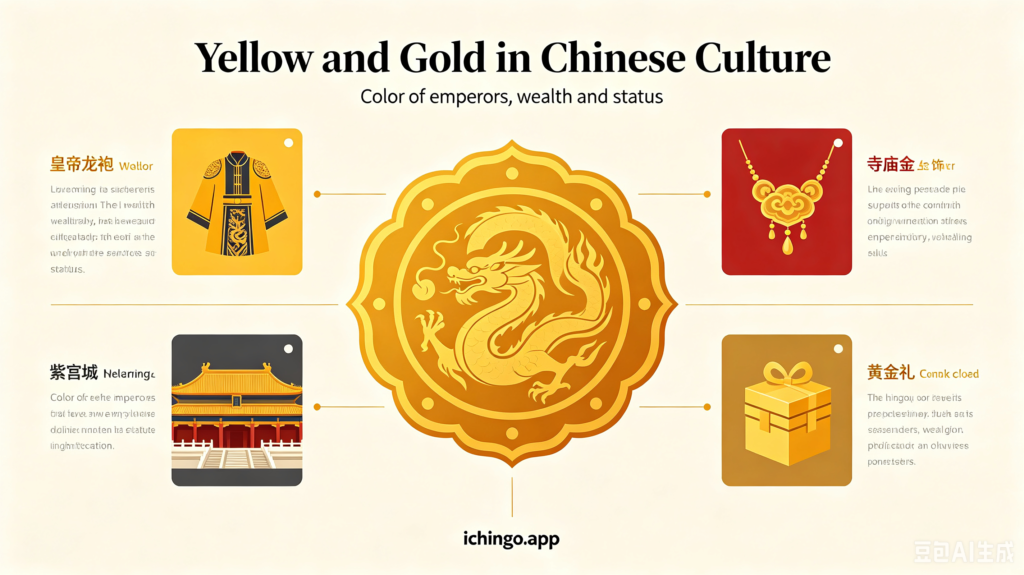
Gold and yellow were historically reserved for the Emperor alone — commoners were forbidden from wearing yellow. Today, gold still signals wealth, prestige, and royalty. You’ll see it heavily used in temples, imperial architecture (like the Forbidden City), and high-end gift packaging.
- Gifting something in gold wrapping immediately elevates its perceived value and respect.
- Gold decorations are especially prominent during Spring Festival.
- The term ‘黄金’ (huángjīn) literally means ‘yellow gold’ — the two concepts are deeply linked in Chinese culture.
Purple — Noble and Spiritual
Purple carries connotations of nobility, spirituality, and good fortune in Chinese culture. It appears frequently in Buddhist temple art and has historically been associated with high-ranking officials. Unlike in some Western cultures where purple can signal mourning, in China it is generally a positive and auspicious color — making it a safe and elegant choice for gifts.
Colors to Be Careful With ⚠️
⬜ White — The Color of Mourning
White is primarily associated with death, mourning, and funerals in traditional Chinese culture. This is the direct opposite of many Western countries where white symbolises purity and celebrations (like weddings). White flowers — especially white chrysanthemums — are specifically used as funeral offerings.
| ⚠️ Watch Out: Never give a bouquet of all-white flowers as a gift. Always mix in red, pink, or yellow blooms. Avoid arriving at a celebration dressed entirely in white. |
Green — The Hat Exception
Green itself is not an unlucky color in Chinese culture — it represents nature, growth, and harmony, and is widely used in eco-branding and health products. However, there is one very specific exception that every visitor must know about.
| ⚠️ Watch Out: Never give a green hat to a Chinese man. The phrase ‘戴绿帽子’ (dài lǜ màozi) — ‘wearing a green hat’ — is a well-known idiom meaning a man’s partner has been unfaithful. Gifting a green hat, even innocently, will cause immediate awkward silence or laughter at your expense. |
⬛ Black — Traditionally Inauspicious
Black has historically been considered an inauspicious color in Chinese culture, associated with bad luck and negative energy. In modern urban China — especially in fashion and business — black is widely accepted and fashionable. However, in traditional contexts (gifting, festivals, celebrations), it’s best avoided.
- Don’t use a black envelope for gifting money — red is always the correct choice.
- Avoid wearing all-black to a wedding or traditional celebration.
Quick Reference: China Color Guide
Gift Color Rules at a Glance
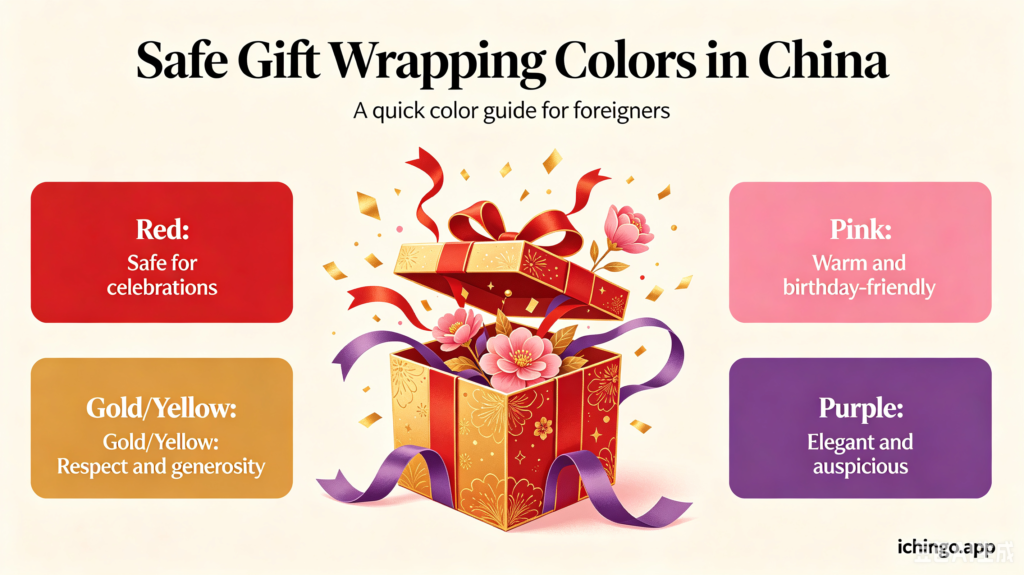
✅ Safe gift wrapping colors:
- Red — always appropriate, especially for celebrations
- Gold / Yellow — signals respect and generosity
- Pink — warm, celebratory, great for birthdays
- Purple — elegant, auspicious, appreciated
❌ Avoid for gifts:
- White — associated with funerals and mourning
- Black — traditionally inauspicious in gift contexts
| Tip: When in doubt, go red. You simply cannot go wrong with a red gift bag or envelope in any Chinese celebration context. |