Introduction — A Nation That Moves Differently
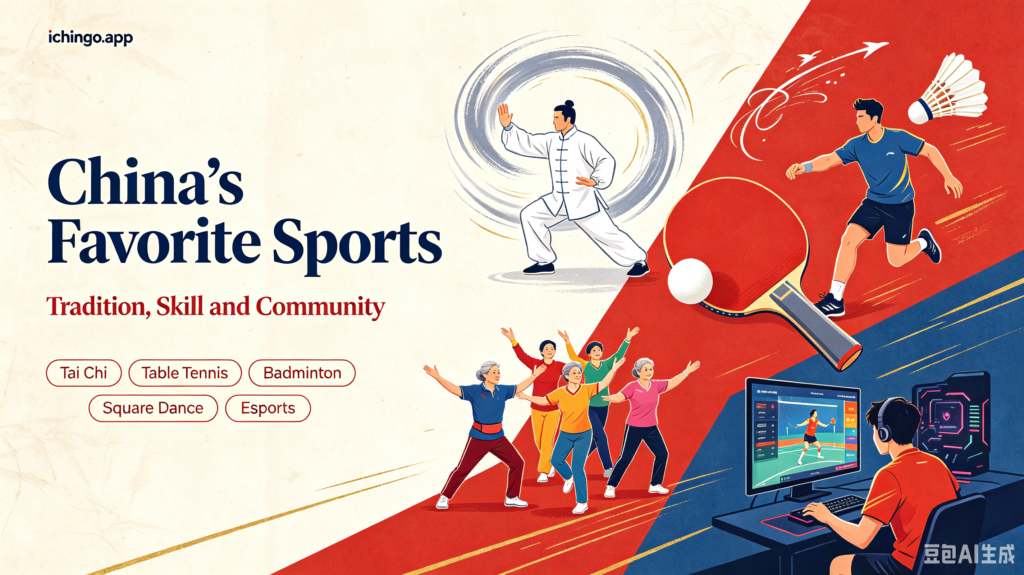
At 6am in any Chinese city, something extraordinary happens. Parks fill with hundreds of people doing Tai Chi, Qi Gong, fan dancing, sword forms, and badminton. Retired couples waltz to speakers on paved plazas. Elderly women perform synchronized square dancing with military precision. Young men hit shuttlecocks and hacky sacks with practiced ease.
By evening, a parallel sports universe opens: 100 million people fire up Honor of Kings on their phones; livestreamed esports tournaments fill 60,000-seat stadiums; gym culture is booming among a new health-conscious urban class; and ping-pong tables sit in every office, school, and community center across the country.
Chinese sport and exercise culture spans 3,000 years of tradition and the cutting edge of 21st-century digital entertainment — often simultaneously. This guide covers both worlds, and connects each to the ichingo.app platforms that will help you participate, watch, or book sports experiences during your visit.
Part 1 — Traditional Chinese Sports & Exercise
China’s traditional sports are not museum pieces — they are practiced daily by hundreds of millions of people. Understanding them reveals something fundamental about Chinese approaches to the body, health, and time.
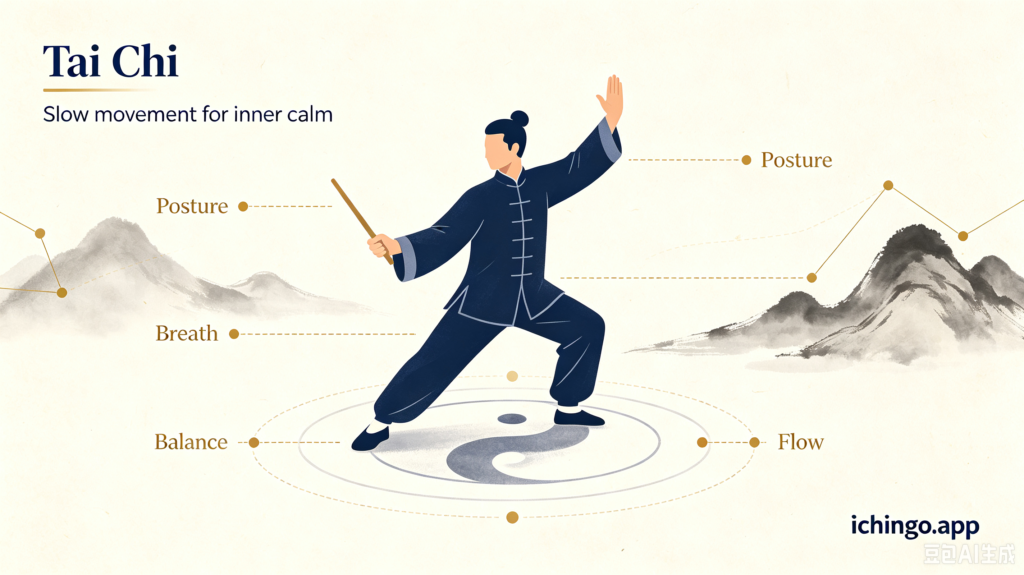
1A. Tai Chi (太极拳 Tàijíquán) — Moving Meditation
Tai Chi is the most widely practiced martial art in the world, with an estimated 300–500 million practitioners globally. In China, it is the default morning exercise — practiced in parks, courtyards, rooftops, and public squares from 5:30am onwards, by people of every age.
| About Tai Chi | Details |
| What it is | A slow, flowing martial art built on Yin-Yang philosophy. Each movement transitions seamlessly into the next, creating a continuous loop of motion. The goal is to cultivate and direct Qi (life energy) rather than develop muscular strength. |
| The five main styles | Chen (oldest, most martial), Yang (most popular, gentle), Wu, Sun, and Wu/Hao. Yang style is what most people recognize — slow, large, and meditative. |
| Health benefits | Multiple clinical studies confirm: reduces falls in elderly, lowers blood pressure, improves balance and flexibility, reduces anxiety. Prescribed alongside conventional medicine in Chinese hospitals. |
| When and where | Every morning from about 5:30am to 9am, in virtually every Chinese park, plaza, and public space. Temple of Heaven (Beijing), People’s Park (Shanghai), Renmin Park (Chengdu) are particularly good spots. |
| Can visitors join? | Yes — stand at the edge, observe, then simply copy the movements. No one will ask you to leave. The community is welcoming to genuine interest. |
| Classes for foreigners | Available in most major cities: ¥100–¥300 per session for drop-in; ¥2,000–¥8,000 for week-long residential courses in Wudang or Chen Village. |
| 💡 Visitor Tip: The single most authentic and moving sports experience available in China is completely free: watch (or join) morning Tai Chi in a major park at dawn. Set your alarm for 6am, go to the nearest large park, and find the Tai Chi groups. Watching 200 people move in synchronized slow motion in morning mist is something you will remember for the rest of your life. |
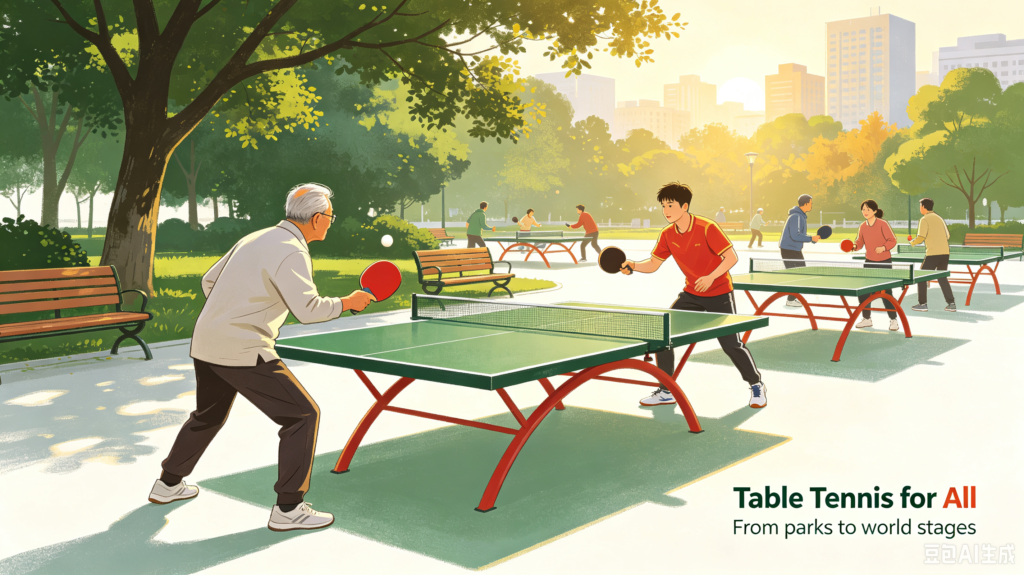
1B. Ping-Pong (乒乓球 Pīngpāng Qiú) — China’s True National Sport
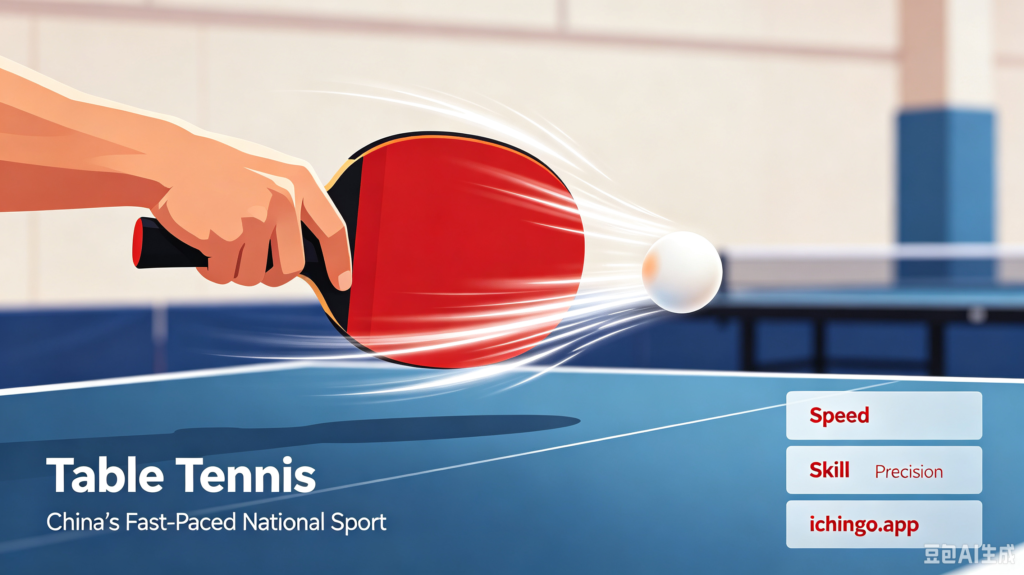
Table tennis is China’s unofficial national sport — and China’s dominance is almost incomprehensible. China has won 60% of all Olympic gold medals in table tennis since it became an Olympic sport in 1988. The national team trains from childhood with a system so effective that many of China’s top competitors have emigrated to represent other countries just to have a chance at competing.
- Ping-pong tables are everywhere: schools, offices, factories, community centers, parks, residential compounds — a table tennis table is as common as a coffee maker in Chinese workplaces
- Street-level players in Chinese parks are often startlingly good by international standards — even casual recreational players can demonstrate extraordinary speed and spin control
- The sport has deep political resonance: ‘Ping-Pong Diplomacy’ (1971) — when Chinese and American table tennis players made contact during the World Championships — was the first public diplomatic communication between the two countries in 23 years, paving the way for Nixon’s China visit
- You can walk into almost any community center in China and request to use a table — usually free or ¥5–¥10/hour
| 📌 Did You Know: China’s Ma Long is the most decorated table tennis player in history — winning every major title multiple times. The entire Chinese national men’s and women’s teams could defeat the combined rest of the world in a team tournament on most days. In recent years, China has deliberately redistributed its top talent to train players in developing countries to make the sport more globally competitive. |
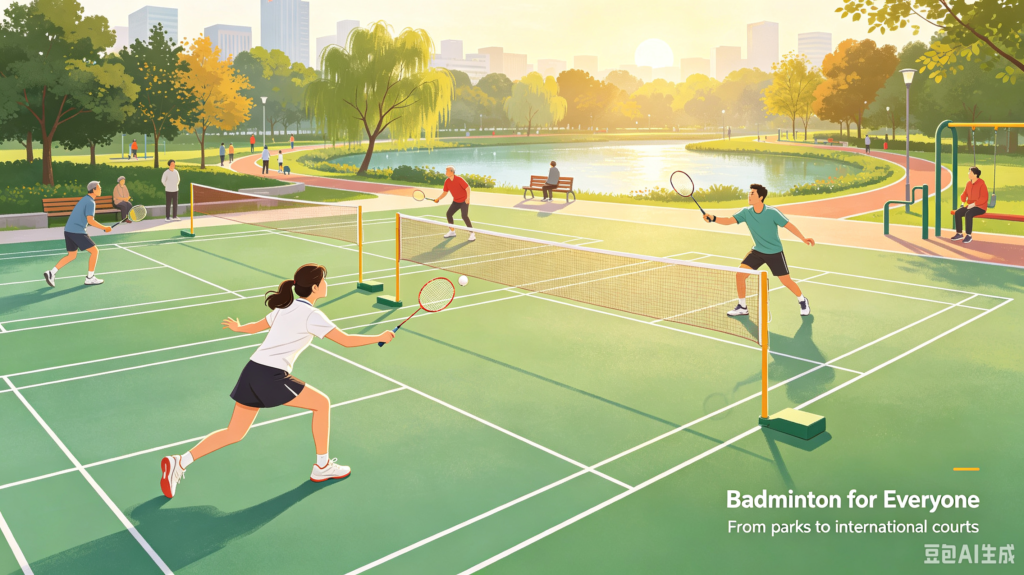
1C. Badminton (羽毛球 Yǔmáoqiú) — The Other National Passion
Badminton is played everywhere in China — on streets, in parks, in school grounds, and in residential compounds. Along with ping-pong, it is the most common recreational sport for ordinary Chinese people. China also dominates the world rankings with similar ferocity to table tennis.
- Easy to play anywhere — all you need is two rackets and a shuttlecock (¥10–¥30 from any sports shop)
- Indoor courts available in most cities: ¥20–¥60/hour. Book via Dianping or directly through sports center WeChat mini-programs
- Lin Dan — two-time Olympic champion and five-time World Champion — is one of China’s greatest sports heroes, nicknamed ‘Super Dan’
1D. Square Dancing (广场舞 Guǎngchǎng Wǔ) — China’s Most Controversial Exercise
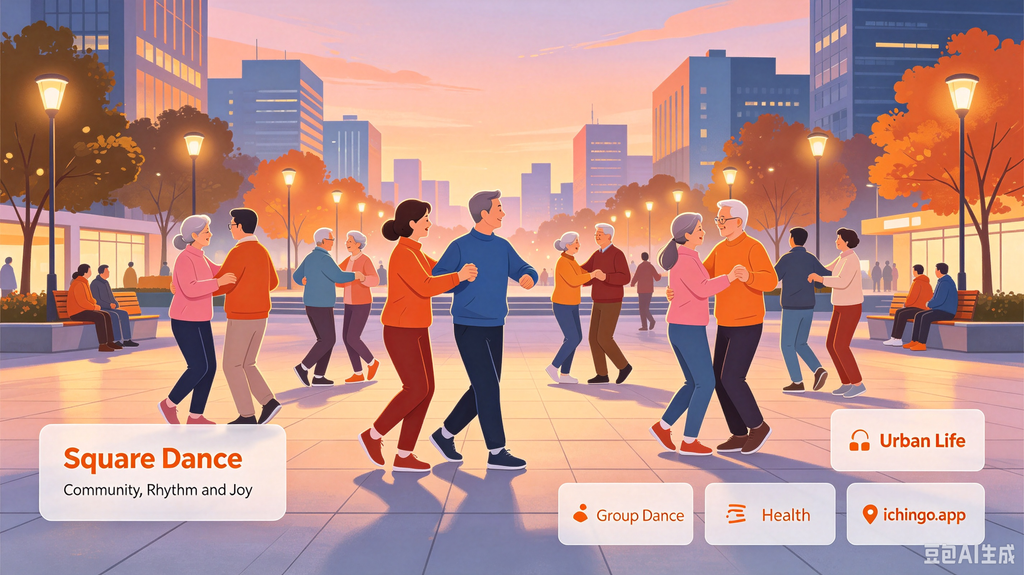
Every evening in every Chinese city, groups of mostly middle-aged and elderly women gather in public squares, parks, and parking lots to perform synchronized group dancing to amplified music. This is Guangchang Wu — square dancing — and it is one of the most distinctive and debated phenomena in contemporary Chinese society.
- Estimated 100 million regular participants across China — one of the largest synchronized recreational activities on earth
- Typical session: 6pm–9pm, weekdays and weekends. Groups are self-organized, self-led, and completely free to join
- The controversy: amplified music at high volume has led to disputes with residents, legal battles, and — in one famous incident — a group of Chongqing men who fired a water cannon at dancers from their apartment window
- The government officially supports square dancing as public health exercise — major cities have designated ‘square dancing zones’
- As a visitor: watching is fine; joining is welcomed with delight — most groups find foreign participation hilarious and heartwarming simultaneously
1E. Shuttlecock (毽子 Jiànzi) — Ancient Street Sport
Jiànzi — kicking a weighted shuttlecock to keep it airborne — has been played in China for over 2,000 years and is still practiced daily in parks and public spaces. Players use their feet, knees, and sometimes head (never hands) to keep the shuttle aloft. Expert players can perform extraordinary acrobatic kicks.
- Buy a jiànzi at any sporting goods market or Taobao for ¥5–¥20
- Pick-up games happen spontaneously in parks — foreigners who can keep the shuttle up for 10 consecutive kicks earn genuine respect
- Competitive jiànzi (called ‘Jianqiu’) is an official sport with World Championships

Part 2 — Modern Sports in China
Over the past three decades, China has invested massively in both competitive sports excellence and recreational sports infrastructure. The results are visible everywhere — in world championship tables, Olympic medal counts, and the proliferation of gyms, stadiums, and sports parks across Chinese cities.
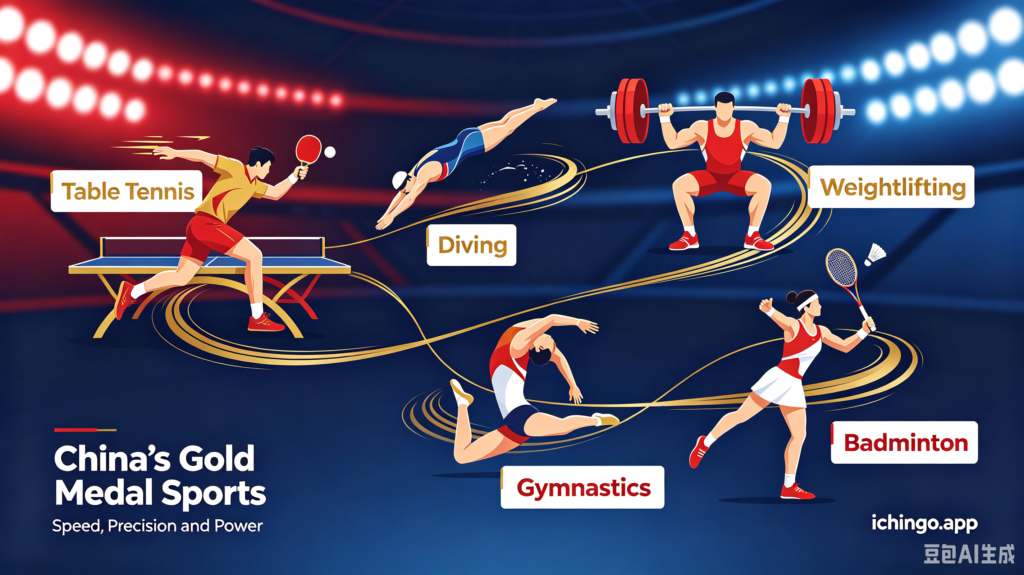
2A. Olympic Dominance — China’s Gold Machine
| Sport | China’s Status | Why China Dominates |
| Table Tennis | Gold machine | State system identifies talent at age 5–7. Full-time training from age 8. The national team is so strong that internal trials are harder than the Olympics. |
| Diving | Most golds ever | China has won over 40 Olympic diving gold medals. Athletes train from age 4–5 on rubber mats before water. Biomechanical perfection is the culture. |
| Badminton | Perpetual champion | Similar talent-identification system to table tennis. Lin Dan’s two consecutive Olympic golds (2008, 2012) are among the greatest individual achievements in Chinese sport. |
| Gymnastics | Consistent medals | China’s gymnastic program is among the world’s most rigorous. The 2008 Beijing Olympics saw China win the most gold medals of any country (51) — gymnastics contributed significantly. |
| Weightlifting | Dominant | China routinely wins the most weightlifting medals at every Olympics. The lifting culture extends to provincial towns where state-run sports schools identify heavy-framed children early. |
| Shooting | Strong | Less visible internationally but one of China’s most consistent medal-winning sports. Significant investment in facilities and coaching. |
| Football (Soccer) | Disappointing | Despite enormous investment and passionate fandom, China’s men’s national team (China Dragons) has qualified for the World Cup only once (2002) and has underperformed relative to the country’s size and resources. A source of genuine national frustration. |
2B. Football (Soccer) — China’s Great Sports Heartbreak
Football is one of the most popular spectator sports in China despite the national team’s poor performance. The Chinese Super League (CSL) draws passionate crowds and in the mid-2010s attracted major international stars including Carlos Tevez, Didier Drogba, and Oscar with record-breaking salary packages.
- Chinese Super League: 16 professional clubs. Beijing Guoan, Shanghai Port, and Guangzhou FC are the biggest clubs
- The national team qualifying for the 2026 World Cup is a significant national sporting goal
- Recreational football is genuinely popular — small-sided games (5v5, 7v7) are common on artificial pitches that operate from early morning to midnight in most cities
- The NBA is perhaps more widely followed than Chinese football — LeBron James, Kobe Bryant (before his death), and Yao Ming are the most recognized athletes in China after Chinese Olympic champions
| 📱 ichingo.app — China App Connection: Watching and playing sport in China:Dianping (大众点评) — Search 足球场 (football pitch) or 羽毛球馆 (badminton hall) near your location for court bookings, prices, and opening hours. Most sports venues are on Dianping. Full guide on ichingo.app.Keep (Keep App) — China’s most popular fitness app with over 300 million registered users. Video workout guides, running tracking, gym class booking, and Tai Chi/Qi Gong video courses. Excellent for maintaining fitness routines during your China visit.Klook — Book guided sports experiences including Tai Chi classes, kung fu sessions, and sports tours. English-language, international card payment. Full guide on ichingo.app. |
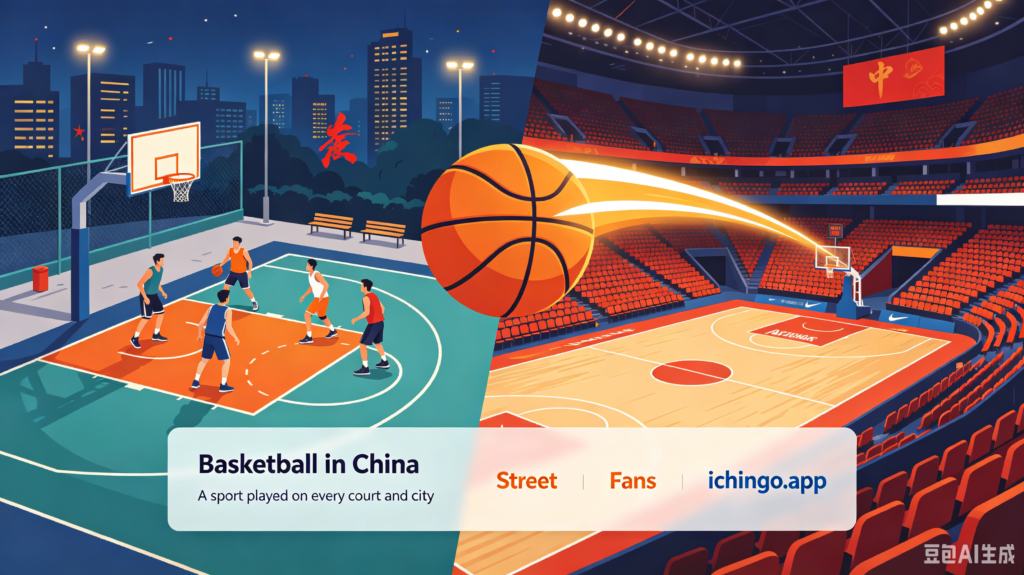
2C. Basketball — Yao Ming’s Legacy
Yao Ming (姚明), the 2.29-meter NBA center who played for the Houston Rockets from 2002 to 2011, single-handedly created a basketball boom in China. Yao’s NBA career was watched by hundreds of millions of Chinese fans and transformed basketball from a niche sport into one of China’s most followed. He is now president of the Chinese Basketball Association.
- The NBA has an estimated 600 million fans in China — more than any other country outside North America
- Basketball courts are in every school, most residential compounds, and thousands of public parks across China
- The CBA (Chinese Basketball Association) is the world’s second most attended basketball league after the NBA
- Street basketball (三人制, 3-on-3) is extremely popular among young urban Chinese — often played in the evenings on illuminated outdoor courts
Part 3 — Esports (电竞) — China’s New Sports Empire
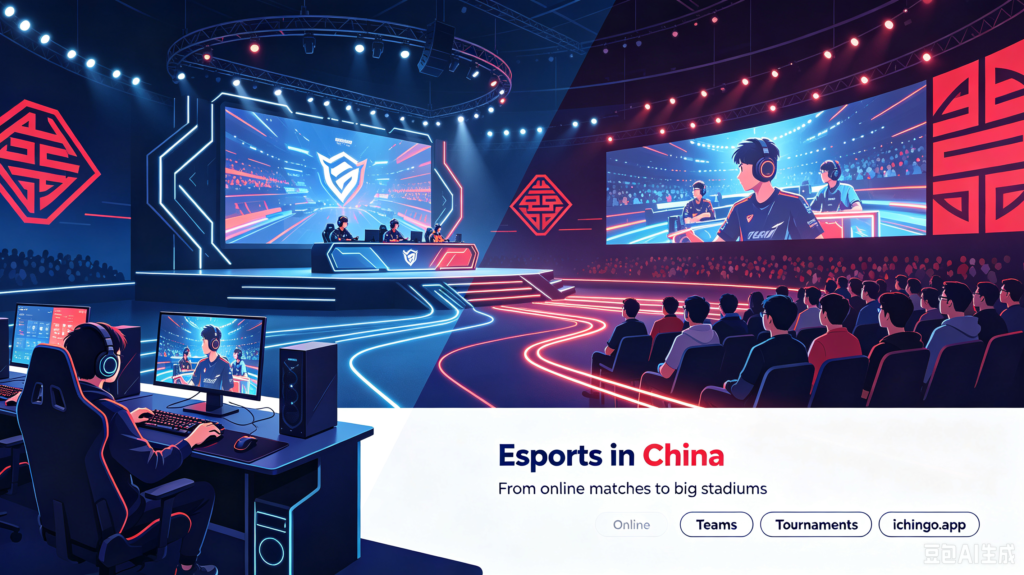
China is the world’s largest esports market — in terms of revenue, player count, viewership, and cultural significance. In China, esports is not a subculture or a niche hobby. It is mainstream entertainment watched by hundreds of millions, contested in 60,000-seat stadiums, with professional players who are treated as celebrities equivalent to football stars.
3A. The Scale Is Hard to Comprehend
| Esports Fact | China Context |
| Honor of Kings daily active users | 100+ million — the most played mobile game in history. Created by Tencent. The Chinese version of a MOBA (Multiplayer Online Battle Arena). Players compete in 5v5 team battles. |
| League of Legends (China) | China has won the LoL World Championship more times than any other region. Chinese teams are the most feared competitors globally. |
| Esports stadium audiences | The 2022 LoL World Championship final in San Francisco was watched by over 5 million concurrent viewers in China — more than the Super Bowl’s Chinese audience. |
| Professional player salaries | Top Chinese esports professionals earn ¥5–¥20 million per year. The best players are national celebrities with millions of social media followers. |
| University esports programs | Hundreds of Chinese universities offer esports as an academic major — covering game strategy, team management, broadcasting, and sports psychology. |
| Government recognition | Esports became an official competitive sport in China in 2003. The government now supports esports development as part of its digital economy strategy. |
3B. China’s Most Popular Games
| Game | Chinese Name | Why It Matters Culturally |
| Honor of Kings | 王者荣耀 | The most played mobile game in history — 100+ million daily players. Developed by Tencent. Features characters from Chinese history and mythology (heroes like Li Bai, Mulan, Zhuge Liang). More Chinese people play this daily than the population of Germany. |
| League of Legends | 英雄联盟 | The world’s most watched esport. China’s professional scene (LPL) is the most dominant internationally. The game gave rise to China’s first globally recognized esports celebrities. |
| PUBG Mobile | 和平精英 | Battle royale shooter with over 100 million Chinese players. The Chinese version (Peace Elite) is modified significantly from the global version for regulatory compliance. |
| Genshin Impact | 原神 | Created by Chinese studio miHoYo. One of the highest-grossing games globally. Beautifully designed open-world RPG with Chinese mythology, aesthetics, and characters. Generated $4+ billion in revenue in its first two years. |
| CrossFire | 穿越火线 | China’s most-played PC FPS game with 8 million peak concurrent users. Korean-developed but predominantly a Chinese phenomenon. |
| Mahjong Online | 麻将游戏 | Traditional Chinese game now massively played online and on mobile. Dozens of regional variants. A connection between traditional gaming culture and digital entertainment. |
| 📌 Did You Know: The Chinese government limits gaming time for minors (under 18): legally allowed only 1 hour on weekdays, 2 hours on weekends, with strict identity verification. This 2021 regulation created a generation of young Chinese who grew up under strict gaming restrictions — and also created a booming market for ‘game-coaching’ services that help adults improve their skills to play with restricted minor family members. |
Part 4 — Modern Gym & Fitness Culture
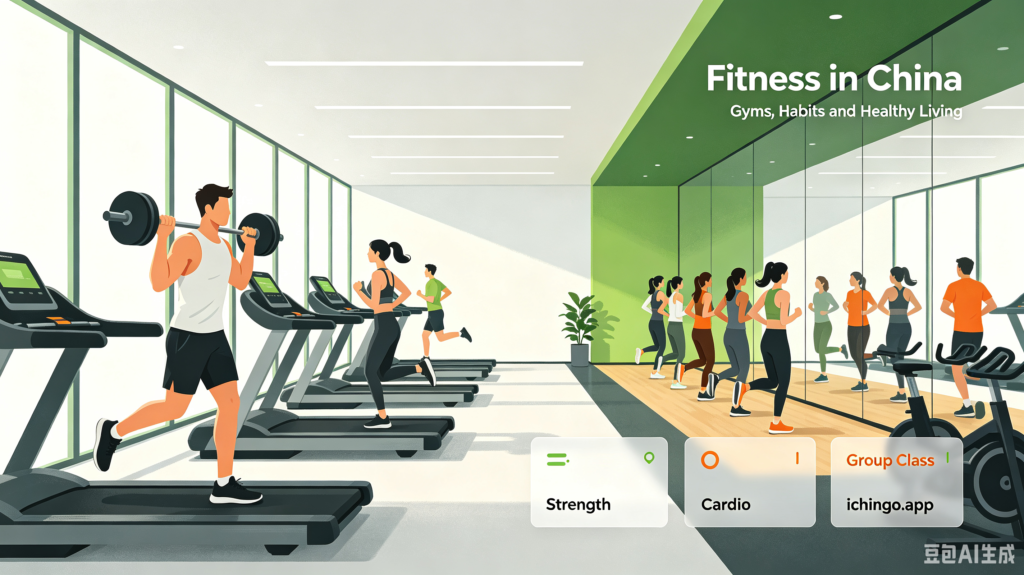
China’s gym and fitness industry has exploded since 2015. The country went from virtually no gym culture to one of the world’s fastest-growing fitness markets in under a decade — driven by a health-conscious urban middle class, social media fitness influencers, and apps that gamified exercise.
4A. The Gym Boom
- China has over 130,000 commercial fitness venues — gyms, studios, and sports centers
- Keep App (Keep运动) has 300 million registered users — China’s answer to Peloton + MyFitnessPal + YouTube fitness combined, all in one app
- Group fitness classes are extremely popular: yoga, HIIT, cycling, and dance classes fill studio schedules from 7am to 10pm
- Running has become a major lifestyle hobby — major cities’ marathon events (Beijing, Shanghai, Guangzhou) are massively oversubscribed
- Gym chains: Super Monkey (超级猩猩) and Lefit (乐刻运动) are the dominant mid-market chains with hundreds of locations across tier-1 cities. Day pass: ¥30–¥60
4B. The Running & Outdoor Movement
Running, cycling, hiking, and outdoor fitness have surged dramatically among Chinese urbanites under 40. The combination of improved air quality in major cities, better urban park infrastructure, and fitness-tracking social sharing has created a new outdoor sports culture.
- Shenzhen Bay Park: 15km coastal running path is one of the most popular urban running routes in China — packed every morning and evening
- Cycling: electric bikes dominate commuting but road cycling (骑行) is a growing hobby sport — Hainan Island has hosted UCI professional cycling events
- Hiking (徒步): organized group hiking is a major weekend activity in cities near mountains — WeChat groups organize free community hikes every weekend in most major cities
- Swimming: China has produced world-class swimmers including Sun Yang — public swimming pools (¥15–¥40/session) are in most neighborhoods
| 📱 ichingo.app — China App Connection: Fitness apps and gym booking in China:Keep (Keep App / Keep运动) — China’s most popular all-in-one fitness app. 300 million users. Video workout programs (Tai Chi, yoga, HIIT, strength), running tracking, gym class booking, and social sharing. Available in English and Chinese. The best single app for maintaining fitness during a China visit.Dianping (大众点评) — Search 健身房 (gym) near your location for gym reviews, prices, and day passes. Also find 游泳馆 (swimming pool), 瑜伽 (yoga studio), and 羽毛球 (badminton court). Full guide on ichingo.app.Meituan (美团) — Many gyms and fitness studios offer discounted day passes through Meituan. Also book fitness classes, yoga sessions, and sports experiences. Full guide on ichingo.app. |

Part 5 — Watching Sport in China as a Visitor
5A. Attending Live Events
| Sport | Ticket Price | Where & How to Book |
| Chinese Super League (Football) | ¥30–¥300 | Tickets via club official WeChat mini-programs or Damai (大麦网, China’s Ticketmaster). Major clubs: Beijing Guoan (Workers’ Stadium), Shanghai Port (Hongkou Football Stadium). |
| CBA Basketball | ¥50–¥500 | Via Damai or club apps. Beijing Ducks, Shanghai Sharks, Guangdong Southern Tigers are the biggest brands. Season October–April. |
| Esports Tournaments | ¥80–¥1,500 | Major events via Damai. The LPL (League of Legends Pro League) holds matches weekly at dedicated esports arenas in Shanghai and other cities. Tickets often sold out — book months in advance for championship events. |
| Table Tennis (World Tour) | ¥50–¥500 | ITTF World Tour events rotate through Chinese cities. Check ITTF schedule. Watching Chinese national team members at close range is a genuinely astonishing athletic display. |
| Marathon (spectating free) | Free to watch | Beijing Marathon (October), Shanghai Marathon (November), Guangzhou Marathon (December) are the biggest. Course-side watching is free. Registration for participants is a lottery — highly competitive. |
| 📱 ichingo.app — China App Connection: Booking sports event tickets in China:Klook — English-language booking for major sports experiences and some ticketed events. Accepts international credit cards. Full guide on ichingo.app.Trip.com (携程) — Chinese sports events are sometimes listed on Trip.com alongside cultural attractions. Also use for transport to stadiums in other cities. Full guide on ichingo.app.Didi (滴滴) — Get to and from sports venues reliably. Stadium areas often have poor public transport options on match days. Full guide on ichingo.app.Yandex Translate — Use camera translation to navigate Chinese-only sports venue signage and ticket systems. No VPN needed inside China. Full guide on ichingo.app. |
5B. Sport & Exercise Quick Reference for Visitors
| Activity | Cost | How to Do It |
| Watch morning Tai Chi | Free | Go to any large park by 6:30am. Stand nearby and observe — or simply copy the movements. |
| Join square dancing | Free | Find an evening group in any public square (usually 6–9pm). Walk up, stand in the back row, and start copying. You will be welcomed. |
| Play ping-pong | ¥5–¥15/hour | Find a community center (社区中心) and ask for the table tennis room. Almost every district has free or near-free tables. |
| Badminton session | ¥20–¥60/hour | Book via Dianping — search 羽毛球馆 near you. Courts usually available without advance booking on weekdays. |
| Tai Chi class | ¥100–¥300/session | Book via Klook for English-taught classes. Drop-in classes available near major tourist areas. |
| Gym day pass | ¥30–¥60 | Search 健身房 on Dianping. Super Monkey and Lefit offer flexible daily access. |
| Public swimming | ¥15–¥40/session | Search 游泳馆 on Dianping. Most pools are excellent quality in major cities. |
| Watch esports live | ¥80–¥500 | Book via Damai for LPL or tournament events. Shanghai is the esports capital. |
Final Thought — Sport as Social Fabric
In China, sport and exercise are less about individual performance and more about community, longevity, and social connection. The Tai Chi group in the park is not competing — it is breathing together. The square dancers are not performing — they are belonging. The ping-pong table in the office is not there for recreation — it is there for the five-minute conversation that happens between games.
Even esports — seemingly the most solitary of activities — is predominantly a social experience in China: played in teams, watched communally, discussed endlessly on social media. The game is the occasion; the connection is the point.
Whether you join a dawn Tai Chi session, challenge a local to ping-pong, watch a table tennis legend practice, or attend an esports championship — sport in China will show you something essential about how Chinese people relate to their bodies, their communities, and each other.
For guides to every app mentioned in this document — Dianping, Keep, Klook, Meituan, Didi, Trip.com, Yandex Translate, and more — visit ichingo.app — your complete toolkit for experiencing China.


