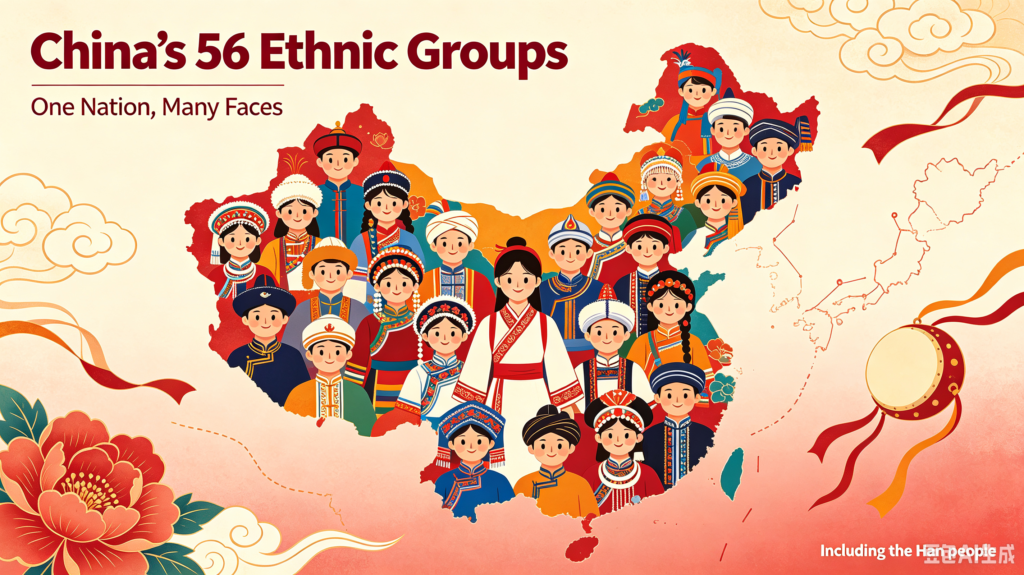
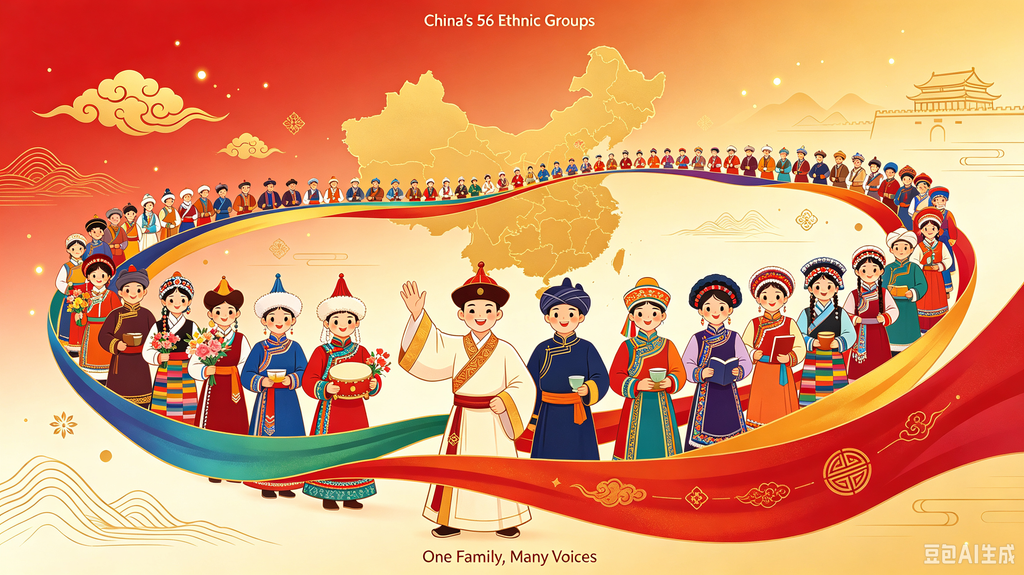
China’s 56 Ethnic Groups — One Country, Many Worlds
China is not one culture — it is 56 civilizations sharing a map. Here is your guide to the people, traditions, and places.
Introduction — China Is Not One Culture
Most foreign visitors arrive thinking of China as one unified culture. The reality is far more extraordinary: China officially recognizes 56 distinct ethnic groups (民族 mínzú), each with its own language or dialect, traditional dress, music, cuisine, architecture, festivals, and relationship to the land. The Han Chinese majority makes up about 91.6% of the population, but the remaining 8.4% — roughly 125 million people — represent a breathtaking diversity of human cultures, some of the oldest and most distinctive in Asia.
These groups inhabit China’s most spectacular landscapes: the Tibetan plateau, the Xinjiang desert, the rice terraces of Yunnan, the karst mountains of Guangxi, the grasslands of Inner Mongolia, the tropical forests of Hainan, and the frozen north of Heilongjiang. Understanding China’s ethnic diversity will transform how you see the country — every region you visit carries the cultural DNA of specific peoples who have lived there for millennia.
This guide introduces the most significant ethnic groups, where they live, what makes their culture distinctive, and how ichingo.app apps can help you reach, experience, and navigate China’s remarkable ethnic diversity.
Part 1 — The Big Picture
56 Groups by the Numbers
Fact
Details
Total ethnic groups recognized
56 — officially classified by the government since the 1950s through an extensive ethnographic survey
Han Chinese population
~1.28 billion (91.6% of total) — the world’s largest ethnic group
Ethnic minority population
~125 million (8.4%) — roughly equal to Japan’s entire population
Languages spoken
Over 300 distinct languages and dialects across all 56 groups
Largest minority group
Zhuang (壮族) — approximately 18 million people in Guangxi
Geographic distribution
Minority groups predominantly in border regions: Xinjiang, Tibet, Yunnan, Guangxi, Inner Mongolia, Guizhou, Qinghai
Official policies
All ethnic groups are legally equal under China’s constitution. Minority areas have autonomous region status with some special governance rights.
Cultural preservation
China has registered thousands of minority cultural practices as national intangible cultural heritage
📌 Did You Know: China’s ethnic minority regions cover approximately 64% of China’s total land area but contain only 8.4% of the population. This means China’s most remote, scenic, and ecologically diverse landscapes — the Tibetan plateau, Xinjiang deserts, Yunnan rainforests, and Inner Mongolian steppes — are primarily the ancestral homelands of minority peoples.
Part 2 — The Han Chinese (汉族 Hànzú)
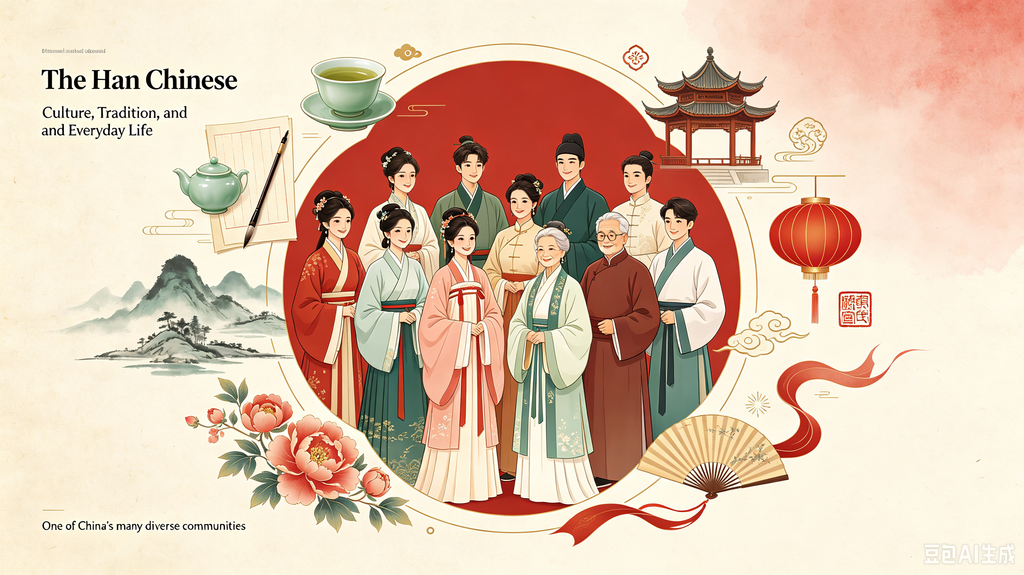
The Han Chinese are the world’s largest ethnic group — 1.28 billion people sharing a common written language, a Confucian cultural framework, and the historical legacy of Chinese civilization. But ‘Han’ encompasses enormous internal diversity: a person from Canton in the south and a person from Manchuria in the north may speak mutually unintelligible dialects, eat completely different foods, and celebrate different regional traditions.
Aspect
Details
Name origin
Named after the Han Dynasty (206 BC – 220 AD), when Chinese civilization reached its first great consolidation
Written language
Classical Chinese characters — the same written system used across all Han communities regardless of spoken dialect
Major dialect groups
Mandarin (official), Cantonese (Guangdong/Hong Kong), Min (Fujian/Taiwan), Wu (Shanghai), Hakka, and more
Cultural pillars
Confucian ethics, ancestor veneration, the lunar calendar, the imperial examination tradition, and the concept of face (mianzi)
Food diversity
Enormously varied — Beijing duck vs Guangdong dim sum vs Sichuan hotpot vs Shanghai soup dumplings are all ‘Han’ cuisines but bear little resemblance to each other
Regional identities
Han people identify strongly with their home regions — a Shanghainese, a Cantonese, and a Beijinger may feel they have more cultural differences than similarities
Part 3 — The Most Significant Minority Groups
These are the ethnic groups most likely to shape your experience as a visitor — either through the places you visit, the food you eat, the music you hear, or the cultural practices you encounter.
🌿 Zhuang People (壮族 Zhuàngzú) Population: ~18 million · Guangxi Zhuang Autonomous Region
The Zhuang are China’s largest ethnic minority — 18 million people living primarily in the Guangxi Zhuang Autonomous Region in southern China. They are closely related to the Thai and Lao peoples of Southeast Asia and share elements of culture, language, and agricultural tradition.
Most famous for: The Dragon’s Backbone Rice Terraces (龙脊梯田) — thousands of years of terraced rice cultivation carved into mountains, now a UNESCO-listed heritage landscape
Language: Zhuang language belongs to the Tai-Kadai family — closer to Thai than to Mandarin
Festivals: The Third Month Third (三月三) festival is Guangxi’s largest cultural celebration — traditional songs, food, and the antiphonal folk singing tradition
Distinctive culture: Zhuang brocade weaving (壮锦) is one of China’s four great weaving traditions — intricate geometric patterns in brilliant colors
Where to see: Guilin, Longsheng, Sanjiang county — the rice terraces and wooden stilted villages
📱 ichingo.app — China App Connection: Visiting Zhuang areas and Guangxi:Trip.com (携程) — Book high-speed train tickets to Guilin, then connect to Longsheng for the rice terraces. Full guide on ichingo.app.Klook — Guided tours to Dragon’s Backbone Rice Terraces with English-speaking guides. Accepts international cards. Full guide on ichingo.app.Didi (滴滴) — Get a private car from Guilin to remote Zhuang villages. Full guide on ichingo.app.
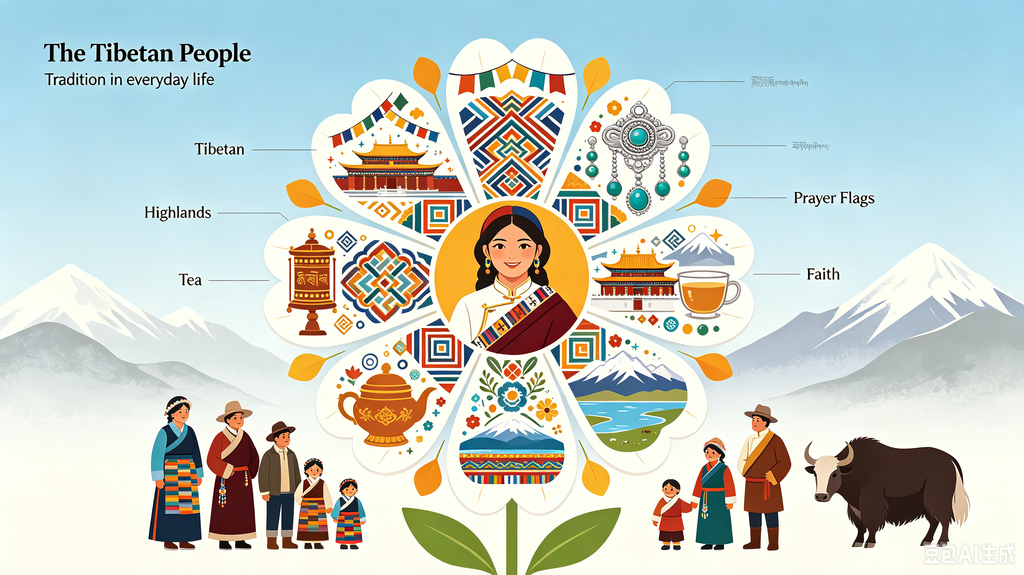
🏔️ Tibetan People (藏族 Zàngzú) Population: ~7 million · Tibet, Qinghai, Sichuan, Yunnan
The Tibetan people inhabit the world’s highest plateau — an average elevation of 4,500 meters — and have developed one of the world’s most distinctive and profound civilizations. Tibetan Buddhism, Tibetan medicine, Tibetan art, and the Tibetan language form a coherent cultural universe that has influenced the spiritual life of Asia for over a millennium.
Religion: Tibetan Buddhism is the foundation of Tibetan cultural identity — the Dalai Lama is the spiritual leader, living in exile in Dharamshala, India since 1959
Architecture: White-walled monasteries perched on cliffs, the Potala Palace in Lhasa (winter palace of the Dalai Lamas), sky burial sites
Distinctive customs: Sky burial (天葬) — the body is offered to vultures after death, returning to nature; prayer flags; prayer wheels; butter sculptures
Music: Overtone chanting, long horns (dungchen), the gesar epic — the world’s longest literary epic at over 1 million verses
Where to see: Lhasa (Potala Palace, Barkhor Street), Shigatse, Gyantse, Yarlung Valley
✅ Good to Know: Foreign visitors require a Tibet Travel Permit in addition to a Chinese visa — must be arranged through a registered travel agency before arrival. Allow 2–3 days to acclimatize to altitude before major activities.
📱 ichingo.app — China App Connection: Visiting Tibet and Tibetan areas:Trip.com (携程) — Book flights to Lhasa (Lhasa Gonggar Airport). Tibet Travel Permit must be arranged through a licensed agency. Full guide on ichingo.app.Feizhu (飞猪) — Book accommodation in Lhasa and Shigatse. Full guide on ichingo.app.Yandex Translate — Translate Tibetan script and Chinese signs throughout Tibet. Camera translation works without VPN. Full guide on ichingo.app.
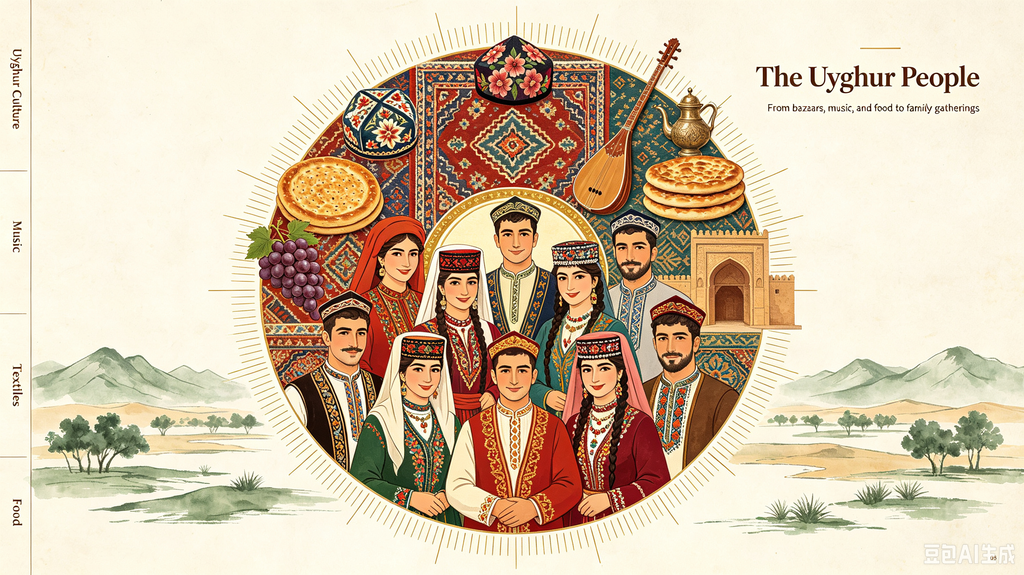
🌙 Uyghur People (维吾尔族 Wéiwú’ěrzú) Population: ~12 million · Xinjiang Uyghur Autonomous Region
The Uyghur people are a Turkic-speaking Muslim people living in Xinjiang, China’s largest administrative region covering one-sixth of China’s total area. Their culture reflects the historic crossroads of the Silk Road — Central Asian, Persian, and Han Chinese influences blended into a distinctive civilization known for its music, food, dance, and architecture.
Language: Uyghur — a Turkic language written in Arabic script, closer to Uzbek or Kazakh than to Mandarin
Religion: Predominantly Sunni Muslim — mosques, Islamic architecture, and halal food are central to Uyghur life
Cuisine: One of China’s great food traditions — lamb skewers (羊肉串), naan bread, hand-grabbed rice (手抓饭), samsa (baked pastries), pomegranate juice
Music and dance: The dutar (two-stringed lute), rawap, and the Twelve Muqam — a UNESCO-listed musical tradition of epic complexity and beauty
Markets: The Grand Bazaar in Urumqi and the Sunday Market in Kashgar (喀什) are among the most extraordinary markets in Asia
Where to see: Kashgar old city, Urumqi, Turpan, Khotan, the ancient Silk Road cities of Xinjiang
📱 ichingo.app — China App Connection: Visiting Xinjiang and Uyghur areas:Trip.com — Book flights to Urumqi (Diwopu International Airport) or Kashgar. Xinjiang is a long journey from eastern China — flying is strongly recommended. Full guide on ichingo.app.Baidu Maps (百度地图) — Navigate Urumqi and Kashgar, including the Grand Bazaar and old city areas. Full guide on ichingo.app.
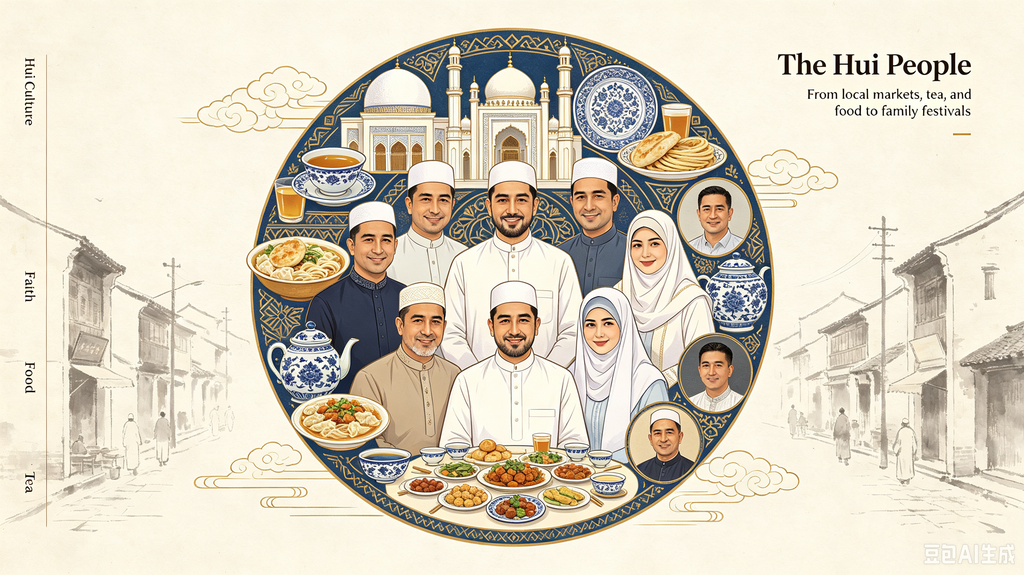
☪️ Hui People (回族 Huízú) Population: ~11 million · Nationwide, concentrated in Ningxia, Gansu, Qinghai
The Hui are China’s most widely distributed ethnic minority — found in virtually every Chinese city and province. They are Han Chinese Muslims whose ancestors converted to Islam during the Tang and Song dynasties through contact with Central Asian and Persian traders along the Silk Road. Unlike the Uyghurs, Hui people speak Mandarin as their primary language and are often indistinguishable from Han Chinese except by their Islamic practices.
Religion: Sunni Islam — the defining characteristic of Hui identity. Mosques (清真寺) in Hui areas are often built in Chinese architectural style rather than Middle Eastern style
Food: Hui cuisine is halal Chinese food — no pork, no alcohol, but otherwise deeply Chinese in technique and flavor. Xi’an’s Muslim Quarter is the most famous Hui food destination in China
Most famous for: Xi’an Muslim Quarter (回民街) — hundreds of halal food stalls selling roujiamo, lamb soup, biangbiang noodles, and candied hawthorn
Distribution: Concentrated in Ningxia Hui Autonomous Region, Gansu, Qinghai, and Yunnan, but also significant communities in Beijing, Xi’an, Kunming, and virtually every major Chinese city
Lanzhou beef noodles (兰州牛肉拉面): Invented by Hui people in Gansu — now found in every Chinese city as a reliable halal meal
📱 ichingo.app — China App Connection: Finding Hui restaurants and areas across China:Dianping (大众点评) — Search 清真 (qingzhen, meaning halal) near your location to find Hui Muslim restaurants in any Chinese city. Full guide on ichingo.app.Baidu Maps — Search 清真寺 to find the nearest mosque or 回民街 to find the nearest Muslim quarter. Full guide on ichingo.app.
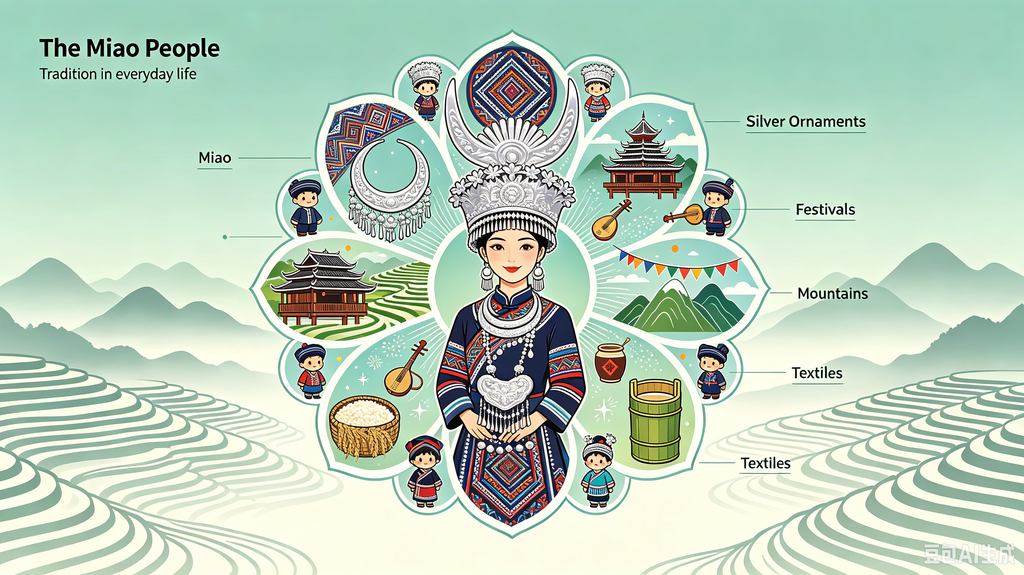
🌺 Miao People (苗族 Miáozú) Population: ~11 million · Guizhou, Yunnan, Hunan, Guangxi
The Miao people are one of China’s most visually striking minorities — famous for their extraordinary silver jewelry, intricate hand-embroidery, and some of the world’s most elaborate traditional costumes. They live primarily in the mountainous villages of Guizhou province, where their wooden stilted houses cascade down hillsides and their festivals fill valleys with song, dance, and silver.
Traditional dress: Miao women wear headdresses of solid silver weighing up to 10 kilograms — the most spectacular traditional adornment of any Chinese ethnic group. Each village has its own distinct embroidery pattern that encodes the village’s history and mythology
Silver culture: Miao silver smithing is an ancient tradition — every family accumulates silver jewelry as wealth and identity. The silver worn at major festivals represents a family’s entire economic value
Music: The lusheng (芦笙) — a bamboo mouth organ — is the Miao’s defining musical instrument. Lusheng dances are performed at festivals with hundreds of dancers moving in synchronized circles
Architecture: Wooden drum towers and wind-and-rain bridges in Dong (侗族) villages nearby — among China’s most extraordinary vernacular architecture
Where to see: Xijiang Miao Village (西江千户苗寨) in Guizhou — the world’s largest Miao village, with over 1,200 wooden homes on a hillside
📱 ichingo.app — China App Connection: Visiting Miao villages in Guizhou:Trip.com — Book flights to Guiyang (贵阳) then connect by bus or car to Xijiang Miao village. Full guide on ichingo.app.Klook — Guided Guizhou ethnic minority tours with English guides. Visits to Miao and Dong villages with cultural immersion. Full guide on ichingo.app.Didi — Private car from Guiyang or Kaili to remote Miao villages. Full guide on ichingo.app.
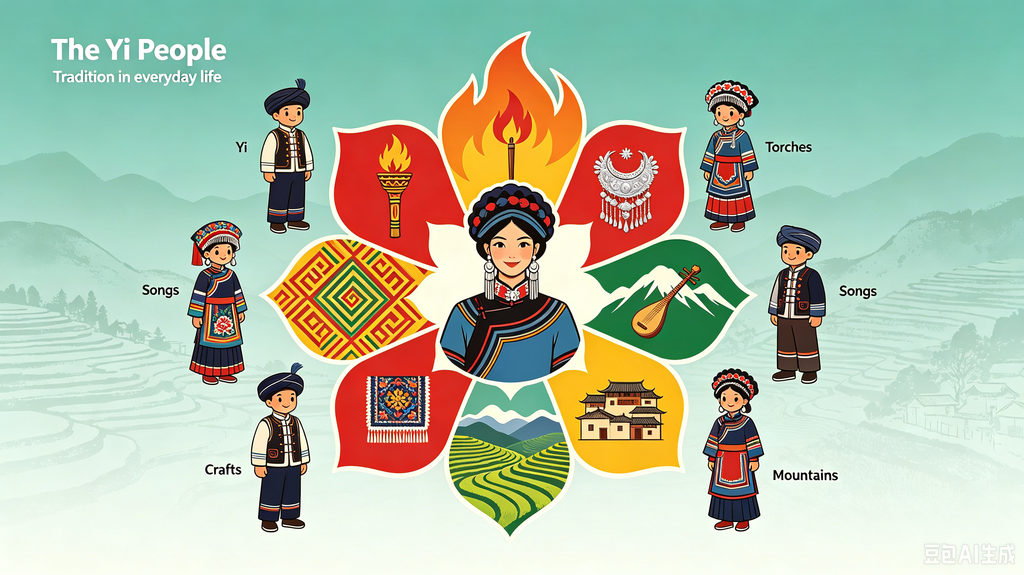
🔥 Yi People (彝族 Yízú) Population: ~9 million · Yunnan, Sichuan, Guizhou, Guangxi
The Yi are one of China’s oldest and most historically powerful ethnic groups — they once ruled much of what is now Yunnan and Sichuan. They have their own script (one of the few ethnic minorities with a traditional writing system), a rich oral literature, and a culture built around fire, tobacco, and the highland plateau.
The Torch Festival (火把节): Yi culture’s greatest celebration — held annually in July or August when communities light enormous torches and spend three nights in music, wrestling, bullfighting, and fire-walking. One of China’s most spectacular ethnic festivals
Yi script: One of China’s few ethnic groups with a traditional writing system that predates contact with Han civilization — Yi script is still used in religious texts and taught in schools
Lijiang connection: The Naxi people (纳西族), closely related to the Yi, inhabit the UNESCO-listed old town of Lijiang — one of the most visited minority culture destinations in China
Black clothing tradition: Traditional Yi dress features predominantly black fabric with bright embroidered borders — reflecting the Yi traditional worldview that associates black with strength
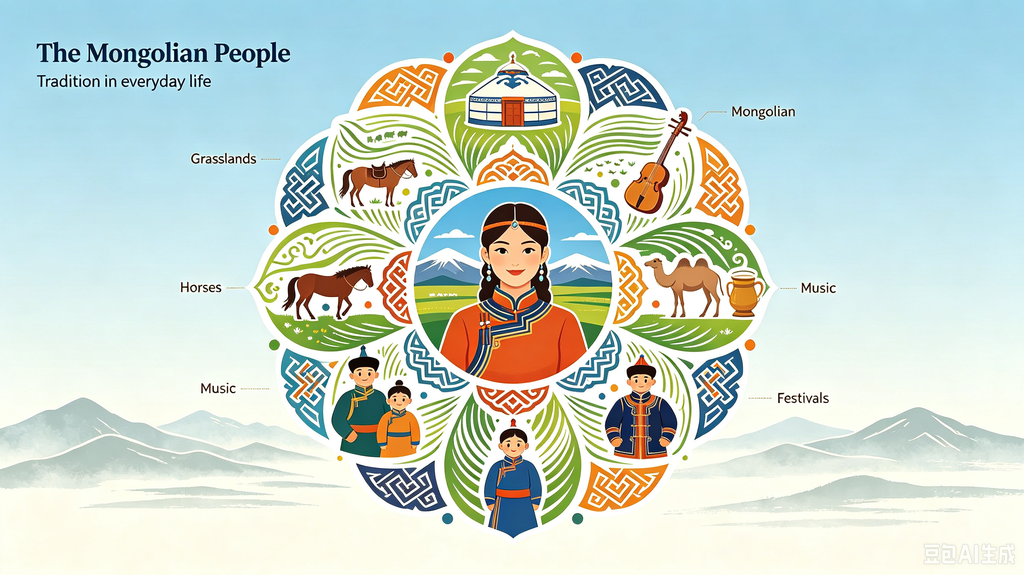
🐎 Mongolian People (蒙古族 Měnggǔzú) Population: ~6 million · Inner Mongolia, Xinjiang, Liaoning
The Mongolians of Inner Mongolia are the southernmost branch of the Mongolian people — culturally connected to the Mongolians of independent Mongolia but living within China’s borders. Their traditional nomadic herding culture, centered on horses, yurts (蒙古包), and the vast grasslands, represents one of the world’s great nomadic civilizations.
Traditional life: Herding horses, cattle, camels, and sheep on the steppes. The ger/yurt (蒙古包) — a felt tent that can be assembled in 30 minutes — is the defining symbol of nomadic life
Naadam Festival: The great summer festival of wrestling, archery, and horse racing — held in July and August on the grasslands. One of the most exciting sporting and cultural events in northern China
Food: Roasted whole lamb (烤全羊), hand-grabbed mutton (手抓羊肉), milk tea (奶茶), airag (fermented mare’s milk), and dairy products from horse, camel, and cow milk
Music: The morin khuur (马头琴, horse-head fiddle) and the extraordinary throat singing (呼麦) tradition — a UNESCO Intangible Cultural Heritage
Where to see: Hulunbuir Grasslands, Xilingol Grasslands, and the areas around Hohhot — all accessible by train from Beijing
📱 ichingo.app — China App Connection: Visiting Inner Mongolia and Mongolian areas:Trip.com — Book high-speed train or flight to Hohhot (呼和浩特) — the capital of Inner Mongolia, about 4 hours from Beijing by fast train. Full guide on ichingo.app.Klook — Grassland tours from Hohhot with yurt stays, horse riding, and traditional meals. English booking, international cards. Full guide on ichingo.app.
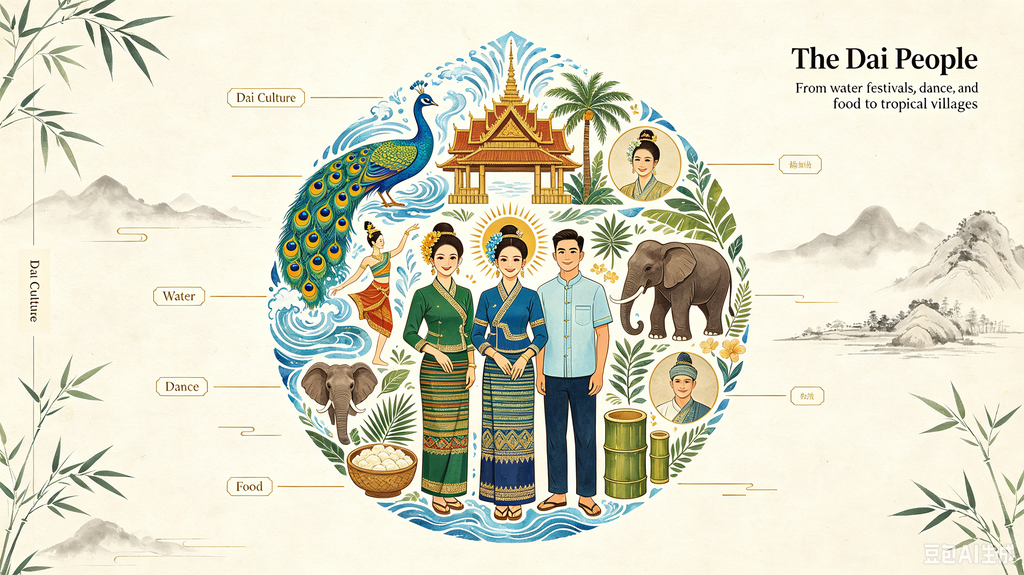
🌴 Dai People (傣族 Dǎizú) Population: ~1.3 million · Xishuangbanna, Yunnan
The Dai people of Xishuangbanna in southern Yunnan are culturally and linguistically connected to the Thai and Lao peoples of Southeast Asia — their language is mutually intelligible with Thai, their Theravada Buddhist temples look identical to those of Thailand, and their cuisine shares the flavors of the Mekong Delta. Visiting Xishuangbanna feels like crossing into Southeast Asia without leaving China.
Water Splashing Festival (泼水节): The most famous Dai festival — the Dai New Year celebrated in April with three days of water-splashing, dragon boat racing, and lantern floating. One of China’s most joyful and photogenic cultural events
Architecture: Octagonal pagodas, wooden temple complexes identical to Thai Buddhist temples, traditional stilted houses on the banks of the Lancang (Mekong) River
Food: Lemongrass, galangal, banana leaf wrapping, river fish, and jungle vegetables — the freshest and most aromatic cuisine in China
Language: Dai language is written in an elegant curvilinear script — visible on temple walls and village signs throughout Xishuangbanna
Where to see: Jinghong city, Mengla, Menghai — Xishuangbanna Dai Autonomous Prefecture in southern Yunnan, bordering Laos and Myanmar
Part 4 — All 56 Ethnic Groups at a Glance
China officially recognizes exactly 56 ethnic groups. Here they are, organized by population size, with their home regions and one defining characteristic.
#
Group (English)
Chinese
Primary Region
One Defining Characteristic
1
Han
汉族
Nationwide
The world’s largest ethnic group; Chinese civilization’s majority culture
2
Zhuang
壮族
Guangxi
Dragon’s Backbone Rice Terraces; largest minority group; Tai-Kadai language
3
Hui
回族
Ningxia, Gansu, nationwide
Chinese-speaking Muslims; Xi’an Muslim Quarter; halal cuisine tradition
4
Manchu
满族
Liaoning, Jilin, Heilongjiang
Founded the Qing Dynasty (1644-1912); most assimilated minority; few fluent speakers remain
5
Uyghur
维吾尔族
Xinjiang
Turkic-speaking; Silk Road culture; extraordinary food tradition; the Twelve Muqam music
6
Miao
苗族
Guizhou, Yunnan, Hunan
Silver headdresses up to 10kg; intricate embroidery encodes village history; lusheng music
7
Yi
彝族
Yunnan, Sichuan, Guizhou
Own ancient script; Torch Festival; strong highland warrior tradition
8
Tujia
土家族
Hunan, Hubei, Chongqing
Waving Hand Dance (摆手舞); wooden brocade weaving; Zhangjiajie area homelands
Wind-and-rain bridges; drum tower villages; Dong Grand Song (侗族大歌) choral tradition
12
Buyei
布依族
Guizhou
Stone villages; batik dyeing; rice wine culture; worshippers of nature spirits
13
Yao
瑶族
Guangxi, Yunnan, Guangdong
Long Hair Yao women of Huangluo village (never cut hair, averages 1.4m); Red Yao
14
Bai
白族
Yunnan (Dali)
San Chao Tea ritual; Dali old city; white architecture with black-tile roofs; Three Pagodas
15
Korean
朝鲜族
Jilin (Yanbian)
Korean culture within China; kimchi; changgu drum dance; Korean language schools
16
Hani
哈尼族
Yunnan
Yuanyang Rice Terraces — UNESCO World Heritage; animist cosmology encoded in terraces
17
Kazakh
哈萨克族
Xinjiang (Ili)
Nomadic herding; eagle hunting tradition; traditional yurt felt art
18
Li
黎族
Hainan Island
China’s original Hainan islanders; Li brocade weaving; tattoo culture; boat-coffin burial
19
Dai
傣族
Yunnan (Xishuangbanna)
Water Splashing Festival; Theravada Buddhist temples; identical to Thai/Lao culture
20
She
畲族
Fujian, Zhejiang, Jiangxi
Dog King ancestor legend; unique marriage songs; blue-black traditional dress
21
Lisu
傈僳族
Yunnan (Nujiang Canyon)
Knife-ladder climbing (刀竿节); world’s most rugged terrain; strong Christian community
22
Dongxiang
东乡族
Gansu
Descended from Mongol soldiers who converted to Islam; most isolated minority region
23
Gelao
仡佬族
Guizhou
Ancient Yelang Kingdom descendants; tushi architecture; unique totem worship
24
Lahu
拉祜族
Yunnan
Gourd musicians; hunter-gatherer roots; Gourd Festival in February
25
Wa
佤族
Yunnan (Ximeng, Cangyuan)
Wood-drum culture; former headhunting tradition ended in 1950s; powerful ritual music
26
Shui
水族
Guizhou
Own unique script (水书) used only by shamans; fish worship; horse racing festival
27
Naxi
纳西族
Yunnan (Lijiang)
Dongba pictographic script (东巴文); Lijiang old town UNESCO site; matriarchal Mosuo sub-group
28
Qiang
羌族
Sichuan (Aba)
One of China’s oldest documented peoples; stone watchtower villages; horn-blowing
29
Tu
土族
Qinghai
Elaborately embroidered sleeves with seven rainbow-colored stripes; wheel dance
30
Mulam
仫佬族
Guangxi
Cave-dwelling ancestors; fire festival; unique bronze drum culture
31
Xibe
锡伯族
Xinjiang, Shenyang
Descendants of border garrison soldiers sent from Shenyang to Xinjiang in 1764; still speak old Manchu
32
Kirgiz
柯尔克孜族
Xinjiang (Kizilsu)
Epic of Manas — world’s second longest epic poem (500,000 lines); eagle hunting
33
Daur
达斡尔族
Inner Mongolia, Heilongjiang
Excellent athletes; China’s field hockey tradition; strong shamanism
34
Jingpo
景颇族
Yunnan (Dehong)
Munao Zongge Festival — thousands dance in spiral formations; crossed swords tradition
35
Maonan
毛南族
Guangxi (Huanjiang)
Stone carving tradition; shell ginger (花竹帽) hat weaving; Frog worship festival
36
Salar
撒拉族
Qinghai (Xunhua)
Descended from Central Asian Turkic migrants; camel legend of origin; strong Islamic identity
37
Blang
布朗族
Yunnan (Xishuangbanna)
Ancient tea cultivators — possibly the originators of Pu-erh tea; buffalo horn drinking vessels
38
Tajik
塔吉克族
Xinjiang (Taxkorgan)
Iran-related Pamiri people; eagle dance; highest-altitude Chinese ethnic community
39
Achang
阿昌族
Yunnan (Longchuan)
Master sword-makers — Husa swords (户撒刀) are China’s finest traditional blades
40
Pumi
普米族
Yunnan (Lanping, Lijiang)
Tibetan-related highland people; unique cremation ceremony; big year-end torch festival
41
Ewenki
鄂温克族
Inner Mongolia, Heilongjiang
Reindeer herders of China’s north — the last nomadic reindeer people in the country
42
Nu
怒族
Yunnan (Nujiang Canyon)
Vine bridge crossings (溜索) over the Nujiang River gorge — one of China’s most dramatic landscapes
43
Gin
京族
Guangxi (Fangcheng)
Vietnam-related maritime people; only sea-based minority; the Duxian single-string instrument
44
Jino
基诺族
Yunnan (Xishuangbanna)
Most recently officially recognized (1979); matrilineal clans; Sun Drum festival
45
De’ang
德昂族
Yunnan (Dehong)
Ancient tea people — grow and drink tea in Blang Mountain as identity ritual
46
Uzbek
乌孜别克族
Xinjiang
Central Asian Silk Road traders; most urban of Xinjiang’s Turkic minorities
47
Russian
俄罗斯族
Xinjiang, Inner Mongolia
Descendants of Russian settlers; Eastern Orthodox Christian; Russian folk music tradition
48
Yugur
裕固族
Gansu (Sunan)
Ancient Silk Road people; multicolored traditional dress; yurt nomads
49
Bonan
保安族
Gansu
Famous for Bonan waist-knives decorated with fish-pattern bone handles
50
Monba
门巴族
Tibet (Mêdog)
Culturally Tibetan; woodcarving; Mêdog canyon — China’s most inaccessible county
51
Oroqen
鄂伦春族
Inner Mongolia, Heilongjiang
Forest hunters who lived entirely on reindeer and birch bark until recent decades
52
Derung
独龙族
Yunnan (Gongshan)
One of China’s smallest groups; women’s traditional facial tattooing; Dulong River canyon
53
Tatars
塔塔尔族
Xinjiang
Descended from Volga Tatars; Muslim; traditional Tatar round bread (包尔萨克)
54
Hezhen
赫哲族
Heilongjiang
Fish-skin clothing tradition — the only people in China who make garments from fish skin
55
Gaoshan
高山族
Taiwan (mainland residents)
Indigenous Taiwanese people; diverse sub-groups including Atayal, Amis, Paiwan
56
Lhoba
珞巴族
Tibet (Medog, Lhunze)
China’s smallest recognized ethnic group (~3,000 people); extraordinary bow-and-arrow tradition
Part 5 — Visitor’s Guide to Ethnic China
Best Destinations to Experience Ethnic Diversity
Destination
Ethnic Groups
What Makes It Unmissable
Guizhou Province
Miao, Dong, Buyei, Yi, Zhuang
The most ethnically diverse province in China. Xijiang Miao village, Zhaoxing Dong village, and the Anshun waterfall area. Silver festivals, wooden architecture, and rice wine culture.
Yunnan Province
Bai, Naxi, Dai, Yi, Hani, Tibetan + 23 more
China’s most diverse province with 26 ethnic groups. Lijiang old town (Naxi), Dali (Bai), Xishuangbanna (Dai), Yuanyang rice terraces (Hani).
Xinjiang
Uyghur, Kazakh, Kirgiz, Tajik, Uzbek
The ancient Silk Road meets Central Asian culture. Kashgar old city, Grand Bazaar, Karakorum Highway, Heavenly Lake.
Tibet
Tibetan, Monba, Lhoba
The world’s most dramatic plateau landscape. Potala Palace, Barkhor Street, monasteries, sky burial sites.
Inner Mongolia
Mongolian
Grasslands, yurts, horse riding, Naadam festival. Best in summer (June–August).
China’s only tropical island. Li people’s original homeland with beach resorts and minority villages inland.
Yanbian, Jilin
Korean (Joseonjok)
China’s Korean autonomous prefecture — Korean food, language, culture, and dance within China.
The Complete ichingo.app Toolkit for Ethnic China
Need
App
How It Helps
Book flights to remote regions
Trip.com / Feizhu
Fly to Guiyang, Kunming, Lhasa, Urumqi, Hohhot — all major hubs for ethnic minority areas. Full guides on ichingo.app.
Book guided ethnic tours
Klook
English guided tours to Miao villages (Guizhou), Dai water festival (Yunnan), Mongolian grasslands. International cards accepted. Full guide on ichingo.app.
Navigate remote villages
Baidu Maps
Search village names in Chinese for GPS routing to even the most remote ethnic minority settlements. Full guide on ichingo.app.
Get to villages from cities
Didi (滴滴)
Private car hire to villages not served by public transport. Full guide on ichingo.app.
Translate local scripts and signs
Yandex Translate
Camera translation of Tibetan, Yi, Uyghur, or Zhuang scripts on signs and packaging. No VPN needed. Full guide on ichingo.app.
Find ethnic restaurants
Dianping (大众点评)
Search 清真 for halal, 藏餐 for Tibetan food, 傣味 for Dai food, 苗家菜 for Miao cuisine in any city. Full guide on ichingo.app.
Pay everywhere
Alipay / WeChat Pay
Even remote village markets and ethnic festival vendors now accept QR payment. Full guides on ichingo.app.
Book accommodation
Feizhu / Trip.com
Book guesthouses inside national parks and minority villages — some of China’s most atmospheric accommodation. Full guides on ichingo.app.
Final Thought — The Most Diverse Country You Will Ever Visit
China is not one place. It is a Tibetan monk chanting in a smoke-filled monastery at 4,500 meters. It is a Miao grandmother in 10 kilograms of silver walking to market in the Guizhou mist. It is a Uyghur musician in Kashgar playing a melody that has not changed since the Tang Dynasty caravans passed through. It is a Mongolian child learning to ride a horse on the same grassland his ancestors crossed a thousand years ago.
Most visitors see only the Han Chinese surface of Beijing, Shanghai, and Xi’an. The deeper China — the China of 55 other civilizations, each with its own language, its own stories, its own relationship to the sky and the land — is waiting in the mountains and deserts and river valleys beyond the bullet train network. It is the most rewarding journey you can make.
For guides to every app that will help you reach and experience China’s extraordinary ethnic diversity — Trip.com, Feizhu, Klook, Didi, Baidu Maps, Yandex Translate, Dianping, Alipay — visit ichingo.app — your complete toolkit for experiencing all of China.